
Aluminum Wiring Remediation Cost in Canada
By Oleksandr Potapenko · 2026-11-16 · How we research prices
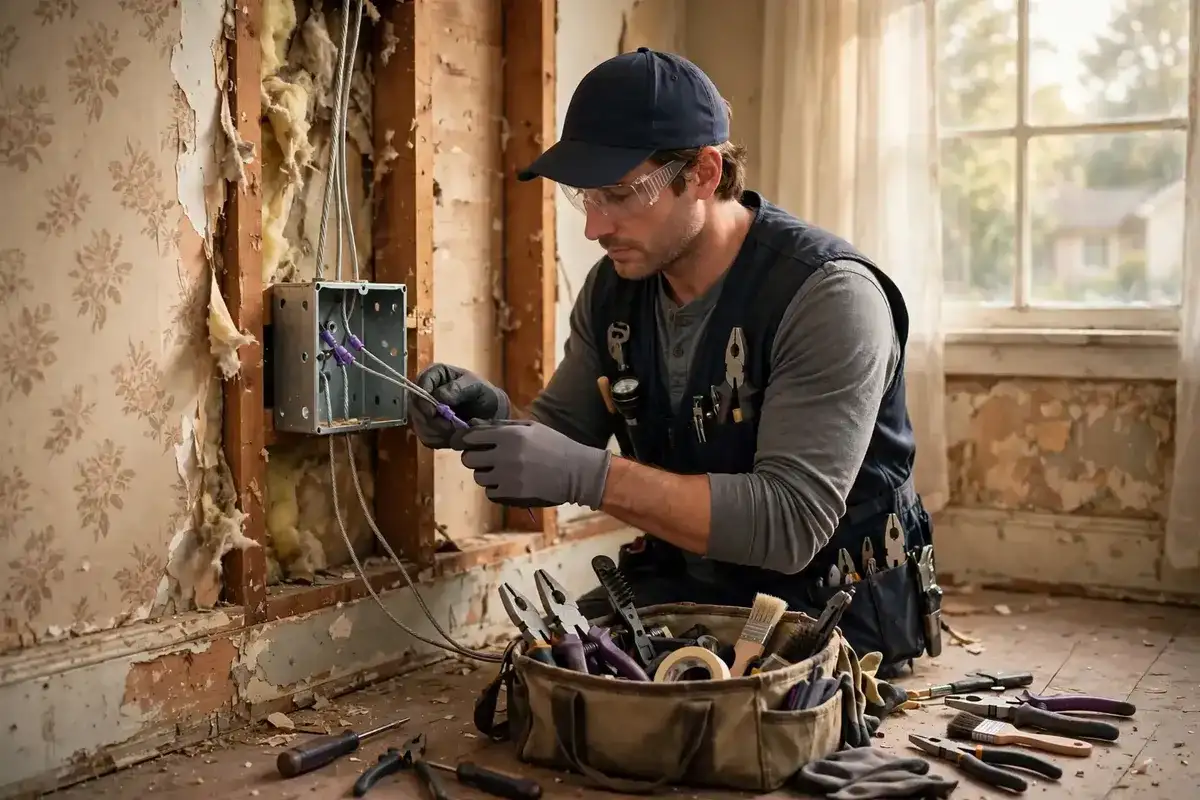
If your house was built between 1965 and 1976, there is a good chance its branch wiring is aluminum, and that single fact changes how every outlet, switch and fixture in the house has to be treated. Aluminum was used across Canada during a copper shortage, and the wire itself is not the problem. The problem is at the connections. Aluminum expands and contracts more than copper as it heats and cools, so terminations loosen over time, and aluminum oxidizes at the connection point, which raises resistance, which creates heat, which loosens the connection further. The US Consumer Product Safety Commission has documented the result: homes with aluminum wiring are 55 times more likely to have fire-hazard conditions at connections than homes with copper. The Electrical Safety Authority in Ontario says the same thing in plainer language: aluminum branch wiring was code-compliant when installed and is not illegal, but the risk is at the connections, and overheated connections are how fires start.
There are two fixes, and they are not equal. Pigtailing is the common one: a short copper lead is spliced onto the aluminum wire at each outlet, switch and fixture, using a connector approved for aluminum-to-copper, so that the device itself only ever touches copper. The ESA recognizes two approved methods, COPALUM and AlumiConn. COPALUM is the gold standard: a proprietary hydraulic tool cold-welds the two metals into a permanent gas-tight joint, and the connection is rated as a permanent repair that never needs monitoring. AlumiConn is the widely available alternative: a set-screw lug with separate ports for aluminum and copper, approved by the Canadian Standards Association and acceptable under the Canadian Electrical Code. What is never acceptable is an ordinary twist-on wire nut, even one labelled for aluminum, or electrical tape, or a push-in backstab connector, because those loosen over time and create exactly the hazard you are trying to remove. A full rewire to copper is the other fix, and it is the only one that removes the aluminum entirely.
The pricing follows the method. COPALUM remediation runs about $50 to $80 per connection point, according to Calgary electrical contractors, and a common GTA range is $50 to $100 per connection, so the total depends on how many connections the house has. For an average home, pigtailing typically costs around $5,000 according to Blais Electric in Guelph, with Elsynergy putting pigtailing at $1,000 to $5,000 and Calgary contractors quoting $2,500 to $10,000 depending on size and method. A full rewire to copper runs $8,000 to $20,000 or more in the GTA, $15,000 to $30,000 or more according to Blais Electric, and $10,000 to $30,000 in the Elsynergy figures. Start with an inspection and audit first, at $200 to $500, in which every connection point is checked, because the connection count is what drives the pigtailing price and you cannot quote it without counting. The inspection also catches the companion problem of the era: many aluminum-wired homes also have Federal Pioneer panels from the same years, and aluminum wiring paired with a Federal Pioneer panel is a particularly bad combination.
The decision rule is driven by insurance, just as it is for knob-and-tube. Many insurers will not write or renew a policy on an untreated aluminum-wired home unless it is inspected, remediated by a licensed electrician, and an ESA certificate is provided. So the sequence is: inspection first, then remediation, then the certificate, then the insurer. Pigtailing is the right answer for most houses, because it satisfies insurers at a fifth of the cost of a rewire and it is up to ten times less expensive than complete replacement, according to Elsynergy. A full rewire is the right answer if the house is being gutted anyway, if the aluminum is damaged or the connections are already scorched, or if you plan to stay for decades and want the problem gone rather than managed. A permit is required for aluminum remediation in most jurisdictions, and in Calgary a Safety Codes Officer inspects the completed work. Get the quote in writing with the method named, COPALUM or AlumiConn, the connection count, and the certificate included, and never accept a quote that says pigtailing with wire nuts. Our guide Knob-and-Tube Rewiring Cost in Canada covers the older wiring problem that often sits in the same neighbourhood, and Electrical Panel Upgrade Cost: 100A to 200A in Canada covers the panel that usually needs attention at the same time. For a rough budget before you call, the RepairPrice home calculator (home-calculator.php) gives a fair range for your city.
Common questions:
Q: Is aluminum wiring dangerous? A: The wire itself is not, but the connections are. Aluminum expands and contracts more than copper, so terminations loosen, oxidize and overheat. The US Consumer Product Safety Commission found homes with aluminum wiring are 55 times more likely to have fire-hazard conditions at connections. Properly remediated with COPALUM or AlumiConn, it is considered acceptable by the ESA.
Q: How much does aluminum wiring remediation cost in Canada? A: Pigtailing runs about $50 to $100 per connection, or around $5,000 for an average home, with Calgary contractors quoting $2,500 to $10,000. A full rewire to copper runs $10,000 to $30,000 or more. Start with an inspection at $200 to $500 to count the connections.
Q: What is the difference between COPALUM and AlumiConn? A: COPALUM cold-welds the aluminum and copper with a proprietary hydraulic tool into a permanent gas-tight joint, and it is rated as a permanent repair. AlumiConn is a set-screw lug with separate ports for each metal, CSA-approved and widely available. Both are recognized by the ESA. Ordinary wire nuts are never acceptable for aluminum-to-copper.
Q: Will my insurance cover a home with aluminum wiring? A: Many insurers will not write or renew a policy on an untreated aluminum-wired home unless it is inspected, remediated by a licensed electrician, and an ESA certificate is provided. Get the insurer's requirements in writing before you buy or before you start the work.
| Method | Typical range (CAD) | Notes |
|---|---|---|
| COPALUM / AlumiConn remediation | 3,000–8,000 | Approved method, average home |
| Full copper rewire | 10,000–30,000 | Most thorough, most disruptive |
| Inspection + audit first | 200–500 | Every connection point checked |
| Per-connection pigtailing | 50–100 each | Connection count drives the total |

 RepairPrice
