
Winter Car Prep in Canada: What Actually Matters
By Oleksandr Potapenko · 2026-11-16 · How we research prices
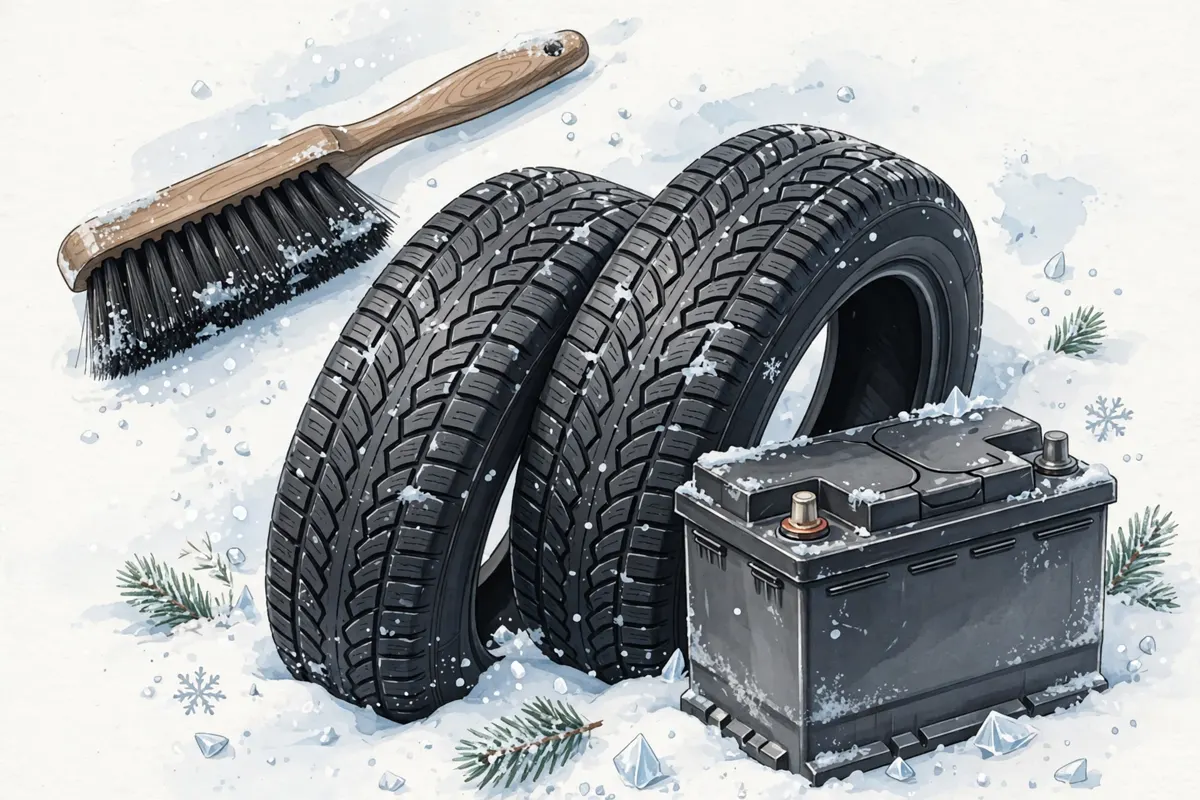
Here is the number that decides your whole winter: according to CAA, a car battery loses about 35% of its cranking strength at 0°C and up to 60% at minus 18°C, while a cold engine needs more power to turn over. That is why a battery that started fine in October dies on the first minus-25 morning in January, and why CAA reports battery-related breakdowns spiking 30% to 50% once temperatures drop below minus 15°C. Winter preparation is not a ritual. It is one battery test, one tire swap, and a few cheap fluids — done in October, before the cold exposes whatever you skipped.
Start with the battery, because it is the most common winter failure and the cheapest to prevent. Most parts stores and many shops will load-test a battery for free, and you should take them up on it if the battery is more than three years old or was ever slow to crank. A replacement costs $180 to $350 installed, which sounds like a lot until you compare it with what CAA North & East Ontario quotes for going without help: a 10-kilometre tow costs $650 to $850 without a membership, a 100-kilometre tow $730 to $960, and a single battery boost, flat-tire change or lockout $100 to $150. A CAA Classic membership starts at about $120 a year, which is less than one unassisted tow. Clean the terminals, make sure the clamps are tight, and if your car has a block heater, test it and its cord before the first minus-15 night — Natural Resources Canada notes a block heater gives easier starts and less engine wear, and a replacement cord or timer costs $0 to $40. Plug it in two or three hours before starting, not all night; a timer pays for itself in electricity.
Tires are the second job and the biggest safety upgrade of the season. The Tire and Rubber Association of Canada is clear: all-season rubber stiffens and loses grip once temperatures drop below 7°C, and winter tires cut braking distance on snow by up to 25% compared with all-seasons. CAA's rule of thumb, the 7-for-7 rule, is to switch once there have been seven consistent days below 7°C — in most of Ontario that is late October to early November. A new set costs $700 to $1,400, and the seasonal changeover runs $60 to $120; buying a second set of steel rims pays for itself in about two years of changeovers and makes each swap faster. All-wheel drive does not replace winter tires — it helps you accelerate, not stop — and never mix winter and all-season tires, because uneven grip causes handling problems. The law is a patchwork: Quebec requires winter tires from December 1 to March 15, with fines of $200 to $300, and British Columbia requires M+S or mountain-snowflake tires on most highways from October 1 to April 30, with a $121 fine plus impoundment risk. Ontario has no mandate, but most insurers offer a 2% to 5% discount for winter tire use. Our guide "Winter Tires and Seasonal Changeover Cost in Canada" breaks down the set, the swap and the storage numbers in detail.
Fluids and visibility come next, and they are the cheapest items on the list. Transport Canada recommends washer fluid rated to minus 40°C and a topped-up reservoir, and our companion guide "Winter Washer Fluid and Wipers in Canada" covers the exact products and prices. A 50/50 coolant mix protects to about minus 37°C, so have the concentration tested in the fall — a hydrometer test is cheap, and the wrong mix can freeze and crack the block. Wiper blades run $30 to $70 a pair, and October is the time to replace them, before the first freezing rain. While you are there, check the tire pressure: cold air drops pressure by roughly 1 PSI per 6°C, and underinflated tires stop worse and wear faster.
The decision rule for winter prep is to spend the money in October in this order: battery test, tires, fluids, emergency kit — and to skip the rest until those four are done. A full fall service runs roughly $80 to $150 on top of the tires, and the whole package costs less than a single January tow. Before you book, check the fair price of the battery, tires and fluids for your exact car in the RepairPrice calculator (calculator.php), so the shop's quote is a number you can verify rather than a surprise. Pack the emergency kit before the first storm: scraper, small shovel, blanket, jumper cables or a portable jump starter, and a spare jug of washer fluid, which Transport Canada lists in its winter driving emergency kit. Public Safety Canada notes help can take hours to arrive on rural highways, so the kit is not decoration. Check your open recalls too — recall repairs are free at the dealer, according to Transport Canada, and a lookup takes two minutes. If your car will not start on a cold morning, our guide "Car Won't Start in the Cold: Winter Causes and Fixes" walks through the diagnosis in order. And if you drive an EV, remember CAA's 2024 winter test of 14 models found 14% to 39% less range in sub-zero conditions — pre-heat while plugged in and keep the battery between roughly 20% and 80% for daily use.
Common questions:
Q: When should I put winter tires on in Canada? A: When daytime temperatures stay consistently below 7°C — CAA's 7-for-7 rule is seven straight days below 7°C. In most of Ontario that is late October to early November. Quebec legally requires them by December 1, and British Columbia requires them on most highways from October 1. Book the swap in mid-October, before the shops fill up.
Q: How cold does it have to be before my battery dies? A: There is no single temperature. CAA's figures are that a battery loses about 35% of its strength at 0°C and up to 60% at minus 18°C, and battery breakdowns spike 30% to 50% below minus 15°C. A battery over three years old, or one that was ever slow to crank, should be load-tested in October — most parts stores test for free.
Q: Do I need a block heater? A: In the Prairies and northern Ontario, yes — it makes cold starts easier and reduces engine wear, according to Natural Resources Canada. Plug it in two to three hours before starting with a timer, not all night. In coastal British Columbia or southern Ontario, most cars manage without one, but it never hurts.
Q: What should I keep in the car for winter emergencies? A: Transport Canada's winter kit includes washer fluid, and the practical list is a scraper, a small shovel, a blanket, jumper cables or a portable jump starter, and a spare jug of minus-40 washer fluid. A CAA membership costs from about $120 a year and covers boosts and tows; without one, a 10-kilometre tow runs $650 to $850.
| Winter check | Typical cost (CAD) | Why it matters |
|---|---|---|
| Battery load test | Often free | CAA: battery loses 35% strength at 0°C, 60% at −18°C |
| Battery replacement | $180–$350 | Cheaper than a $650–$850 tow without CAA |
| Winter tires, set of 4 | $700–$1,400 | Up to 25% shorter braking on snow (TRAC) |
| Seasonal tire changeover | $60–$120 | Book mid-October; steel rims pay off in ~2 years |
| Block heater cord / timer | $0–$40 | Easier starts, less engine wear (NRCan) |
| Winter washer fluid + wipers | $30–$80 | Fluid rated to −40°C (Transport Canada) |
| Coolant concentration test | Cheap with fall service | 50/50 mix protects to about −37°C |
| Emergency kit | $60–$120 | Scraper, shovel, blanket, jump starter, spare fluid |


 RepairPrice
