
How Shops Overcharge — and How to Check Any Quote
By Oleksandr Potapenko · 2026-11-16 · How we research prices
Most overcharging is not a crime. It is a set of small, legal-looking moves that add up to hundreds of dollars on a single invoice, and each one has a specific tell. Once you know the five moves, you can spot them on any estimate in about two minutes, and you can answer each one with a single sentence. This guide names the moves, shows the math, and gives you the response that works at the counter.
The first move is the bundled quote with no breakdown. The estimate says "front-end work $1,400" or "engine repair $1,200", and nothing else. Without a breakdown you cannot check the parts price, the labour hours, or the rate, which is exactly the point. The response is one sentence: "Please itemize this into parts, labour hours, and rate." A fair shop does it without argument, because the itemized version is the document it already has internally. A shop that refuses is telling you the breakdown would not survive inspection. The US Federal Trade Commission advises drivers to get a written estimate before work starts that describes the problem, the parts, and the labour, and to ask the shop to call before it exceeds that amount. That advice exists because the bundled quote is the most common pattern in repair disputes.
The second move is the unasked-for flush. You came in for an oil change and left with a transmission flush, a coolant flush, and a fuel system cleaning you never requested. The tell is the interval: the shop's recommendation sits far from the manufacturer's schedule. Modern coolant commonly lasts 100,000 miles or more, according to dealer-maintenance analyses, and many transmissions use fluid the manufacturer calls lifetime. The response is: "Show me the interval in the manufacturer's schedule." The Federal Trade Commission advises following the manufacturer's maintenance schedule in the owner's manual, not the shop's own schedule. If the advisor cannot produce the page, the flush is a sale, and you decline it. The same test kills the fuel-system cleaning, where a $10 to $20 bottle of additive is often poured into the tank for a $100-plus service, and the engine flush, which is rarely necessary on a well-maintained car.
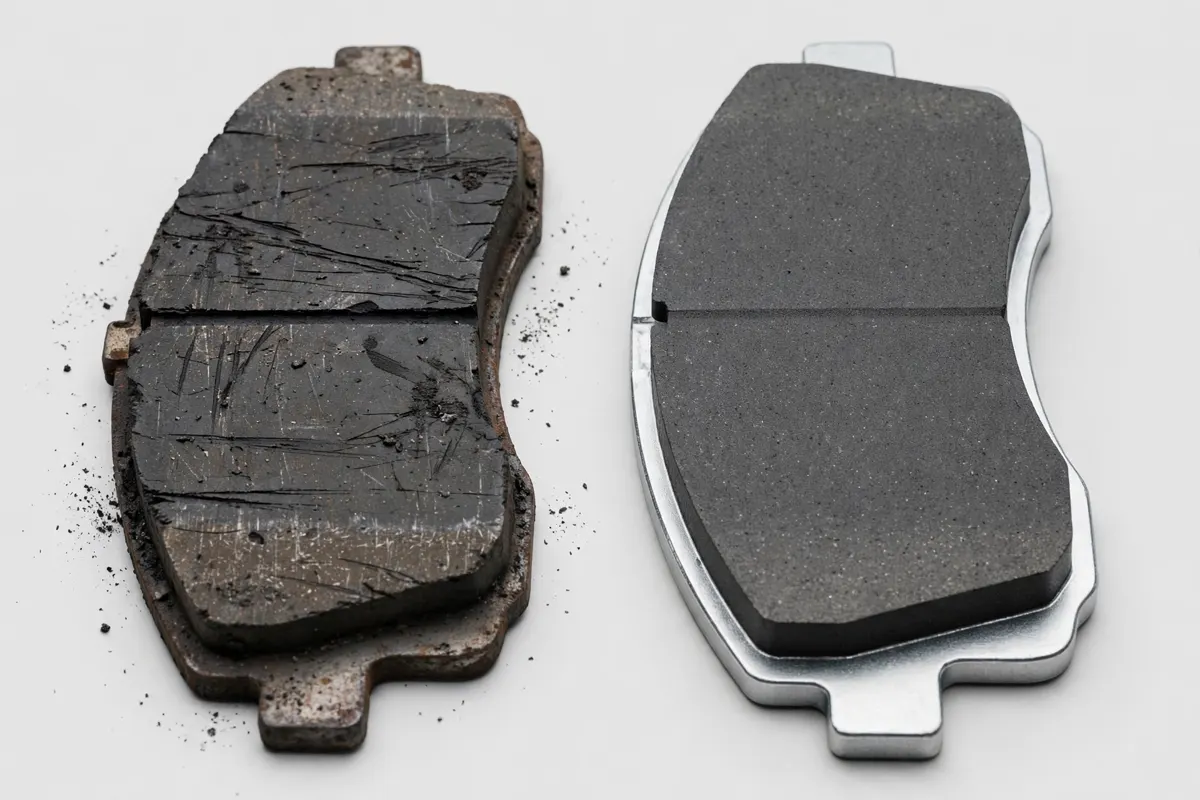
The third move is the scare close. "Unsafe, decide today" is a sales line, not a diagnosis, and it works because it shuts down the one thing that protects you: time. The tell is the absence of proof. A real safety problem comes with evidence, a worn pad you can see, a measurement against the manufacturer's limit, a leak you can watch. A 2019 Honda Civic's front brake pads take about 1.2 hours under the Mitchell 1 and Alldata book-time guides, and that number does not change because the advisor sounds worried. The response is: "Show me the part or the measurement, and I will get a second opinion today." Unless the brakes have actually failed, almost every repair can wait a day. A shop that will not let you wait is a shop that needs you to decide before you think.
The fourth move is the double dip: parts markup plus full hours. The shop charges a retail-plus price for the part and the full book time for the labour, even when the job took half the time, and it does both on the same invoice without mentioning either. The tell is arithmetic. Shops mark parts up 20 to 50 percent over wholesale, according to EngineerFix, and up to about 50 percent over retail is normal. Triple retail is not. The hours should match the book time for your car, and the rate should sit inside the local band: WarrantyChick's August 2026 guide puts Canadian independents at $120 to $180 an hour, Tekmetric's June 2026 index puts the US average at $132 an hour, and ARI's October 2026 data puts the US median at $120. Look the part number up at a major retailer in five minutes. If the part is triple retail and the hours are double book time, the quote is padded on both lines at once, and that is the clearest overcharge there is.
The fifth move is the short warranty. A 30-day warranty on a major repair is a warning sign, not a deal. The industry standard is one year on parts and labour, in writing, and in Ontario the Consumer Protection Act guarantees a statutory minimum of 90 days or 5,000 km on repair work and parts. A shop that will only stand behind its work for 30 days is pricing in the chance that it fails, and you are the one paying for that chance. The response is to walk away, because a cheap quote with a 30-day warranty is more expensive than a fair quote with a one-year warranty the first time the repair has to be done twice.
Here is the decision rule that ties the five moves together. Before you approve any job over $500, run three checks: the estimate is itemized, the hours match book time, and the part price is within about 50 percent of retail. Then get a second quote. The Synchrony study by Stephens and Associates from the first quarter of 2026 found the same repair costs a median of 53 percent more at dealerships than at independent shops, about $232 more per repair, so the second call is usually worth several hundred dollars. If the shop fails any check, point at the specific line, not the total: the part at triple retail, the hours at double book time, the 30-day warranty. Specific objections get specific answers. If the shop cannot answer, leave, and file a complaint with your provincial consumer-protection office or state attorney general if a charge was already made. Keep the estimate, the invoice, and any texts where you approved the work; they are the evidence. And before your next visit, run the job through the RepairPrice calculator at calculator.php, and read "How Do I Check If a Repair Quote Is Fair?" and "Am I Being Ripped Off by My Mechanic? 7 Warning Signs" for the full checklist.
Common questions:
Q: How do shops overcharge customers?
A: Five moves cover most of it: a bundled quote with no breakdown, unasked-for flushes far from the manufacturer's schedule, a scare close with no proof, parts at triple retail combined with padded labour hours, and a 30-day warranty on a major repair. Each one has a tell you can check in minutes: ask for the itemization, ask for the manual interval, ask to see the part, look the part number up at a retailer, and ask for the warranty in writing.
Q: What is a normal markup on parts at a repair shop?
A: Shops mark parts up 20 to 50 percent over wholesale, according to EngineerFix, and up to about 50 percent over retail is normal, because the markup pays for ordering, stocking, and the parts warranty. Triple the retail price is an overcharge. Aftermarket parts typically cost 40 to 60 percent less than the equivalent factory part, so ask whether you are being charged factory prices for aftermarket parts.
Q: How can I check labour hours on a repair quote?
A: Compare them with the book time from the Mitchell 1 or Alldata labour guides for your exact year, make, and model. Front brake pads on a 2019 Honda Civic take about 1.2 hours, an alternator one to three hours, a timing belt three to five hours. RepairPal's estimator, updated in September 2026, gives the same check for free. Hours at double the book time mean the estimate is padded.
Q: What should I do if I already paid an inflated repair bill?
A: Put the dispute in writing the same day, pointing at the specific line: the part at triple retail, the hours at double book time, the work you never approved. In Ontario, a shop cannot bill more than 10 percent above its written estimate without your consent. If the shop refuses to adjust the bill, file a complaint with your provincial consumer-protection office or state attorney general and the Better Business Bureau, and keep the estimate, the invoice, and your approval records as evidence.
| Trick | How to spot it | Response |
|---|---|---|
| Bundled quote, no breakdown | $90 part billed at $250, padded hours, nothing itemized | Demand an itemized estimate |
| Unasked-for flushes | Interval far from the manufacturer schedule; coolant often 100,000+ miles | Ask for the manual interval |
| Scare close, unsafe today | Vague claim, no part or measurement shown, car drives normally | Ask for proof; get a second opinion |
| Parts markup + full hours | Retail-plus parts, job took half the time; check part at a retailer | Ask OEM vs aftermarket, and warranty terms |
| 30-day warranty | Standard is 1 year parts + labour; Ontario minimum is 90 days / 5,000 km | Walk away |
 RepairPrice
