
Furnace Replacement Cost in Canada
By Oleksandr Potapenko · 2026-11-16 · How we research prices
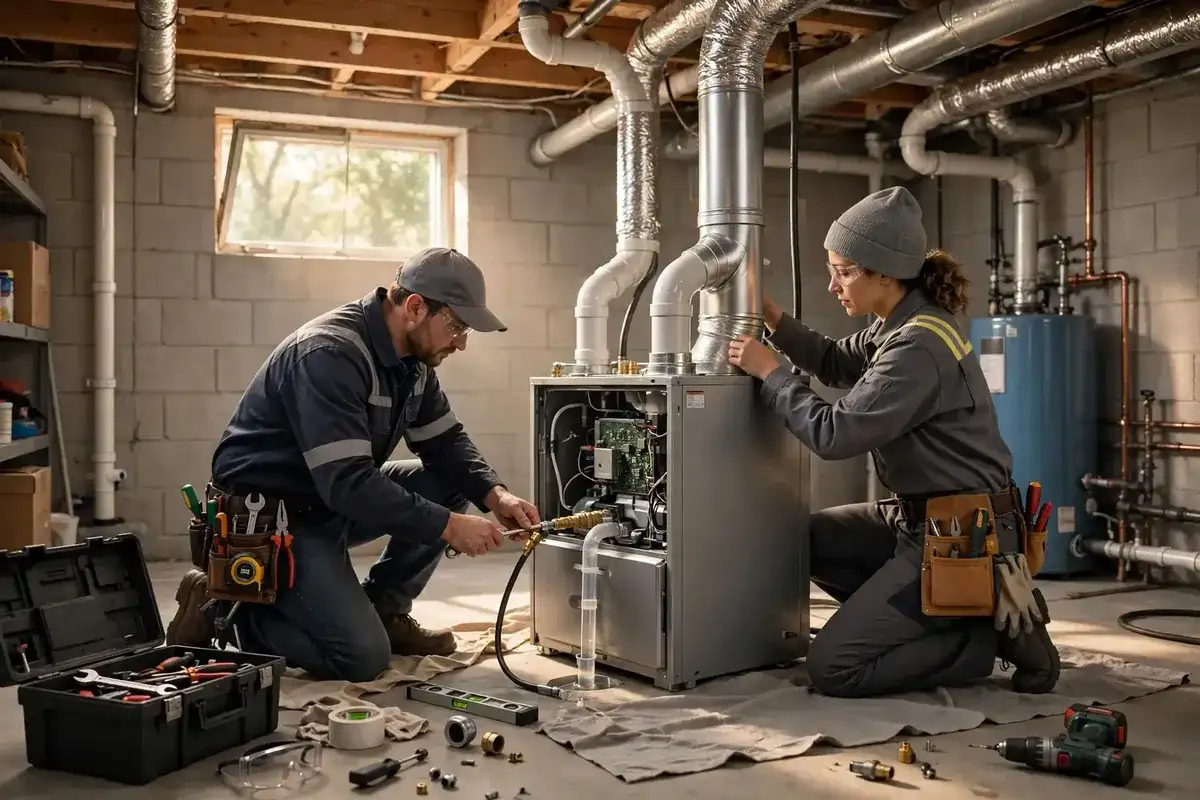
A new gas furnace in Canada costs most homeowners 4,000 to 7,000 CAD installed, and that band is not a guess. FurnacePrices.ca, which collects installed prices reported by Canadian homeowners who requested quotes through its network, puts the typical high-efficiency furnace at 4,000 to 7,000 CAD, with budget single-stage units at 3,000 to 4,000 CAD and premium modulating units at 7,000 to 9,000 CAD and up. HomeStars, the Canadian contractor marketplace, gives a similar picture in its 2026 HVAC guide: 3,500 to 8,000 CAD for a gas furnace replacement only, with a mid-range unit costing 1,500 to 4,000 CAD before installation. Where the two disagree is the top end, and the reason is instructive: HomeStars folds in larger homes and complex retrofits, while FurnacePrices.ca separates those out as premium jobs. Treat 4,000 to 7,000 CAD as the normal case and 9,000 to 10,000 CAD as the price of a big house, a difficult venting route, or a top-tier modulating furnace.
A note on how Canadian prices work, because it matters for every number in this guide. There is no single national Canadian price series for furnace work, the way there is for gasoline or groceries. The CAD ranges here are estimates built two ways: from verified US figures published by Angi and HomeAdvisor, converted at roughly 1.40 CAD per US dollar, and cross-checked against Canadian sources such as HomeStars and FurnacePrices.ca, plus published Canadian contractor quotes. When a Canadian source and a converted US figure disagree, this guide says so and explains why, usually labour rates and code requirements.
Read a furnace quote the way a contractor writes it, line by line. The equipment is the biggest line, 1,500 to 4,000 CAD for a mid-range unit according to HomeStars, and the rest is labour, venting, gas hookup, condensate drainage, permits and haul-away of the old unit. HomeStars puts Canadian HVAC labour at 85 to 150 CAD an hour, and a standard replacement takes 8 to 16 hours, so labour alone runs roughly 800 to 2,500 CAD on a straightforward swap. A quote that is thousands below the rest usually omits something: the permit, the condensate neutralizer, the gas shutoff upgrade, or the duct repair the installer finds once the old unit is out. Polar Draft, a Canadian HVAC pricing guide, lists duct repairs at 1,200 to 3,500 CAD and permits at 150 to 450 CAD in Ontario and BC, which is why the cheapest quote is rarely the cheapest job.
Efficiency is the decision that follows you for twenty years, and Canadian law has already made part of it for you. The minimum legal efficiency for a new residential gas furnace in Canada is 95 percent AFUE, so the old 80 percent mid-efficiency furnace is no longer sold as a new install here. The real choice is between a 95 percent single-stage or two-stage unit and a 97 to 98 percent modulating unit. The modulating furnace costs more upfront and runs quieter, holds temperature within a fraction of a degree, and trims gas use over a 15 to 25 year life, which is the lifespan HomeStars cites for gas furnaces with regular maintenance. In a cold-climate province where the furnace runs six months a year, the premium usually pays back. In a mild coastal climate with a short heating season, it often does not, and the standard 95 percent unit is the better buy.
Sizing matters more than brand, and it is where bad installers reveal themselves. An oversized furnace short-cycles, switching on and off in bursts, wearing out parts and heating unevenly. An undersized one runs constantly through a cold snap and never catches up. A proper heat-loss calculation, often called a Manual J, measures the house as it is now, not as it was when the old furnace went in, because insulation, windows and air sealing may all have changed since. A contractor who sizes by square footage alone, or who simply matches the old unit's BTU rating, is guessing. Ask for the calculation in writing, and ask whether the new furnace is AHRI-matched to your air conditioning coil if you have one, because a mismatched coil erases efficiency ratings and warranty support.
Timing is money. Replacing a furnace in October, on your schedule, costs less and goes better than replacing one in January, when crews are saturated and after-hours change-outs add 200 to 600 CAD, according to Polar Draft's 2026 guide. A furnace past 15 to 20 years, with rising repair bills, a cracked heat exchanger, or a carbon monoxide concern, should be quoted in autumn. And never skip the carbon monoxide detector check: a cracked heat exchanger is the one furnace failure that is a safety emergency, not just a comfort problem. If your alarm sounds or you smell gas, leave the house and call emergency services.
Rebates in 2026 are real but narrower than the headlines suggest, so check before you budget around them. The federal Canada Greener Homes Grant is closed, with December 31, 2025 the last day to submit documents, and the Greener Homes Loan closed to new applications on October 1, 2025. The federal Oil to Heat Pump Affordability Program took its last applications on July 31, 2026. What remains is provincial: Ontario's Home Renovation Savings program, delivered with Enbridge Gas and Save on Energy, and BC's CleanBC programs, plus Quebec's LogisVert program. A furnace-only replacement attracts little rebate money in most provinces; the generous rebates now sit with heat pumps, which is why many homeowners price a heat pump alongside the furnace. Our guide "Heat Pump vs Furnace: Cost Comparison for Canadian Homes" runs that comparison in full, and "Furnace Tune-Up and Maintenance Cost in Canada" explains how to stretch the life of the unit you already have. You can sanity-check any quote against the RepairPrice home calculator (home-calculator.php) before you sign.
Common questions:
How much does a new furnace cost in Canada in 2026?
Most homeowners pay 4,000 to 7,000 CAD installed for a typical high-efficiency gas furnace, according to FurnacePrices.ca, with HomeStars giving a wider 3,500 to 8,000 CAD band. Premium modulating units, large homes and complex venting push the total toward 9,000 to 10,000 CAD.
How long does a furnace last in Canada?
HomeStars puts the lifespan of a gas furnace at 15 to 25 years with regular maintenance. Past 15 years, rising repair bills are the signal to get a replacement quote alongside any repair quote.
Is a 95 percent AFUE furnace good enough, or do I need 98 percent?
In Canada, 95 percent AFUE is the legal minimum for new gas furnaces, and it is a good furnace. The 97 to 98 percent modulating tier buys quieter operation, steadier temperatures and lower gas use, and it pays back fastest in cold provinces with long heating seasons.
Should I replace my furnace and air conditioner at the same time?
Often yes. FurnacePrices.ca puts a combined furnace and central AC install at 7,500 to 12,000 CAD, with most homeowners paying 8,500 to 10,500 CAD, and the shared labour saves money versus doing the two jobs years apart. If the furnace is past 15 years, get a combined quote for comparison.
| Item | Typical range (CAD) | Notes |
|---|---|---|
| High-efficiency furnace, installed (typical) | 4,000–7,000 | FurnacePrices.ca typical tier; 95%+ AFUE |
| Budget single-stage, installed | 3,000–4,000 | Entry-level 95% AFUE, metro area |
| Premium modulating, installed | 7,000–9,000+ | 97–98% AFUE; large or complex homes higher |
| Labour (straightforward swap) | 800–2,500 | HomeStars: 85–150 CAD/hr, 8–16 hours |
| Furnace + central AC combined | 7,500–12,000 | Shared labour saves vs separate jobs |

 RepairPrice
