
Frozen Pipes: Prevention and Repair Cost in Canada
By Oleksandr Potapenko · 2026-11-16 · How we research prices
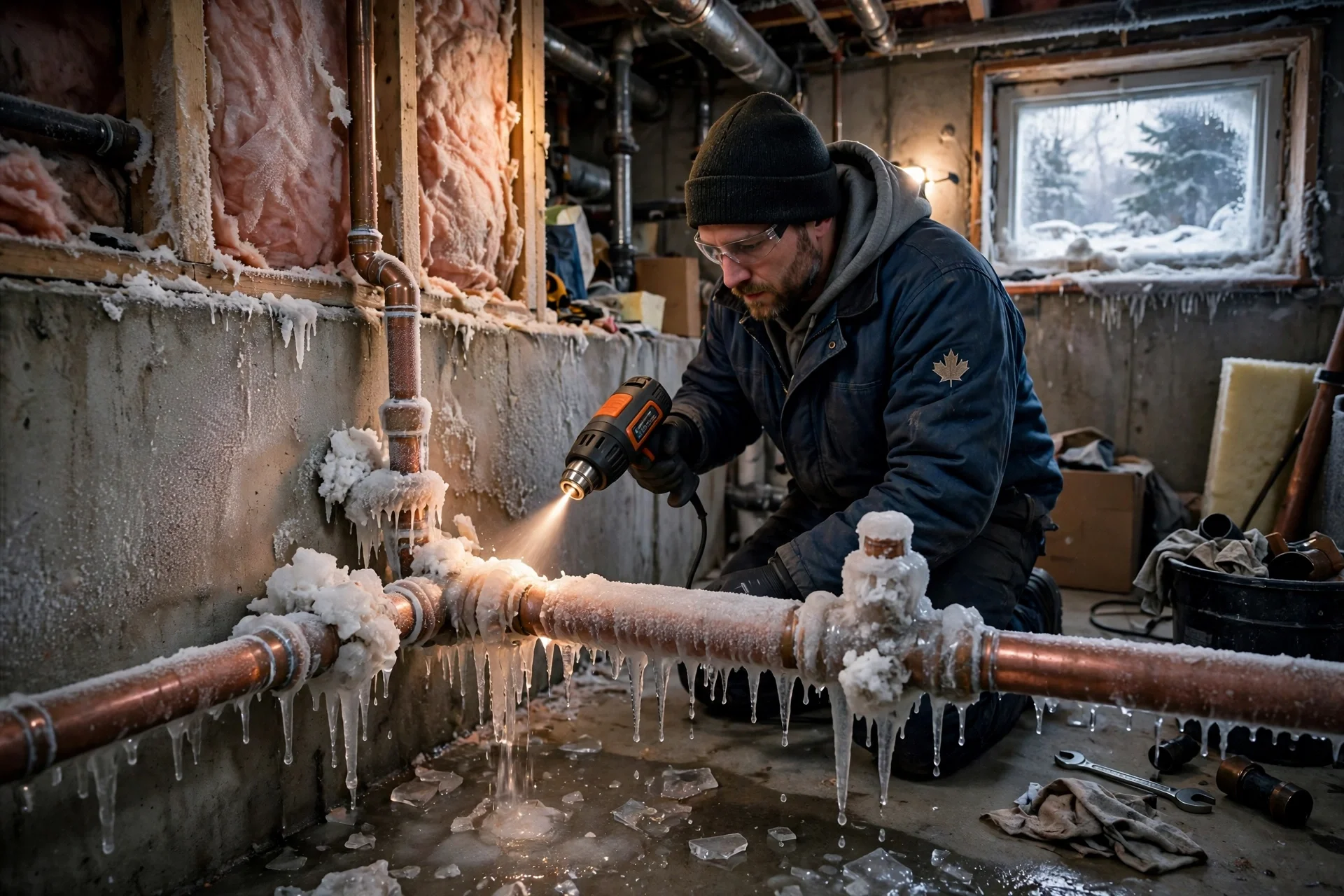
Frozen pipes are the most Canadian plumbing problem there is, and the most preventable. Angi puts a plumber's thawing fee at about 100 USD if the pipe has not burst, with underground lines at 100 to 200 USD, and a burst pipe repair averaging about 500 USD in a 150 to 5,000 USD range. HomeAdvisor and Fixr agree on the thaw figure. A burst main line averages about 1,100 USD to repair. The prevention side is almost free by comparison: foam pipe insulation at 0.20 to 1.35 USD per foot, a pipe heat cable kit at about 30 to 35 USD for 6 to 12 feet, and a battery water-leak sensor at about 25 to 30 USD each. Converted at 1.39, the thaw costs about 140 CAD, the burst repair about 700 CAD on average, and the insulation about 0.30 to 1.90 CAD per foot. There is no Canadian national series for frozen pipe work, so these converted US figures are the planning range, and the Canadian cross-check is the climate itself: pipes in unheated attics start freezing at about minus 7 Celsius, about 20 Fahrenheit, according to University of Illinois research cited by safety agencies, and Angi notes that pipes freeze when temperatures drop below 20 Fahrenheit for six hours.
The physics is simple and it is worth knowing, because it explains every piece of advice that follows. Water expands about 9 percent as it turns to ice. A pipe full of water that freezes has nowhere for that expansion to go, so the pressure builds until the pipe splits, usually at a fitting or a weak point, and usually not where the ice is. The burst is often discovered at the thaw, when the ice plug melts and the water finally has somewhere to go: through the split and into the wall. That is why a frozen pipe that shows no leak while it is frozen is not necessarily safe. It is a burst waiting for the thaw, and the thaw is when the damage happens.
The vulnerable pipes are the same in every Canadian house. Pipes in exterior walls, especially on the north side. Pipes in unheated attics, crawl spaces, and garages. Pipes under kitchen sinks on exterior walls, where the cabinet door keeps the warm air out. The outdoor hose bib and the pipe feeding it, which is why our guide Outdoor Faucet (Hose Bib) Repair and Replacement Cost exists. And the main water line where it enters the house, which in Canada must be buried below the frost line, typically 1.2 to 1.8 metres deep depending on the municipality. The US Department of Energy notes that homes that insulate pipes reduce freeze risk by 85 percent, which is the single most useful number in this guide: insulation is not a nice-to-have. It is the fix.
The prevention list is short, cheap, and worth doing in October, not in January. Insulate every pipe in an unheated space with foam sleeves: 0.50 to 2 USD per foot, minutes to install, and the job pays for itself the first winter it matters. Seal the cracks near pipes with caulk or spray foam, because cold air leaking through a gap freezes a pipe faster than cold air in a room does. Keep the heat above 13 degrees Celsius, about 55 Fahrenheit, even when you are away, and open the cabinet doors under sinks on exterior walls so warm air reaches the pipes. Let a tap drip at five drops a second when the temperature drops below minus 7 Celsius. Disconnect the garden hose and shut off the outdoor bib from the inside valve in the fall, then open the bib to drain it. A smart automatic shut-off valve, like a Moen Flo or a Phyn, costs about 470 to 1,000 USD plus installation, and shuts the water off when it detects a leak. It is expensive, but it is the only prevention that works when nobody is home.
If a pipe is already frozen, the rule is heat, gently, and never a flame. A hair dryer on its lowest setting, a space heater, an electric heating pad, or hot towels will thaw an accessible pipe in about 30 minutes. Never use an open flame, a blowtorch, or a propane heater: the fire risk is real, and a torch on a frozen pipe can flash the water to steam and burst the pipe you are trying to save. Open the tap the pipe feeds, so the water has somewhere to go as the ice melts, and start heating from the tap end back toward the frozen section. If you cannot find the frozen section, if the pipe is inside a wall, or if the thaw reveals a leak, stop and call a plumber. A professional thaw costs about 100 USD, and the emergency call-out fee adds 100 to 350 USD. That is a small bill against a burst pipe and a flooded ceiling, which is what a bad DIY thaw becomes.
The decision rule is about timing, and it is the simplest one in this batch. Spend 50 CAD and an afternoon in October on insulation, and you will probably never pay the 500 CAD average burst repair or the 3,868 USD average water damage restoration that HomeAdvisor reports. If you are leaving the house empty for the winter, shut off the main water and drain the lines, or have someone check the house and run the taps. A frozen pipe in an empty house is discovered by the ceiling on the floor below, and by then the bill is not a plumbing bill any more. Price the prevention and the repair in the RepairPrice home calculator (home-calculator.php), and read Burst and Leaking Pipe Repair Cost in Canada for what happens when prevention arrives too late.
Common questions:
Q: How much does a plumber charge to thaw a frozen pipe?
A: About 100 USD, roughly 140 CAD, if the pipe has not burst, according to Angi and Fixr. Underground lines cost 100 to 200 USD, and emergency call-out fees add 100 to 350 USD.
Q: At what temperature do pipes freeze?
A: Pipes in unheated spaces start freezing at about minus 7 Celsius, about 20 Fahrenheit, and Angi notes they freeze when temperatures drop below 20 Fahrenheit for six hours. Keep the heat above 13 Celsius, about 55 Fahrenheit, even when away.
Q: Can I thaw frozen pipes myself?
A: Yes, if the pipe is accessible and has not burst: a hair dryer on low, a space heater, or hot towels, starting from the tap end. Never use an open flame. If the pipe is inside a wall or the thaw reveals a leak, call a plumber.
Q: How do I prevent pipes from freezing?
A: Insulate pipes in unheated spaces, seal cracks near pipes, keep the heat above 13 Celsius, open cabinet doors under sinks on exterior walls, let a tap drip below minus 7 Celsius, and shut off and drain outdoor bibs in the fall. Insulation alone cuts freeze risk by 85 percent, according to the US Department of Energy.
| Service | Typical range (CAD) | Notes |
|---|---|---|
| Thawing, pipe still intact | $200–$500 | Cheapest outcome — act fast |
| Burst pipe repair, accessible | $400–$1,500 | Cut out and replace the split section |
| Burst pipe repair, inside a wall | $500–$2,000 | Plus drywall repair, quoted separately |
| Water damage restoration | $1,000–$6,000+ | Drying, mould prevention, rebuild |
| Emergency after-hours callout | $200–$400 | Before any work; 1.5–2x daytime rates |
| Pipe insulation, DIY | $1–$3 per foot | Foam sleeves, minutes to install |

 RepairPrice
