
Hybrid vs Plug-in Hybrid vs Gasoline: Which One Fits?
By Oleksandr Potapenko · 2026-11-16 · How we research prices
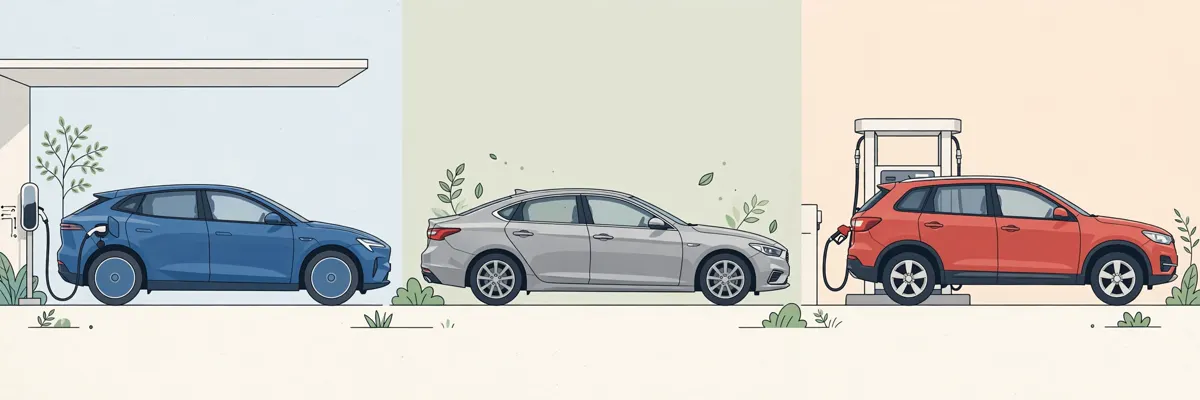
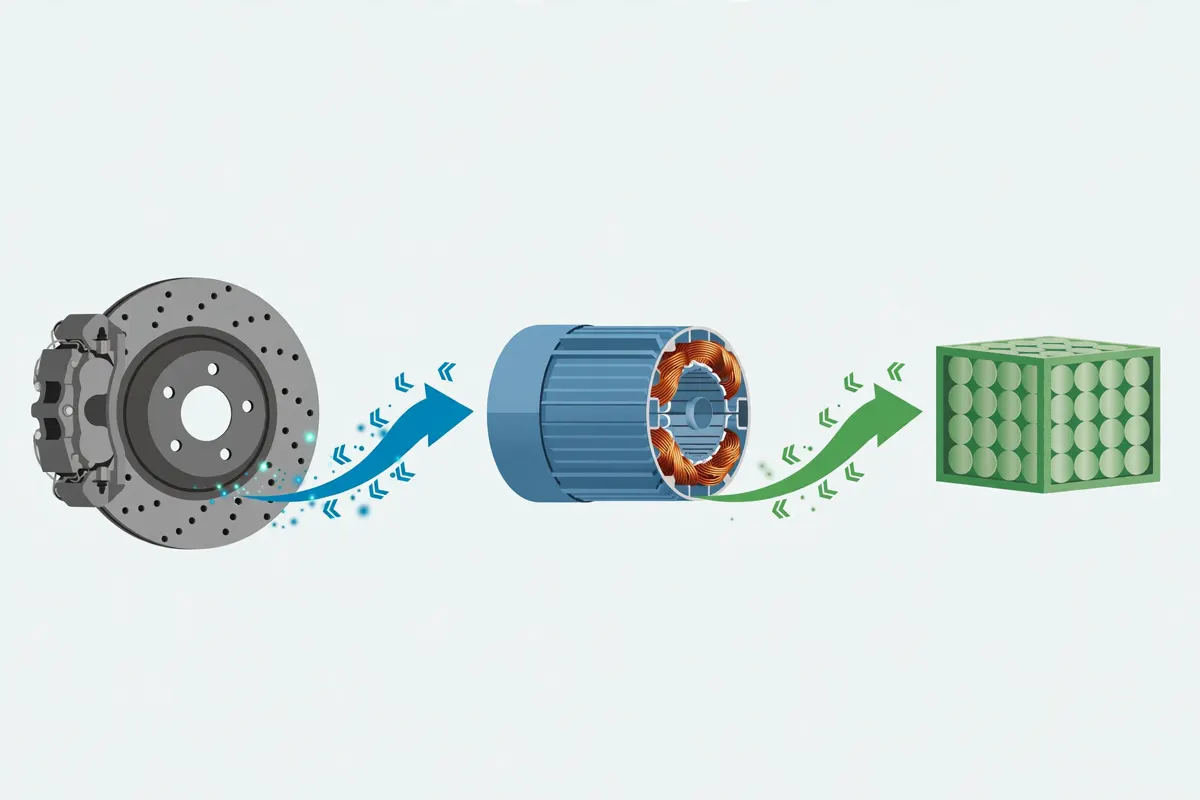
Three powertrains, three different lives, and the wrong choice costs you money every week for a decade. A conventional hybrid charges itself from the engine and the brakes and never plugs in. A plug-in hybrid carries a much bigger battery, plugs in at home, and drives 63 to 89 kilometres on electricity alone before the engine wakes up. A gasoline car plugs into nothing and asks nothing of you except fuel. The question is not which technology is best in general. It is which one fits the way you actually drive, where you park at night, and how long you keep your cars.
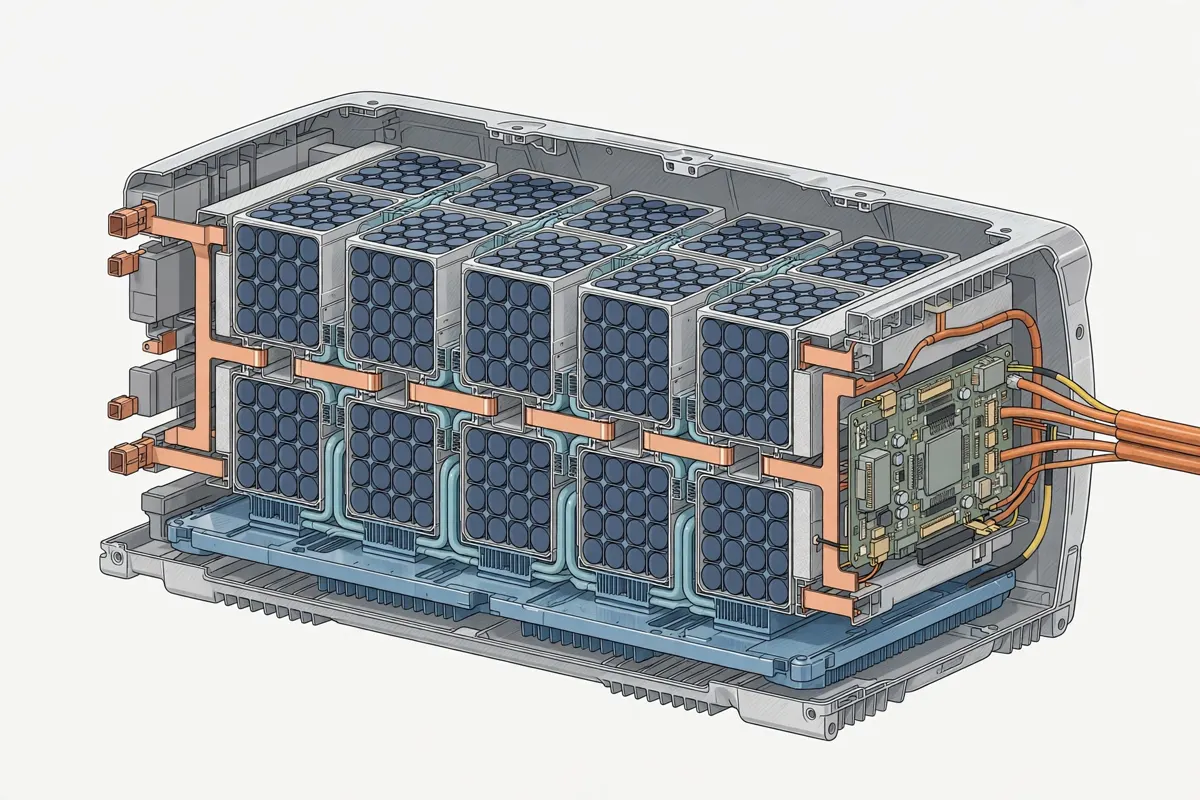
Start with the battery, because it explains almost everything else. A conventional hybrid carries a small pack of roughly 1 to 2 kilowatt-hours, which is why it is cheap to replace and why it never drives far on electricity alone. A plug-in hybrid carries a pack ten times that size: the 2026 Toyota RAV4 Plug-in Hybrid has a 22.7 kilowatt-hour battery, and the 2026 Prius Plug-in Hybrid has a 13.6 kilowatt-hour battery. That size is also why the replacement bill is ten times bigger. RepairPal and Kelley Blue Book data put a conventional hybrid pack at US$3,500 to US$5,500 installed at a dealer, while plug-in hybrid packs run US$6,000 to US$10,000, or about $8,400 to $14,000 Canadian at a 1.40 conversion rate. BloombergNEF's 2025 battery price survey helps explain where those numbers come from: the global average lithium-ion pack price fell to a record low of US$108 per kilowatt-hour in 2025, with battery-electric vehicle packs at US$99 per kilowatt-hour, down from US$115 in 2024. Battery cells keep getting cheaper, but a replacement pack is mostly integration, cooling hardware, labour and warranty, so retail replacement prices fall far more slowly than cell prices. There is no Canadian national price series for plug-in hybrid battery replacement, so the Canadian figures here are estimates converted from those verified US figures at 1.40 and checked against Canadian dealer quotes.
Now the range question, because it decides the whole purchase. Natural Resources Canada rates the 2026 RAV4 Plug-in Hybrid at 89 kilometres of electric-only range for the SE trim, 85 kilometres for the XSE and 79 kilometres for the GR Sport, up from 68 kilometres on the 2025 model. The 2026 Prius Plug-in Hybrid is rated at up to 72 kilometres for the SE and 63 kilometres for the XSE and XSE Premium. In a Canadian winter those numbers fall by roughly a third, because cold batteries hold less charge and cabin heating draws power, so plan on 55 to 60 kilometres of real winter range from a RAV4 Plug-in Hybrid. That still covers the average Canadian commute: Statistics Canada reports the median one-way commute at roughly 30 minutes, and most urban commutes run well under 50 kilometres round trip. If your daily driving fits inside the electric range and you can charge at home overnight, a plug-in hybrid can run most of the year on electricity at roughly a third of the cost of gasoline per kilometre. If you cannot charge at home, the plug-in hybrid is just a heavier, more expensive conventional hybrid carrying a battery you never fill.
The money comparison has three layers. The purchase price comes first: a 2026 RAV4 Plug-in Hybrid starts at about $50,680 including delivery, against $37,500 for the RAV4 Hybrid, a premium of roughly $13,000 before incentives. The incentive comes second, and it changes the maths materially. Transport Canada's Electric Vehicle Affordability Program pays up to $2,500 on an eligible new plug-in hybrid for purchases from February 16, 2026, and up to $5,000 on a battery-electric vehicle, while a conventional hybrid gets nothing, and the old iZEV program closed in March 2025. Quebec's Roulez vert adds up to $1,000 on a plug-in hybrid in 2026 and ends December 31, 2026. The fuel saving comes third: Natural Resources Canada estimates the 2026 RAV4 Plug-in Hybrid saves about $684 a year in gasoline against the hybrid, before charging costs, and AutoTrader's review of the same vehicle calculates a payback of about four and a half years on the price premium once the rebate is included. That is an honest payback, not a fantasy, and it only works if you actually plug the car in most nights.
Here is the decision tree, and it is short enough to use in the showroom. If you have home charging, drive under 80 kilometres most days, and keep cars eight years or more, buy the plug-in hybrid: the rebate, the fuel saving and the electric driving add up, and the battery warranty covers you to 10 years or 240,000 kilometres on a Toyota. If you have no home charging, drive mostly highway, or change cars every three to four years, buy the conventional hybrid: it needs nothing from you, costs $13,000 less than the plug-in, and still returns 5.5 to 6.2 litres per 100 kilometres in a RAV4. If you drive under 10,000 kilometres a year, tow heavy loads regularly, or want the lowest possible purchase price and the simplest possible car, buy gasoline: the hybrid premium will not pay itself back on that little driving. For the detailed running-cost maths, read Hybrid vs Gasoline: What Costs Less to Maintain?, and for the battery bill behind each choice, read Hybrid Battery Replacement Cost in Canada. Before you sign anything, check the quote against the RepairPrice calculator at calculator.php.
One last warning, and it is the one plug-in hybrid owners mention most often after the purchase. A plug-in hybrid that is never plugged in is the worst of all three choices: heavier than the hybrid, thirstier than the hybrid once the battery is dead weight, and more expensive than both. Dealers in Canada have reported exactly this pattern with used plug-in hybrids traded in by owners who never installed a charger. If you are not sure you will charge it, do not buy it. The conventional hybrid forgives indecision. The plug-in hybrid punishes it.
Common questions:
Is a plug-in hybrid better than a regular hybrid? Only if you charge it. A plug-in hybrid driven mostly on electricity saves roughly $684 a year in fuel against a conventional hybrid, according to Natural Resources Canada, and qualifies for up to $2,500 in federal EVAP incentives. If you never plug it in, it is heavier, more expensive and less efficient than the regular hybrid.
How far can a plug-in hybrid go on electricity? The 2026 Toyota RAV4 Plug-in Hybrid is rated by Natural Resources Canada at 79 to 89 kilometres depending on trim, and the 2026 Prius Plug-in Hybrid at 63 to 72 kilometres. Expect about a third less in a Canadian winter. Most urban commutes fit inside that range.
Do plug-in hybrids qualify for rebates in Canada? Yes. Transport Canada's Electric Vehicle Affordability Program pays up to $2,500 for an eligible new plug-in hybrid in 2026, and Quebec's Roulez vert adds up to $1,000 for a plug-in hybrid until December 31, 2026. Conventional hybrids qualify for no federal or provincial purchase rebate.
What costs more to replace, a hybrid or a plug-in hybrid battery? The plug-in hybrid battery, by a wide margin. A conventional hybrid pack costs $4,200 to $8,800 installed in Canada, while a plug-in hybrid pack costs $8,400 to $14,000, because the battery is roughly ten times larger. Both are covered by long factory warranties when new.
| Powertrain | Needs a plug? | Electric-only range | Battery replacement | Best for |
|---|---|---|---|---|
| Full hybrid (HEV) | No | None — assists only | $4,200-$8,800 | No charging access, city driving |
| Plug-in hybrid (PHEV) | Yes | Roughly 63-89 km (NRCan 2026) | $8,400-$14,000 | Short commute plus home charging |
| Gasoline | No | — | No traction battery | Lowest purchase price, simplicity |

 RepairPrice
