
Hybrid Brakes and Regenerative Braking Explained
By Oleksandr Potapenko · 2026-11-16 · How we research prices
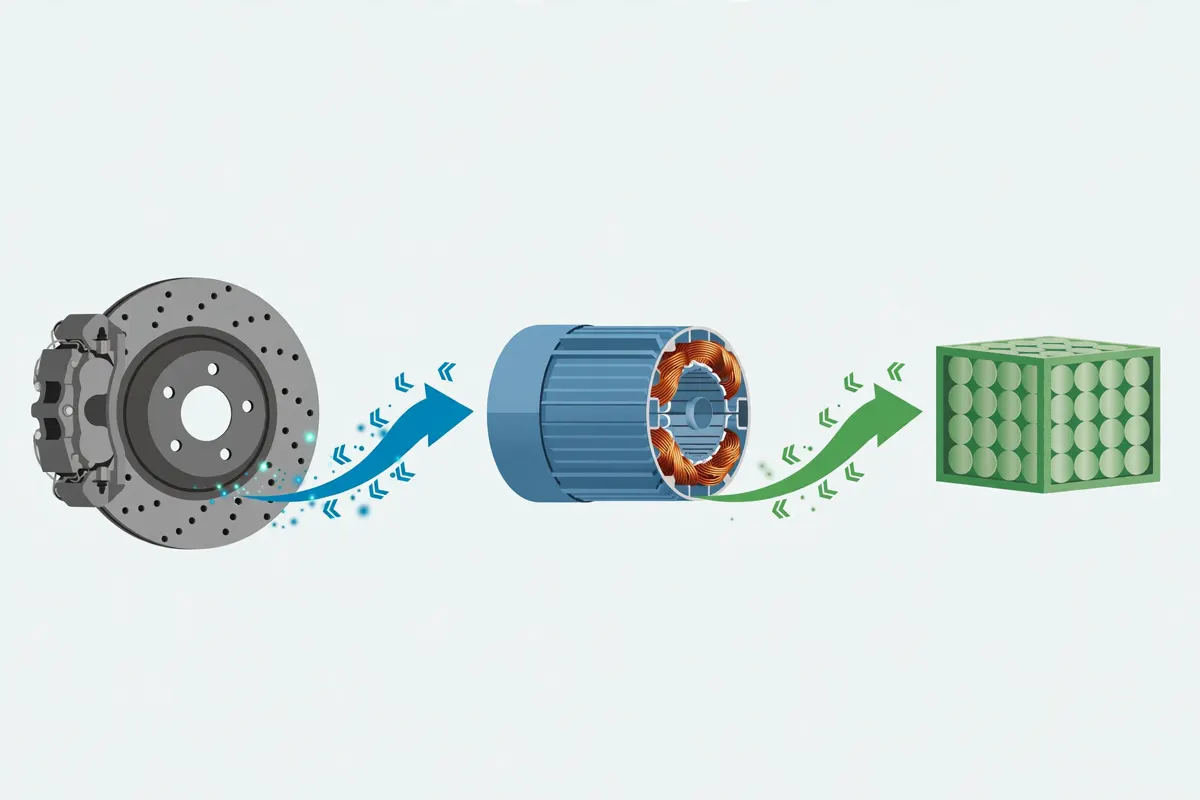
Your hybrid's brakes are the strangest bargain in car ownership: the parts that do the stopping barely get used, and the parts that fail are the ones that sit idle. To understand why, you have to understand what happens the moment you lift off the accelerator. In a gasoline car, every stop turns speed into heat at the brake pads, and the pads wear a little thinner each time. In a hybrid, the electric motor reverses its role and becomes a generator, turning the car's motion back into electricity and feeding it into the battery. That is regenerative braking, and it does most of the stopping before the friction pads ever touch the rotors.
The numbers behind that are striking. The United States Department of Energy estimates that fully electric vehicles recover roughly 22 percent of driving energy through regeneration, while hybrids capture an estimated 5 to 9 percent over typical mixed driving. That does not sound like much until you translate it into pad life. The friction brakes on a hybrid only handle hard stops and the final crawl to a halt below about 8 kilometres an hour, where the motor can no longer generate useful current. The result is that hybrid brake pads commonly last 70,000 to 100,000 miles, or roughly 112,000 to 160,000 kilometres, on their original set. Toyota's own dealer network reports RAV4 Hybrid owners routinely reaching that range, and the brake-pad maker Frontech notes that a 2021 Toyota Camry Hybrid can travel up to 112,600 kilometres before needing new pads, against about 50,000 kilometres for a typical gasoline car. A gasoline car owner replaces pads every 40,000 to 70,000 kilometres. A hybrid owner often replaces them half as often, sometimes a third as often. AAA's 2026 Your Driving Costs study backs the saving from the other direction: it puts maintenance, repairs and tires for a compact SUV hybrid at US$1,506 a year against US$1,954 for the gasoline version.
Here is where the story turns, and where Canadian owners get caught. Brakes that rarely get hot do not stay clean the way a gasoline car's brakes do. Road salt, moisture and months of light use leave a film of rust on the rotors, and the pads, which barely move, can stick to that rust. The caliper slide pins, which need regular movement and lubrication to stay free, seize from disuse instead of from wear. The industry term is corrosion before wear: the rotors on a hybrid often need replacing because they have rusted, not because they have worn thin. Technicians who work on hybrids in the snow belt report this constantly, and it is the single most misunderstood fact about hybrid brakes. A hybrid owner who proudly skips brake service for five years is not saving money; they are letting a $150 slide-pin service turn into a $600 to $1,200 pad and rotor job.
The fix is cheap and boring, which is exactly why people skip it. Have the brakes inspected and serviced once a year, ideally before winter. The service is simple: remove the pads, clean the rust from the pad abutments and the rotor hats, lubricate the caliper slide pins, and measure pad thickness. At a Canadian independent shop this costs roughly $120 to $200 per axle, and it is the difference between pads that last 150,000 kilometres and rotors that die at 80,000. Brake fluid still follows the manufacturer schedule regardless of pad life, usually every two to three years, because fluid absorbs moisture whether the pads move or not; a flush costs $120 to $200 in Canada. And do not let anyone sell you pads by mileage alone. A hybrid at 150,000 kilometres can still have half its pad life left, so measure first and replace only when the measurement says so.
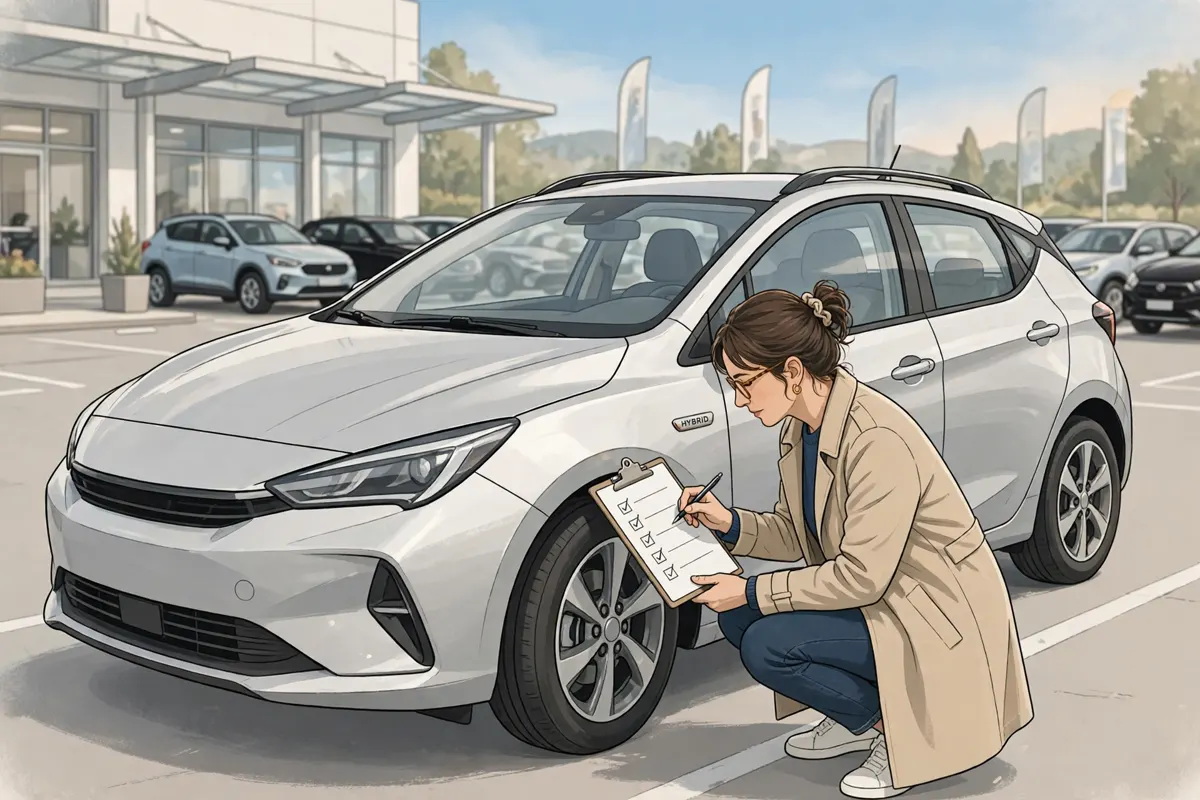
There is one more hybrid-specific failure worth knowing about, because it is expensive and it sounds like a brake problem when it is not. The brake actuator on older Toyota hybrids, the hydraulic unit that blends regenerative and friction braking, can fail with a groaning pump noise and a cluster of warning lights. RepairPal and independent hybrid specialists put that repair at roughly US$1,900 to US$3,400, or about $2,600 to $4,700 Canadian at a 1.40 conversion rate. It is not common, but it is the reason a pre-purchase inspection on a used hybrid should always include a brake-system scan, as our guide Buying a Used Hybrid: The Checklist explains. A brake pad replacement itself, when it finally comes due, costs $200 to $550 per axle in Canada at an independent shop, against $300 to $800 at a dealer. Compare any quote with the RepairPrice calculator at calculator.php before approving the work.
So the rule for hybrid brakes is the opposite of what intuition suggests. Do not wait for a squeal to book a brake appointment, because a hybrid's pads may never squeal before the rotors rust through. Book the annual inspection, pay the small service bill, and let the pads last the 150,000 kilometres they were designed for. The regenerative system saves you money on pads; the annual service is what protects that saving. Skip the service and the car will collect the money back with interest, in rotors, calipers and seized pins, usually in February, usually on the coldest week of the year.
Common questions:
How long do hybrid brake pads last? Commonly 112,000 to 160,000 kilometres on the original pads, against 40,000 to 70,000 kilometres for a gasoline car. Many Prius and RAV4 Hybrid owners reach 160,000 kilometres without a pad change. City driving helps, because regeneration works hardest in stop-and-go traffic.
Do hybrids need brake fluid changes? Yes, on the same schedule as a gasoline car, usually every two to three years. Brake fluid absorbs moisture over time whether the pads are used or not, and old fluid corrodes the expensive brake actuator. A flush costs $120 to $200 in Canada.
Why do hybrid rotors rust? Because the friction brakes are used so rarely that the rotors never get hot enough to clean themselves, and Canadian road salt accelerates the corrosion. Annual brake service, cleaning and lubricating the calipers, prevents most of it.
Are hybrid brakes more expensive to repair? The pads themselves cost about the same as gasoline-car pads, and you replace them far less often. The expensive hybrid-specific item is the brake actuator on older Toyotas, at roughly $2,600 to $4,700 installed, which is why a brake-system scan matters when buying used.
| Component | Gas car, typical life | Hybrid, typical life |
|---|---|---|
| Brake pads | 40,000-70,000 km | Often 112,000-160,000 km |
| Rotors | With pads, or at the second pad change | Often corrode before wearing out — inspect yearly |
| Brake fluid | Per manufacturer schedule, every 2-3 years | Same schedule, regardless of pad life |
| Caliper slides | Seize with neglect | Seize with disuse — clean and lubricate yearly |
| Annual brake service | About $120-$200 per axle | About $120-$200 per axle, prevents rotor rust |

 RepairPrice
