
Hybrid vs Gasoline: What Costs Less to Maintain?
By Oleksandr Potapenko · 2026-11-16 · How we research prices
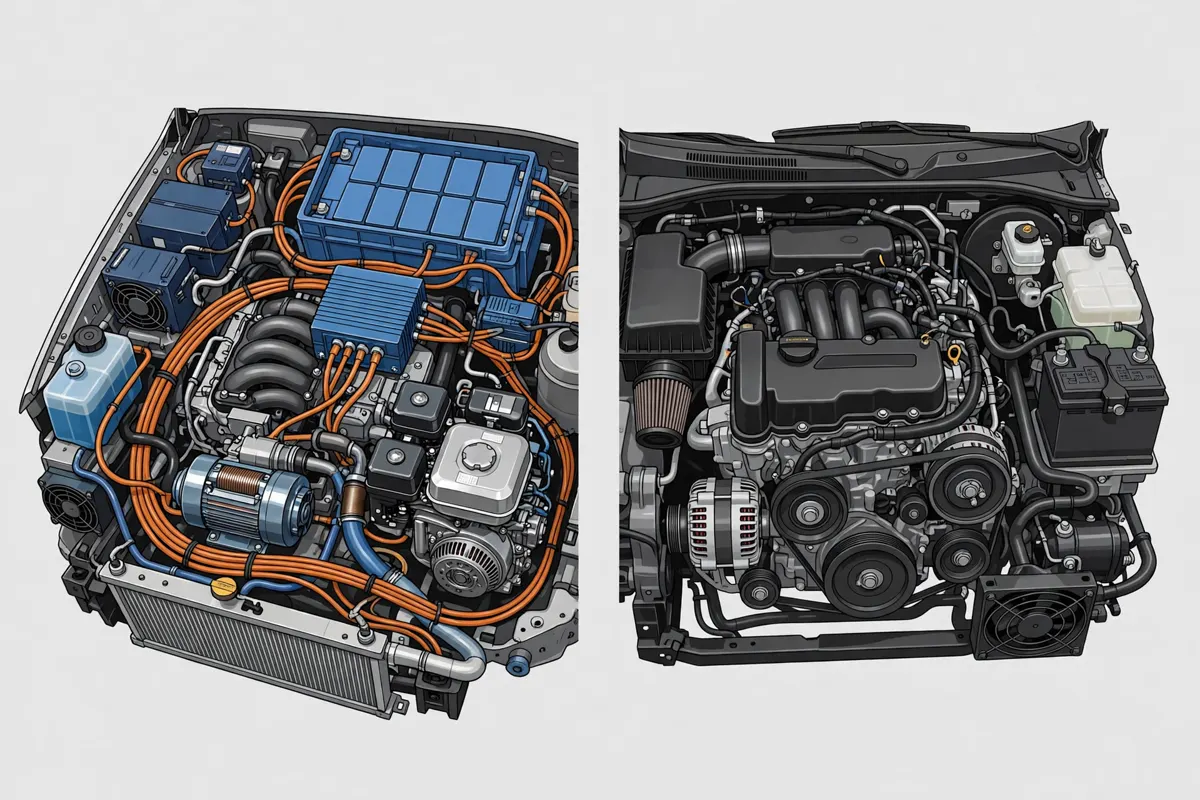
The short version is that a hybrid costs less to maintain than the equivalent gasoline car, but not by the margin the brochures imply, and not on every line of the bill. The most useful numbers come from AAA's Your Driving Costs study, which measures what owners actually pay. For 2026, AAA puts maintenance, repairs and tires for a compact SUV at US$1,506 a year for a hybrid against US$1,954 a year for the gasoline version, both at 15,000 miles a year. Converted at 1 US dollar to about 1.40 Canadian dollars, that is roughly $2,110 a year for the hybrid and $2,735 for the gasoline car, a saving of about $625 a year. AAA's 2025 edition found the same pattern in smaller cars: maintenance alone for a medium sedan was US$1,551 a year for a hybrid against US$1,786 for gasoline, and for a compact SUV it was US$1,491 against US$1,746. Two editions, two vehicle classes, the same direction: the hybrid wins on upkeep by roughly 13 to 23 percent.
Consumer Reports adds a reliability angle that explains part of that gap. Its owner survey of roughly 380,000 vehicles found that standard hybrids have about 15 percent fewer problems on average than gasoline-only cars. Fewer problems means fewer unscheduled shop visits, and that is where the real money hides. Argonne National Laboratory, as reported by Yale Environment 360, measured maintenance at about 9 cents a mile for hybrids against about 10 cents a mile for gasoline cars, with most of the saving coming from brakes. These are three independent sources pointing the same way, which is why the conclusion is safe to state plainly.
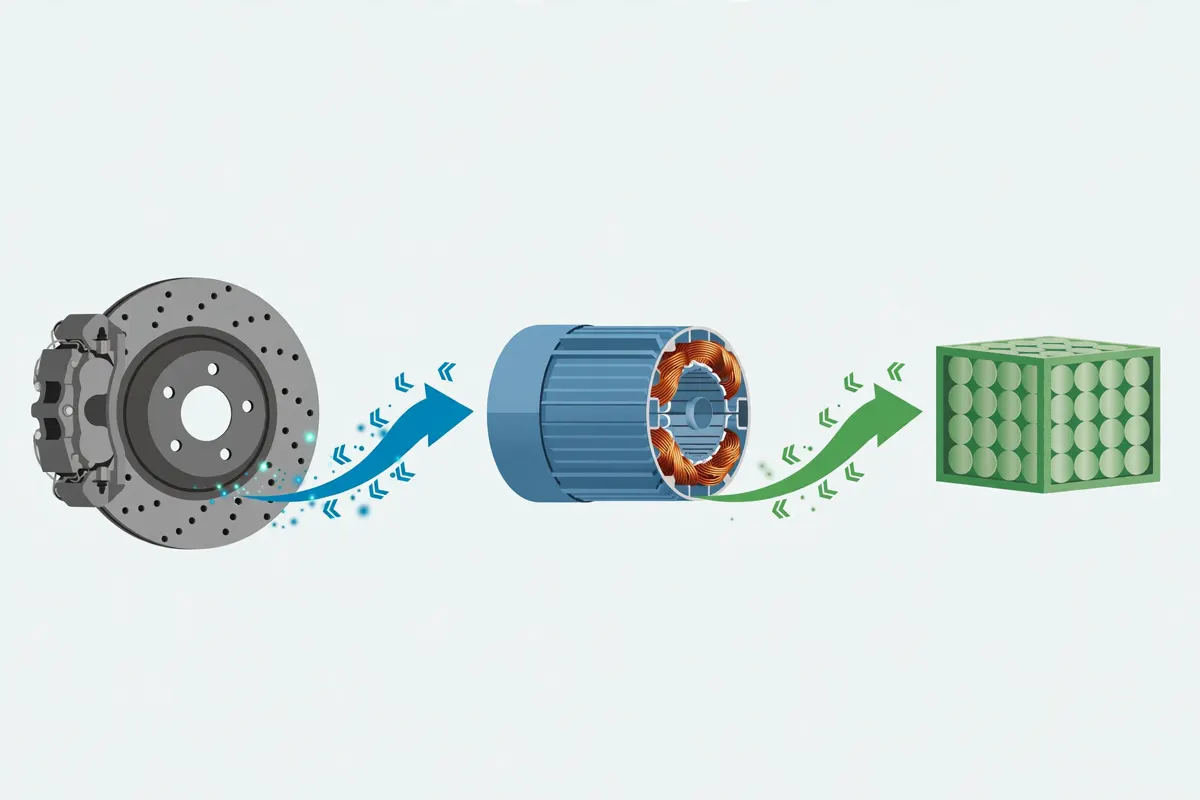
Where does the saving actually come from? Brakes first. Regenerative braking does most of the slowing, so the friction pads on a hybrid commonly last 112,000 kilometres or more, against 40,000 to 70,000 kilometres on a gasoline car. Our companion guide Hybrid Brakes and Regenerative Braking Explained works through the numbers in detail. Oil changes come second, but the advantage is smaller than people think. A hybrid engine runs fewer hours and often shuts off in traffic, so Toyota and Honda both allow 16,000-kilometre intervals on many hybrids, against 8,000 to 16,000 kilometres on their gasoline equivalents. You save perhaps one oil change a year, worth $90 to $150 in Canada. There is no starter motor to replace on most hybrids, no alternator in the conventional sense, and no timing belt on the Toyota hybrid system, which uses a chain. Those are real savings, just spread thinly across a decade.
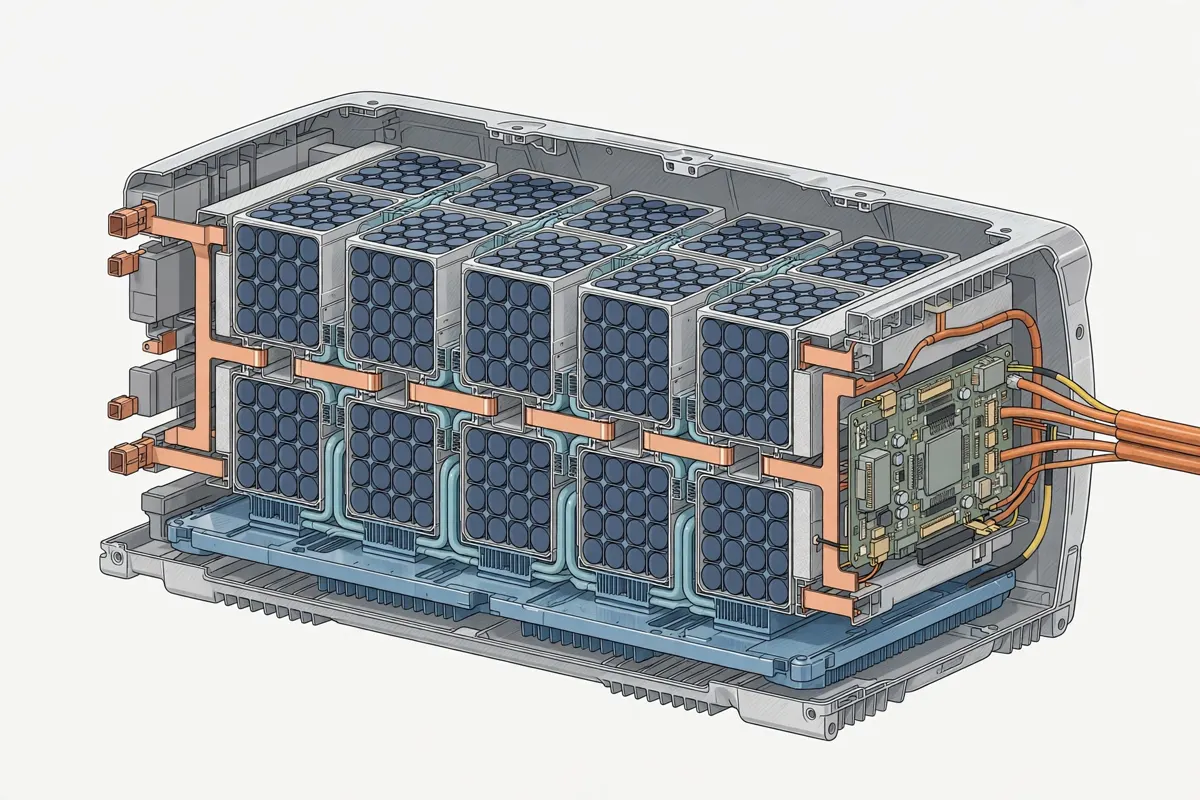
Now the other side of the ledger, because a fair guide has to show it. A hybrid has two batteries, not one: the traction pack and a conventional 12-volt battery, and the 12-volt unit on a hybrid is a smaller absorbed-glass-mat battery that costs $250 to $450 installed in Canada, noticeably more than a basic gasoline-car battery. The inverter coolant, which cools the hybrid electronics, needs changing roughly every 80,000 to 160,000 kilometres depending on the model, and owners routinely forget it until a warning appears; budget $200 to $350 at a dealer. The electronic continuously variable transmission fluid is another commonly ignored item: Toyota calls it a lifetime fill, but independent hybrid specialists recommend changing it around 100,000 kilometres, at $200 to $300, because worn fluid is how an otherwise bulletproof transaxle eventually fails. And the big one: if the traction battery fails outside warranty, a single repair can erase five to ten years of maintenance savings in one afternoon. Our guide Hybrid Battery Replacement Cost in Canada puts that bill at $4,200 to $8,800 for a new Toyota pack. The honest way to think about it is that the hybrid saves you a little every year and risks costing you a lot once, late in the car's life.
The five-year maths makes the trade-off concrete. Take the AAA 2026 compact SUV figures: $625 a year saved on maintenance, repairs and tires, or about $3,125 over five years. Fuel adds more. AAA's 2025 comparison put fuel at US$1,348 a year for a compact SUV hybrid against US$1,714 for gasoline, a saving of about US$366 a year, or roughly $510 Canadian, which is another $2,550 over five years. Combined, a typical Canadian hybrid SUV owner saves roughly $5,500 to $6,000 over five years against the gasoline twin, before any battery repair. That is a real advantage, but it is not the fortune some sellers describe, and it disappears entirely if you buy the hybrid at a $4,000 premium and sell after three years.
So here is the decision rule. Buy the hybrid if you drive mostly in the city, keep cars eight years or more, and do 20,000 kilometres a year or more; that is where the brake and fuel savings compound and the battery warranty still covers you. Buy the gasoline car if you drive mostly highway, keep cars three to four years, or drive under 10,000 kilometres a year; the hybrid premium will not pay itself back in that window. Either way, run any quote through the RepairPrice calculator at calculator.php before you approve work, because the hybrid discount that matters most is the one on the invoice in front of you, not the average in a study.
Common questions:
Are hybrids more expensive to maintain than gas cars? No. AAA's 2026 Your Driving Costs study puts maintenance, repairs and tires for a compact SUV hybrid at US$1,506 a year against US$1,954 for gasoline, and Consumer Reports found hybrids have about 15 percent fewer problems than gas cars. The hybrid is cheaper to maintain on average, though a single out-of-warranty battery repair can be very expensive.
Do hybrids need oil changes? Yes. A hybrid still has a gasoline engine, so it still needs oil, filters, coolant and spark plugs. Intervals are often longer, around 16,000 kilometres on many Toyota and Honda hybrids, because the engine runs fewer hours, but the service itself is the same job.
How often do hybrid brakes need replacing? Much less often than on a gasoline car. Regenerative braking handles most deceleration, so pads commonly last 112,000 kilometres or more on a hybrid, against 40,000 to 70,000 kilometres on a gasoline car. Rotors, however, can corrode from disuse in Canadian winters and may need replacing before the pads wear out.
What is the most expensive hybrid repair? The traction battery. A new Toyota hybrid pack costs $4,200 to $8,800 installed in Canada depending on generation, and a plug-in hybrid pack costs $8,400 to $14,000. The inverter assembly is the second most expensive item, at roughly $2,500 to $5,600 installed.
| Maintenance item | Hybrid | Gasoline |
|---|---|---|
| Oil changes | Often every 16,000 km — engine runs fewer hours | Standard interval, often 8,000-16,000 km |
| Brake pads | Often 112,000+ km thanks to regenerative braking | Typically 40,000-70,000 km |
| Transmission service | eCVT fluid — change near 100,000 km, about $200-$300 | Standard intervals |
| Batteries | Traction pack plus a 12V battery ($250-$450) | 12V battery only |
| Inverter coolant | Change every 80,000-160,000 km, about $200-$350 | Not applicable |
| Annual maintenance, repairs and tires (AAA 2026, compact SUV) | About $2,110 (US$1,506) | About $2,735 (US$1,954) |


 RepairPrice
