
RAV4 Hybrid vs CR-V Hybrid vs Tucson Hybrid in Canada
By Oleksandr Potapenko · 2026-11-16 · How we research prices

Three hybrid SUVs, three different answers to the same question, and the winner depends entirely on what you value most. The Toyota RAV4 Hybrid is the cheapest and the most efficient. The Honda CR-V Hybrid is the roomiest and the most refined. The Hyundai Tucson Hybrid is the best warranted and the best equipped for the money. All three are good cars, which is exactly why the choice is hard, and why the details below matter more than the badges.
Start with the money, because the gap is bigger than most shoppers expect. Toyota Canada lists the 2026 RAV4 Hybrid from $37,500 for the LE all-wheel drive, rising to $52,450 for the XSE Technology, before freight, pre-delivery inspection and fees, and Toyota's own estimated vehicle price adds $3,658 for those items. Honda Canada lists the 2026 CR-V Hybrid from $45,900 for the Sport Hybrid to $51,200 for the Touring Hybrid, before a $2,000 destination charge. Hyundai Canada lists the 2026 Tucson Hybrid from $42,799 for the new Night Edition, or about $45,796 with freight, pre-delivery inspection and fees. AutoTrader Canada confirms all three figures, and the important detail is the trim structure: Honda sells the CR-V Hybrid only in Sport and Touring trims, so there is no cheap CR-V Hybrid at all, while Toyota sells the RAV4 Hybrid from a genuinely affordable LE. The base-price gap between the RAV4 Hybrid and the CR-V Hybrid is $8,400, and that is before taxes. The Tucson Hybrid sits in the middle at $42,799, which makes it the value play for buyers who want more equipment than the base RAV4 without paying Honda money.
Fuel economy is the RAV4's second win. Natural Resources Canada rates the 2026 RAV4 Hybrid at 5.5 to 6.2 litres per 100 kilometres combined, against about 6.4 litres for the CR-V Hybrid and about 6.6 to 6.7 litres for the Tucson Hybrid. The gap looks small on paper, but over 20,000 kilometres a year at $1.50 a litre, the RAV4 saves roughly $270 a year against the CR-V and roughly $330 a year against the Tucson. In a Canadian winter all three will use more, by roughly 20 to 30 percent in city driving, because cold engines run longer and cabin heating draws energy, so treat the official figures as a fair-weather comparison and expect 7 to 8 litres per 100 kilometres in January. AAA's 2026 Your Driving Costs study adds an ownership-cost angle: it puts maintenance, repairs and tires for a compact SUV hybrid at US$1,506 a year against US$1,954 for gasoline, a gap the RAV4 Hybrid is well placed to capture. Power tells a different story: the RAV4 Hybrid makes 236 horsepower, the Tucson Hybrid makes about 231 horsepower, and the CR-V Hybrid makes 204 horsepower. The Honda is the slowest of the three on paper, but it is also the quietest and smoothest, because its two-motor system spends more time in electric mode at low speed, and reviewers consistently rate its cabin as the most refined.
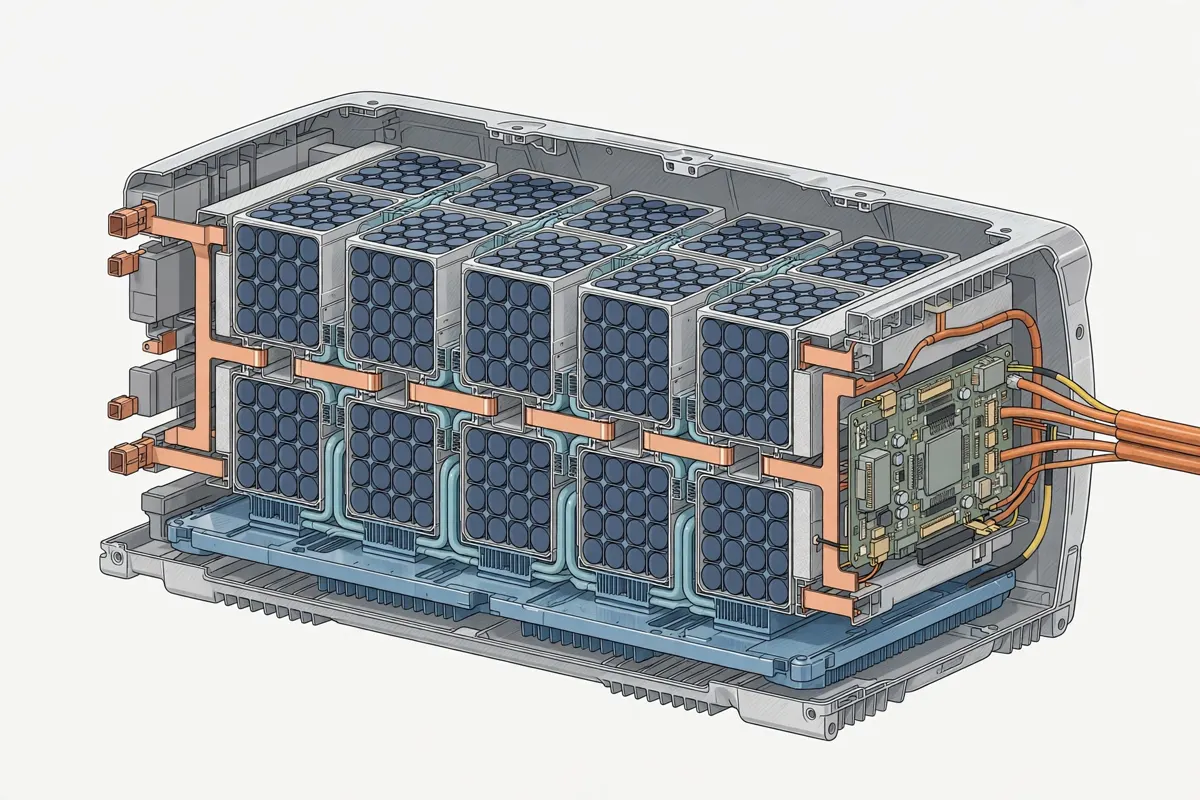
Warranties are where the three brands genuinely diverge. Toyota covers the hybrid battery for 10 years or 240,000 kilometres, the longest in the segment, but its comprehensive warranty is only 3 years or 60,000 kilometres. Honda covers hybrid components for 8 years or 160,000 kilometres with the same 3-year or 60,000-kilometre comprehensive warranty. Hyundai gives the best overall coverage: 5 years or 100,000 kilometres comprehensive, 5 years or 100,000 kilometres powertrain, and 8 years or 160,000 kilometres on the hybrid and EV system. If you keep cars ten years, Toyota's battery warranty is the one that matters. If you keep cars five years, Hyundai's comprehensive warranty is worth more, because it covers everything, not just the battery. Resale is the RAV4's quiet advantage: Canadian Black Book residual estimates put the RAV4 Hybrid at roughly 58 to 62 percent of its price after five years, against roughly 52 to 56 percent for the CR-V Hybrid, and the RAV4 is built in Cambridge and Woodstock, Ontario, which helps parts availability and dealer familiarity across Canada.
So who should buy which? Buy the RAV4 Hybrid if you want the lowest purchase price, the best fuel economy, the longest battery warranty and the strongest resale value, and you can live with a firmer ride and a noisier cabin than the Honda. It is the rational pick for most Canadian families, and the 2026 model's switch to an all-hybrid lineup means every new RAV4 is now a hybrid, which keeps used values strong. Buy the CR-V Hybrid if rear-seat space, ride quietness and cabin refinement matter more than price, and you are comfortable paying about $8,400 more for them; it is also built in Alliston, Ontario, and it is the only one of the three with a genuinely adult-sized second row. Buy the Tucson Hybrid if you want the most equipment for the money, the longest comprehensive warranty, and the most modern interior, and you accept slightly higher fuel consumption and weaker resale than the Toyota. Before you decide, read Buying a New Hybrid: What to Check Before You Sign for the warranty and incentive traps, and Hybrid vs Plug-in Hybrid vs Gasoline: Which One Fits? if you are also considering the RAV4 Plug-in Hybrid, which adds 79 to 89 kilometres of electric range. And run any dealer quote through the RepairPrice calculator at calculator.php, because the three SUVs are close enough that a $2,000 difference in the out-the-door price can change the answer.
Common questions:
Which is better, the RAV4 Hybrid or the CR-V Hybrid? The RAV4 Hybrid wins on price, fuel economy, battery warranty and resale value: it starts at $37,500 against $45,900 for the CR-V Hybrid, uses 5.5 to 6.2 litres per 100 kilometres against about 6.4, and carries a 10-year or 240,000-kilometre battery warranty. The CR-V Hybrid wins on cabin space, ride quietness and refinement.
Is the Tucson Hybrid a good buy in Canada? Yes, for value. It starts at $42,799 for the 2026 Night Edition, undercuts the CR-V Hybrid by about $3,100, and carries the best comprehensive warranty in the group at 5 years or 100,000 kilometres. Its fuel economy, about 6.6 litres per 100 kilometres, and its resale value trail the RAV4 Hybrid.
How much does a 2026 RAV4 Hybrid cost in Canada? From $37,500 for the LE all-wheel drive to $52,450 for the XSE Technology, before freight, pre-delivery inspection and fees. Toyota Canada's estimated vehicle price adds $3,658, so a base LE costs about $41,158 before taxes.
Which hybrid SUV has the longest battery warranty? Toyota, at 10 years or 240,000 kilometres on the hybrid battery for 2020 and newer models. Honda and Hyundai both cover their hybrid systems for 8 years or 160,000 kilometres.
| Model | From (2026 examples, before tax) | Combined fuel | Power | Battery warranty |
|---|---|---|---|---|
| Toyota RAV4 Hybrid | About $37,500 | 5.5-6.2 L/100 km | 236 hp | 10 years / 240,000 km |
| Honda CR-V Hybrid | About $45,900 | About 6.4 L/100 km | 204 hp | 8 years / 160,000 km |
| Hyundai Tucson Hybrid | About $42,799 | About 6.6 L/100 km | About 231 hp | 8 years / 160,000 km |

 RepairPrice
