
Hardwood Floor Installation Cost in Canada
By Oleksandr Potapenko · 2026-11-16 · How we research prices
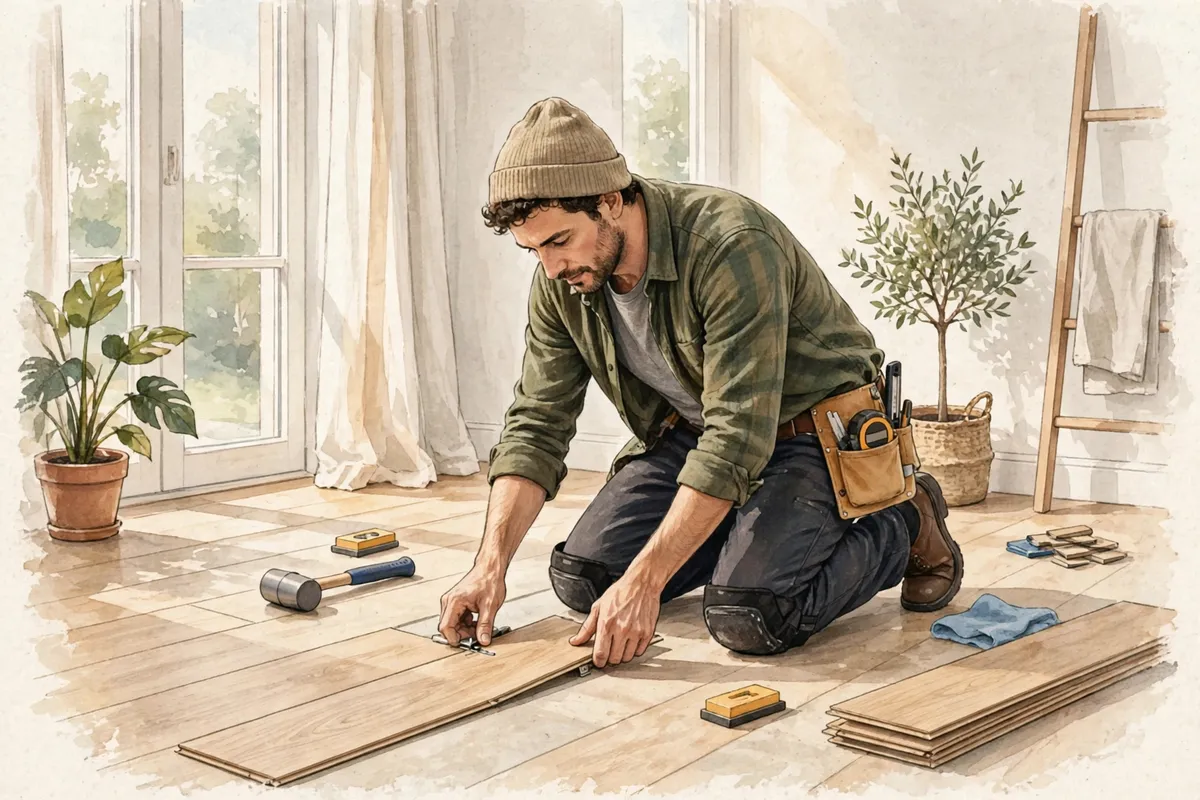
Hardwood is the one floor that can raise what a buyer will pay for a house, and it is also the one floor where a careless quote can be off by thousands. The boards themselves are only half the job. Species, plank width, solid versus engineered construction, and whether the floor is finished in your living room or in a factory all move the price — and in Canada, winter humidity and concrete basements narrow the choices before you ever look at a sample.
Start with the numbers, and with an honest warning about where they come from. There is no single Canadian national price series for hardwood installation, so the Canadian ranges below are estimates built from verified American figures converted at 1.40 Canadian dollars per US dollar, then checked against published Toronto-area contractor pricing. Angi's September 2026 guide, based on 10,984 verified projects, puts the American average at $4,723 US per job, with most homeowners paying $2,469 to $7,034 US, and $6 to $12 US per square foot installed for standard work, rising to $13 to $25 US for premium species and complex layouts. HomeAdvisor publishes a wider $6 to $25 US per square foot, and HomeGuide's 2026 guide puts installed hardwood at $9 to $25 US, splitting solid hardwood at $11 to $25 US and engineered at $9 to $20 US. Converted at 1.40, that is roughly $8 to $35 Canadian per square foot — a spread so wide it is useless without the species breakdown, which is where the Toronto cross-check earns its keep. GMC Construction's 2026 Toronto guide lists solid hardwood at $9 to $16 Canadian installed and engineered at $8 to $14 Canadian, while Parqueteam Hardwood Flooring in Toronto lists solid at $10 to $18 Canadian and engineered at $7.49 to $15.49 Canadian. The Canadian market sits at the low-to-middle end of the converted American range because labour is cheaper here than in coastal American cities, and because red oak and maple — the value species — dominate Canadian sales. A realistic Canadian planning range is $8 to $17 per square foot installed for ordinary rooms, $4,000 to $8,500 for a 500-square-foot living area, with wide-plank white oak, walnut, herringbone, and site finishing pushing past $20.
Species is the first decision and the biggest price lever. Red oak is the workhorse: Fixr's cost guide puts red oak boards alone at about $3 to $5.75 US per square foot, and installed red oak is the floor that lands near the bottom of every range. Maple costs a little more and wears harder, which is why it shows up in busy family rooms. White oak has become the default premium pick — warmer than red oak, takes stain evenly, and costs roughly 20 to 30 percent more than red oak installed. Walnut and hickory sit at the top, and anything wider than five inches adds money twice: the boards cost more, and the installer charges more because wide planks are harder to keep flat.
The second decision is solid versus engineered, and in Canada it is really a climate decision. Solid hardwood is a single piece of wood, three-quarters of an inch thick, nailed to a wood subfloor on or above grade. It can be sanded and refinished five to ten times over a 50- to 100-year life, which is the strongest argument for it. But it cannot go over concrete, it dislikes radiant heat, and it moves with humidity. Engineered hardwood is a thin layer of real wood over plywood layers; Angi puts it 10 to 20 percent cheaper installed than solid, and it handles humidity swings, concrete slabs, and in-floor heating far better. For a basement, a condo, or any room over a slab, engineered is not the budget compromise — it is the correct product. For a main floor over a wood subfloor in a house with stable humidity, solid is the longer-lived one.
Finish is the third fork. Prefinished planks arrive with a factory finish, install in a day or two, and can be walked on the same evening; the trade-off is a small bevel between boards that you can see and feel. Site-finished floors are sanded, stained, and sealed in your home, giving a seamless surface and any stain colour you want, but Angi prices the finishing alone at $2 to $7 US per square foot, and the house is out of commission for days while coats cure. A matte or satin finish hides scratches and pet claw marks better than high gloss, which matters more than most buyers expect in the first year.
Before you sign anything, get the quote broken into lines: material, labour, underlayment, removal of the old floor, subfloor levelling, stairs, vents, and transitions. Angi's own guide warns to budget $900 to $3,000 US for subfloor repairs that only appear once the old floor comes up, so ask how the contractor prices that discovery. Confirm the acclimation plan — planks should sit in your home for several days before installation — and keep indoor humidity near 35 to 45 percent in winter, or gaps will open by February. If your old floor is hiding hardwood underneath, read our guide "Hardwood Floor Refinishing Cost in Canada" first: refinishing at a fraction of new-installation cost may give you the same floor. And if the rooms below grade are part of the project, compare "Vinyl Plank Flooring Installation Cost in Canada" and "Laminate Flooring Installation Cost in Canada" before committing, since both handle concrete better than solid wood. Run the numbers for your own square footage in the RepairPrice home calculator (home-calculator.php) before you take the first quote.
Common questions:
How much does it cost to install hardwood floors in Canada? For a standard installation, budget roughly $8 to $17 Canadian per square foot installed, or $4,000 to $8,500 for a 500-square-foot living area. Angi's 2026 American data converts to a wider band, but Toronto contractor guides from GMC Construction and Parqueteam cluster at $9 to $18 Canadian for solid hardwood, which is the range most Canadian quotes will land in.
Is engineered hardwood cheaper than solid hardwood? Yes, by about 10 to 20 percent installed, according to Angi's 2026 figures — roughly $9 to $20 US per square foot for engineered versus $11 to $25 US for solid. Engineered is also the only sensible choice over concrete slabs, in basements, and over radiant heat.
Is it cheaper to refinish or replace hardwood floors? Refinishing is dramatically cheaper: HomeAdvisor, Bob Vila, and NerdWallet all publish $3 to $8 US per square foot for a full sand and refinish, against $6 to $25 US for new installation. If the boards are structurally sound, refinishing costs roughly a third to a half of replacement.
Can hardwood be installed in a basement? Solid hardwood cannot — it needs a wood subfloor above grade and hates moisture. Engineered hardwood can go over concrete with the right underlayment and moisture check, but in a basement with any damp history, vinyl plank is the safer spend.
| Option | Typical range (CAD) | Notes |
|---|---|---|
| Installed, per sq ft | $8–$17 | Material $5–$12, labour $3–$6 (Angi 2026, converted at 1.40) |
| Red oak / maple | $8–$12 | Common, durable; boards $3–$5.75 US (Fixr) |
| White oak / walnut / wide plank | $12–$20 | Premium look; wide plank adds labour |
| Engineered hardwood | $8–$14 | 10–20% cheaper than solid (Angi); best over concrete |
| 500 sq ft living area | $4,000–$8,500 | Before removal and levelling |
| Stairs, per step | $50–$150 | Nosings, labour intensive |


 RepairPrice
