
Gutter Guard Installation Cost in Canada
By Oleksandr Potapenko · 2026-11-16 · How we research prices
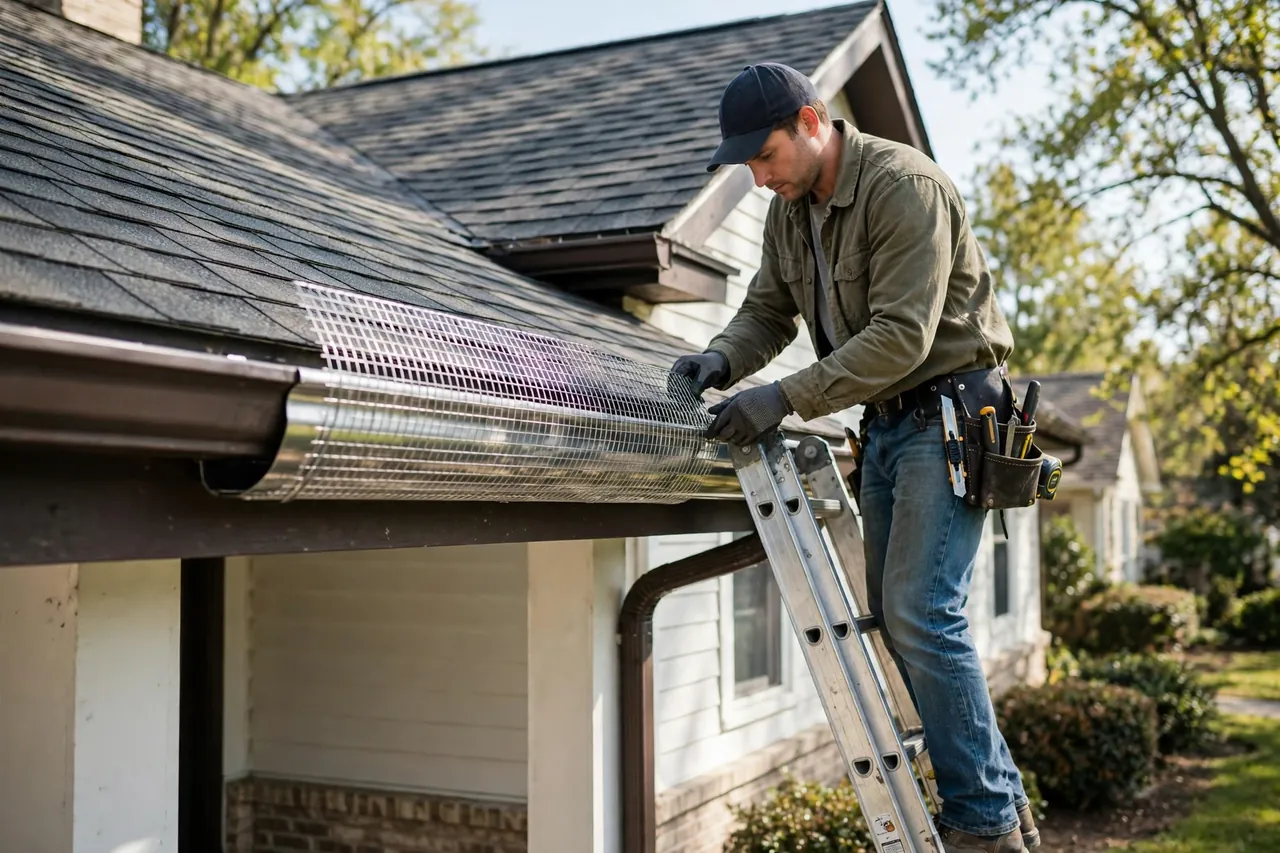
Gutter guards promise the end of the ladder. A cover, screen or mesh sits over your eavestrough, lets rain through, keeps leaves out, and means you never have to scoop wet leaves out of a gutter again. The promise is real, and it is also oversold. Guards reduce cleaning. They rarely eliminate it. The wrong guard on the wrong roof can make things worse, and the most expensive guard on the market costs more than the gutters it protects. The honest question is not whether gutter guards work. It is which guard works on your roof, in your climate, with your trees, and whether the price is worth the ladder time it saves.
HomeAdvisor, in its 2026 gutter guard data, puts professionally installed guards at $6 to $13 per linear foot, materials and labour included, with an average of about $9 per foot. HomeGuide, in its 2026 gutter guard guide, prices material alone at $0.50 to $10 or more per linear foot, with labour at $3 to $20 or more per foot, and micro-mesh material at $2 to $5 per foot before installation. The two agree on the shape of the bill and disagree on the total, because HomeAdvisor prices the typical local installer and HomeGuide prices the full range from a DIY screen to a premium installed system. The premium end is where the disagreement gets loud. This Old House, in its 2025 survey of 1,000 gutter guard owners, found professional installation averaging $21.67 to $25.84 per linear foot, and priced LeafFilter, the best-known premium brand, at $41.72 per linear foot in 2026, with LeafGuard at $39.59. HomeGuide puts LeafFilter at $18 to $45 per linear foot installed, or $3,600 to $9,000 for a 200-linear-foot home, with a lifetime transferable warranty. The gap between $9 a foot and $42 a foot is not a rounding error. It is the difference between a local installer fitting a micro-mesh guard and a national brand selling a premium system with a lifetime warranty and a sales appointment. Converted at roughly 1.40, HomeAdvisor's typical band becomes about $8 to $18 per linear foot in Canadian dollars, while a premium LeafFilter-style system converts to roughly $25 to $63 per foot. Canadian local pricing sits with the lower band: Clear Ottawa prices Ottawa professional installation at $7 to $12 per linear foot, with micro-mesh and reverse-curve systems higher, and EavesArmour prices a full micro-mesh installation in Ontario at $1,500 to $4,500 for a typical home, or $3 to $8 per foot in incremental labour when guards are added during a gutter replacement. The honest 2026 Canadian planning range is $8 to $20 per linear foot installed for a quality micro-mesh system from a local installer, or $1,200 to $4,000 for a typical house, with premium national brands at two to four times that. There is no single Canadian national price series for gutter guards, so these are estimates from named US and Canadian guides.
The guard types are genuinely different products, and the type matters more than the brand. A plastic or metal screen is the cheapest guard, at $0.40 to $1 per foot for material according to HomeAdvisor, and it keeps out large leaves while letting pine needles, seeds and shingle grit straight through. A mesh or micro-mesh guard is a fine stainless steel screen, often 275-micron surgical-grade mesh on a premium system like LeafFilter, that blocks even small debris: HomeGuide prices micro-mesh material at $2 to $5 per foot, and it is the type most Canadian guides recommend for homes under trees. A reverse-curve, or surface-tension, guard is a solid cover with a curved lip that pulls water around the edge and into the trough while leaves fall past. It sheds leaves well, but in a hard downpour water can overshoot the lip entirely, and the solid top can become a ledge for ice in winter. Foam inserts sit inside the trough and let water through while blocking debris, but they hold moisture, grow mould, and are generally the weakest long-term choice in Canada. Brush guards are bristles that sit in the trough and catch leaves on top, but they become debris catchers themselves and need regular cleaning. For most Canadian homes, micro-mesh is the right answer: it handles the small debris that actually clogs gutters, it tolerates freeze-thaw better than plastic, and it does not create a solid shelf for ice the way a reverse-curve cover can.
Winter is where Canadian gutter guards earn their reputation, good and bad. True North Eaves, a Canadian guide, is blunt: guards do not cause ice dams, because ice dams form when heat escapes through the roof and melts snow from below, and a properly installed guard does not change that heat-loss dynamic. But a poorly fitted guard that holds standing water at the trough edge can contribute at the margins, and a solid-top reverse-curve cover can become a ledge for ice to build on. Custom Contracting, an Ontario contractor, makes the same point: guards do not melt ice dams, and the wrong product can trap snow and ice if your roof already has insulation or ventilation problems. The practical rule is to fix the attic first and buy the guard second. If your roof already dams, read Ice Dam Removal and Prevention Cost in Canada before you spend a dollar on guards, because attic air sealing and insulation to R-50 is the cure and a guard is not. On a well-insulated, well-ventilated roof, a micro-mesh guard is a winter non-issue. On a roof that dams every February, any guard will be blamed for a problem it did not cause.
The payback math is simple and it is the decision rule. A professional gutter cleaning costs $150 to $300, and most Canadian homes need it twice a year, so the annual cleaning bill is $300 to $600. A micro-mesh guard installation at $1,200 to $4,000 pays for itself in roughly 4 to 8 years of avoided cleanings, and that is before counting the avoided ladder falls, the avoided fascia rot from overflowing troughs, and the avoided basement water from a clogged downspout. A premium national-brand system at $5,000 to $9,000 takes 10 to 20 years to pay back on cleaning alone, which is why the lifetime warranty matters so much on those systems: you are buying the warranty as much as the mesh. Guards are worth it most for homes under heavy tree cover, for tall or steep roofs where cleaning is genuinely dangerous, and for owners who can no longer safely climb a ladder. They are not worth it for a single-storey house with no overhanging trees, where a $200 cleaning twice a year is cheaper than any guard. And they are never maintenance-free: even the best micro-mesh needs an annual brush-off and an inspection, because shingle grit and pollen film build up on the mesh and slow drainage.
Before you sign, ask four questions. What exact guard type and mesh size is being installed, and is the frame rigid enough to survive freeze-thaw? Does the guard void the warranty on your existing eavestroughs or your roof, because some guards that lift shingles do? Is the price per linear foot all-in, including the downspout covers and the disposal of nothing, since no old material is removed? And what does the warranty actually cover: a lifetime clog warranty that repairs or replaces the system if it clogs is worth far more than a materials-only warranty. If you are replacing the eavestroughs anyway, read Eavestrough / Gutter Installation Cost in Canada first, because guards added during a replacement cost $3 to $8 per foot in incremental labour versus $12 to $18 as a separate visit, according to EavesArmour. Compare the quotes with the RepairPrice home calculator at home-calculator.php, and get the quote in writing with the guard type named, because a quote that says gutter guards without naming the type is a quote for the cheapest screen on the shelf.
Common questions:
Are gutter guards worth it? For most homes under trees, yes: a quality micro-mesh system at $8 to $20 per linear foot installed pays for itself in roughly 4 to 8 years of avoided cleanings at $150 to $300 each, twice a year. For a single-storey house with no overhanging trees, twice-yearly cleaning is cheaper than any guard.
Do gutter guards cause ice dams? Not on their own. Ice dams are caused by heat escaping through the roof, and a properly installed guard does not change that, according to True North Eaves and Custom Contracting. A poorly fitted guard or a solid-top reverse-curve cover can trap snow and ice at the eave, so fix attic insulation and ventilation first.
How much do gutter guards cost in Canada? HomeAdvisor puts typical US professional installation at $6 to $13 per linear foot, and Clear Ottawa prices Ottawa at $7 to $12 per foot. Budget roughly $8 to $20 per foot installed for a quality micro-mesh system in Canada, or $1,200 to $4,000 for a typical house, with premium national brands at two to four times that.
Do gutter guards eliminate cleaning completely? No. They reduce cleaning from twice a year to an annual brush-off and inspection. Shingle grit, pollen and fine debris still build up on the mesh, and downspouts still need checking. Any guard sold as maintenance-free is oversold.
| Item | Typical range (CAD) | Notes |
|---|---|---|
| Micro-mesh, installed per linear foot | $8–$20 | Best for Canadian winters; small debris blocked |
| Screen / mesh, installed per linear foot | $6–$13 | Typical local installer (HomeAdvisor) |
| Foam / brush inserts, per linear foot | $3–$8 | Weakest long-term choice in Canada |
| Reverse-curve, installed per linear foot | $10–$25 | Sheds leaves; can overshoot in heavy rain, ice ledge risk |
| LeafFilter premium, installed per linear foot | $25–$63 | HomeGuide $18–$45 US; lifetime transferable warranty |
| Typical house, micro-mesh total | $1,200–$4,000 | 150–200 ft, installed |
| Gutter cleaning (without guards) | $150–$300 | Twice a year: spring and after leaf fall |

 RepairPrice
