
What Your Car's Symptoms Are Telling You
By Oleksandr Potapenko · 2026-11-16 · How we research prices
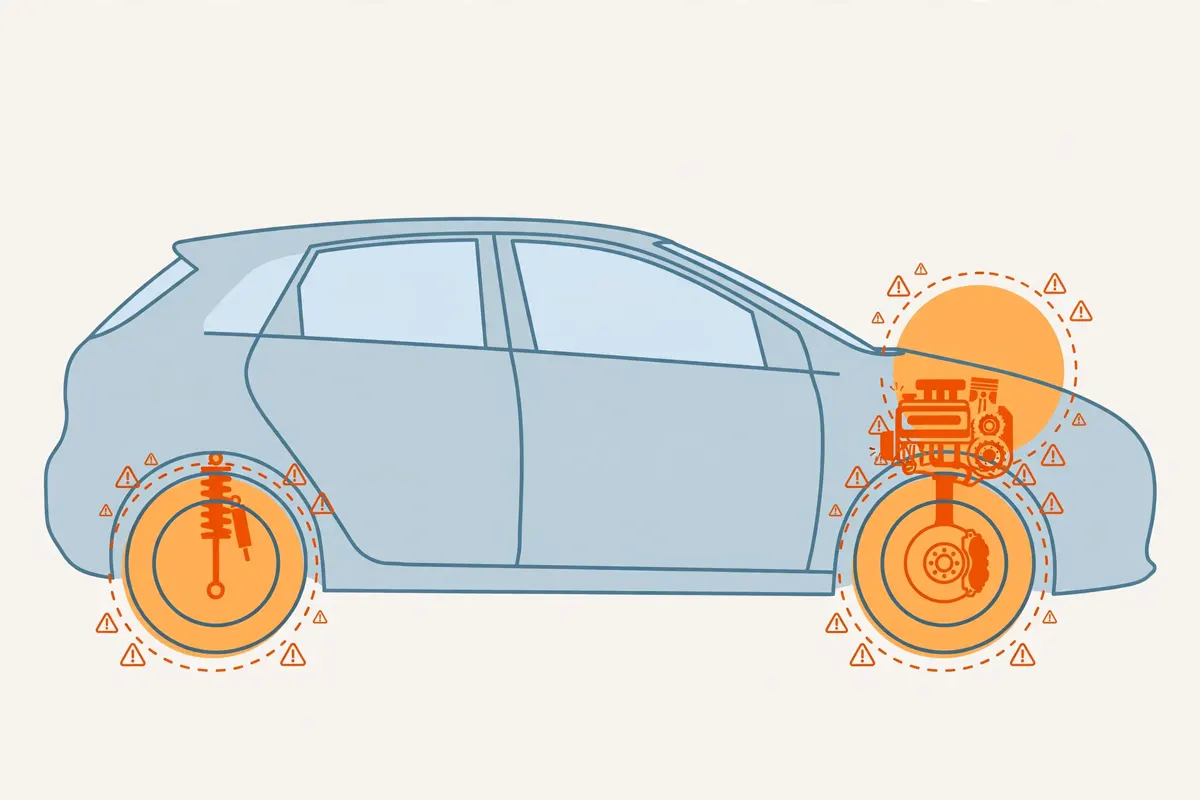
Your car talks to you in symptoms, and most of them are not mysterious once you know the vocabulary. A squeal, a smell, a vibration, a light: each one points at a system, and each one carries a clock. The skill is not memorising every noise. It is sorting the three that mean stop driving now from the twenty that mean book a shop this week, and knowing which cheap fix becomes an expensive one if you wait. This guide is that sorting system, built from the failure patterns that show up most often in real repair data.
Start with the red flags, because they are the only symptoms that outrank everything else. A red oil pressure light, a red temperature light, exhaust fumes inside the cabin, a brake pedal that sinks to the floor, or steering that suddenly goes heavy or loose: stop driving. A red oil light does not mean the oil is a little low; it means oil pressure has dropped to a level where the engine is damaging itself with every revolution, and CarMD's repair data shows what happens when drivers keep going — engine damage that runs into the thousands. Exhaust fumes in the cabin mean a leak upstream of the tailpipe and a carbon monoxide risk you cannot smell your way out of; open a window, pull over, and call for a tow. Everything else in this guide can wait for an appointment. These five cannot.
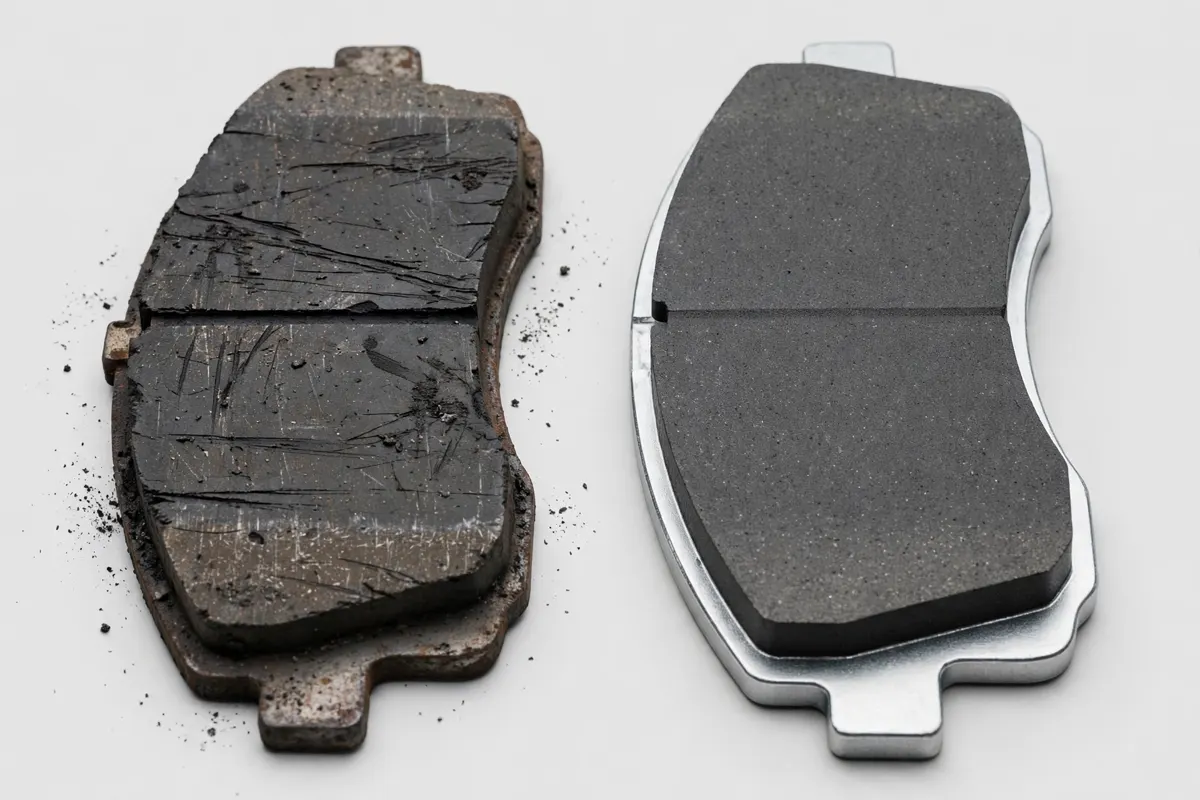
Sounds are the richest diagnostic language a car has. A squeal when you brake usually means the wear indicators on the brake pads are touching the rotor, which is the car telling you the pads are nearly gone; a grinding noise means the pads are gone and metal is cutting into the rotor, and every stop now costs you rotors as well as pads. A clicking noise when you turn, especially a rhythmic click that gets faster as you accelerate through a corner, points at a worn CV joint on a front-wheel-drive car; it will not strand you tomorrow, but a CV joint that finally breaks leaves you with no drive to that wheel at all. A knocking or clunking sound over bumps usually comes from the suspension — worn control arm bushings or sway bar links — and while it sounds alarming, the usual RepairPal-scale bill is a few hundred dollars, not a few thousand. A squeal on a cold start that fades as the engine warms up is most often a worn drive belt or a tired belt tensioner, and a belt that snaps can take the alternator, the power steering, and on some cars the water pump with it.
Smells narrow things down faster than sounds do. A sweet smell, especially with foggy windows and a greasy film on the inside of the windshield, means coolant is leaking into the heater core, and that is a repair to book soon, not because the car will stop, but because coolant loss leads to overheating. A rotten-egg smell is the signature of a catalytic converter that is failing or being poisoned by a misfire; CarMD's 2026 Vehicle Health Index puts converter replacement at an average of $1,511 USD, which is why a sulphur smell plus a check engine light deserves a diagnostic the same week. A burning-oil smell after parking often means oil dripping onto the exhaust manifold from a valve cover gasket, which is messy and smelly long before it is dangerous. And the smell of raw fuel is the one smell to treat as an emergency: a fuel leak near a hot engine is a fire risk, so do not keep driving to see if it goes away.
Feels matter too. A vibration in the steering wheel at highway speed usually means a wheel is out of balance or a tire is damaged, and it is cheap to check; a vibration under braking usually means warped rotors. A car that pulls to one side can mean uneven tire pressure, which costs nothing to check, or a sticking brake caliper or worn suspension, which does not. A clutch pedal that engages right at the floor, a transmission that slips or bangs into gear, or an engine that hesitates when you press the accelerator are all symptoms where the diagnostic matters more than the guess: transmission work is the most expensive guessing game in car repair, and a $100 to $180 CAD diagnostic at an independent shop is cheap insurance against a $3,000 rebuild that was actually a $200 sensor.
The decision rule for every symptom is the same three questions. First, is it a red flag — oil pressure, temperature, fumes, brakes, steering? If yes, stop. Second, is it getting worse quickly? A noise that appeared yesterday and is louder today is a different problem from a noise that has been stable for six months. Third, what does waiting cost? Brake pads at $175 to $375 CAD per axle become pads plus rotors at $320 to $595; a $287 oxygen sensor ignored becomes a $1,511 catalytic converter; a $135 ignition coil ignored becomes a misfire that fills the converter with raw fuel. The pattern in CarMD's data is consistent: the average check engine repair hit a record $554 USD in 2025 precisely because small faults were left to grow. When you do book, describe the symptom the way this guide describes it — when it happens, whether it is hot or cold, whether it changes with speed or steering — because a good description can cut diagnostic time in half. And run the numbers through the RepairPrice calculator (calculator.php) before you authorise the repair, so you know whether the quote belongs to the right price band. For the light on your dashboard specifically, read our guide My Check Engine Light Is On — How Much Will the Diagnostic Cost?, and if the car will not start at all, read Car Won't Start: Battery, Starter, or Alternator?
Common questions:
Q: My car makes a noise but drives fine. Can I ignore it? A: Only if you know what it is. A squealing belt and a grinding brake sound the same to an untrained ear and cost very different amounts. A noise that is new, louder, or tied to braking, steering, or the engine deserves a look within the week.
Q: What symptom means I should stop driving immediately? A: A red oil pressure or temperature light, exhaust fumes in the cabin, a brake pedal that sinks to the floor, or steering that suddenly changes feel. Pull over safely and call for a tow; driving on makes the repair dramatically more expensive.
Q: Why does my car smell like rotten eggs? A: Usually a catalytic converter problem or an engine misfire sending unburned fuel into the converter. CarMD puts converter replacement at an average of $1,511 USD, so get a diagnostic promptly rather than waiting for the check engine light to start flashing.
Q: Is a diagnostic worth paying for if I already suspect the problem? A: Yes, when the repair is expensive or the symptom could come from several systems. A $100 to $180 CAD diagnosis that confirms a $200 sensor beats a $3,000 transmission rebuild ordered on a guess.
| Symptom | Likely system | Urgency |
|---|---|---|
| Squeal when braking | Brake pads worn | Soon |
| Grinding when braking | Pads gone, metal on metal | Stop driving, check now |
| Clicking when turning | CV joint | Soon |
| Knocking over bumps | Suspension — control arms, sway links | Soon |
| Squeal on cold start | Drive belt | Soon |
| Sweet smell + foggy windows | Coolant leak into the heater | Soon |
| Rotten egg smell | Catalytic converter (CarMD avg $1,511 USD) | Diagnose |
| Exhaust fumes in the cabin | Exhaust leak, carbon monoxide risk | Stop driving now |
| Red oil or temperature light | Oil pressure or overheating | Pull over now |


 RepairPrice
