
Sump Pump Installation and Replacement Cost in Canada
By Oleksandr Potapenko · 2026-11-16 · How we research prices
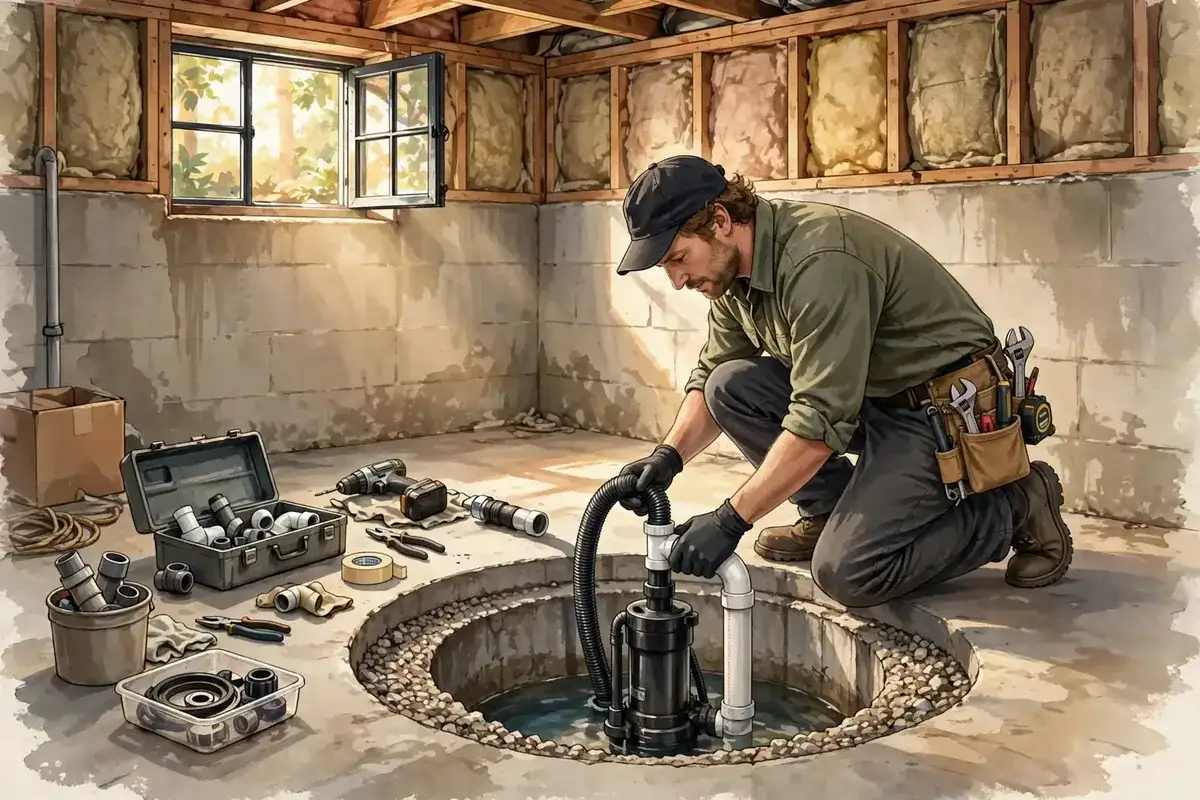
A sump pump is the cheapest flood insurance a basement can have, and also the component most likely to fail on the one night it matters. HomeAdvisor puts sump pump installation at 800 to 2,500 USD installed, with the pump unit itself at 150 to 800 USD. Angi reports a national average of about 1,100 USD, with most installs between 800 and 1,500 USD, while HomeGuide puts the average at about 1,600 USD in a 600 to 2,500 USD range. This Old House, using Fixr and Angi data, puts the average professional install at about 1,400 USD, with most homeowners paying 500 to 4,000 USD. Converted at 1.39, the typical installed system lands around 830 to 3,475 CAD, averaging roughly 1,500 to 2,200 CAD. A straight pump swap in an existing pit is much cheaper: 350 to 1,000 USD, or about 490 to 1,390 CAD. There is no Canadian national series for sump pumps, so these converted US figures are checked against Canadian realities: a new pit cut through a concrete floor is the expensive part everywhere, and Canadian basements with deep footings and frost-depth discharge lines run toward the high end of the range.
The job splits into two projects with different prices, and confusing them is how quotes get misread. Replacing a pump in an existing pit is a half-day job: pull the old pump, drop in the new one, reconnect the discharge and the check valve, test the float switch. HomeGuide puts a direct replacement at 400 to 700 USD, and HomeAdvisor's broader replacement data runs 645 to 2,120 USD, averaging about 1,362 USD, because it includes jobs with discharge or electrical changes. Creating a system where none exists is a construction job: cutting the concrete floor, digging the pit, installing the basin and the pump, running the discharge line outside, and adding a dedicated circuit. That is where the 2,500 to 5,000 CAD figures come from, and where cutting through a concrete slab alone can run 2,500 to 5,000 USD, according to HomeGuide. Ask which of the two jobs your quote is for before you compare it to anyone else's.
The pump itself is a small set of choices with large consequences. A pedestal pump sits above the pit with the motor out of the water: it is cheaper, 150 to 400 USD, louder, and easier to service. A submersible pump sits in the pit: quieter, more powerful, and more expensive. Horsepower runs 1/3 to 3/4 HP for most homes, and the difference is how much water the pump moves and how high it lifts it. Cast iron construction lasts longer than thermoplastic and handles the grit that kills cheaper pumps. The float switch is the part that fails most often, and it is the part worth spending on: a vertical float or a diaphragm switch is more reliable than a tethered float that can snag on the pit wall. A pump's life is 7 to 10 years on average, and the honest replacement schedule is to replace it before it fails, not after the basement floods.
The battery backup is not an accessory. It is the system. Sump pumps fail most often during the storm that knocks the power out, which is exactly when the water is coming in. A battery backup adds 300 to 700 USD to a basic install, or 600 to 2,000 USD for a complete installed system, according to HomeGuide and Angi, with Angi averaging about 900 USD. The battery itself needs replacing every three to five years at 100 to 200 USD. A water-powered backup, which runs on municipal water pressure and needs no battery, costs 400 to 800 USD for the unit and 1,200 to 2,500 USD installed, and it is worth considering in a house with reliable municipal pressure and no well. Either way, add a water alarm: a 25 to 30 USD sensor that screams when the water rises is the cheapest early warning in the house. Our guide Backwater Valve Installation Cost in Canada covers the other half of basement flood protection, and Frozen Pipes: Prevention and Repair Cost in Canada covers the winter failure that fills the same pit. Price the combination in the RepairPrice home calculator (home-calculator.php).
The decision rule is about timing, not price. Test the pump every spring and every fall: pour a bucket of water into the pit and watch it pump out and shut off. If it runs constantly, the check valve may have failed and the water is running back into the pit. If it does not run, check the outlet, the float, and the breaker before you call anyone. Replace a pump that is over eight years old, that has already been repaired once, or that cannot keep up in a heavy rain. And never let a contractor talk you out of the backup to save money on the quote: the backup is the part of the system that works when nothing else does.
Common questions:
Q: How much does it cost to install a sump pump in Canada?
A: A typical installed system runs about 830 to 3,475 CAD, averaging roughly 1,500 to 2,200 CAD, based on HomeAdvisor, Angi, and HomeGuide figures converted at 1.39. A straight pump swap in an existing pit costs about 490 to 1,390 CAD.
Q: How much does a battery backup sump pump cost?
A: The backup unit adds 400 to 1,000 CAD to a basic install, or 830 to 2,800 CAD for a complete installed system. The battery needs replacing every three to five years at 100 to 200 CAD.
Q: How long does a sump pump last?
A: Seven to ten years on average, with the float switch usually failing first. Replace it before it fails: a pump that dies during a storm is discovered by the water on the floor.
Q: Do I need a sump pump if my basement has never flooded?
A: If the house has a pit, yes, keep a working pump in it. If there is no pit and no history of water, a pump is not urgent, but a backwater valve and good grading matter more. See our guide on backwater valves for the other half of the protection.
| Job | Typical range (CAD) | Notes |
|---|---|---|
| Pump replacement (existing pit) | 500–1,200 | Pump 200–600 CAD plus labour |
| New pit + system install | 2,500–6,000 | Floor cutting, pit, discharge, power |
| Battery backup add-on | 600–1,500 | Protects against storm outages |
| Discharge line reroute / freeze fix | 300–900 | Slope, burial, freeze-resistant outlet |


 RepairPrice
