
Oil Pressure Warning Light: Causes and Repair Cost
By Oleksandr Potapenko · 2026-11-16 · How we research prices
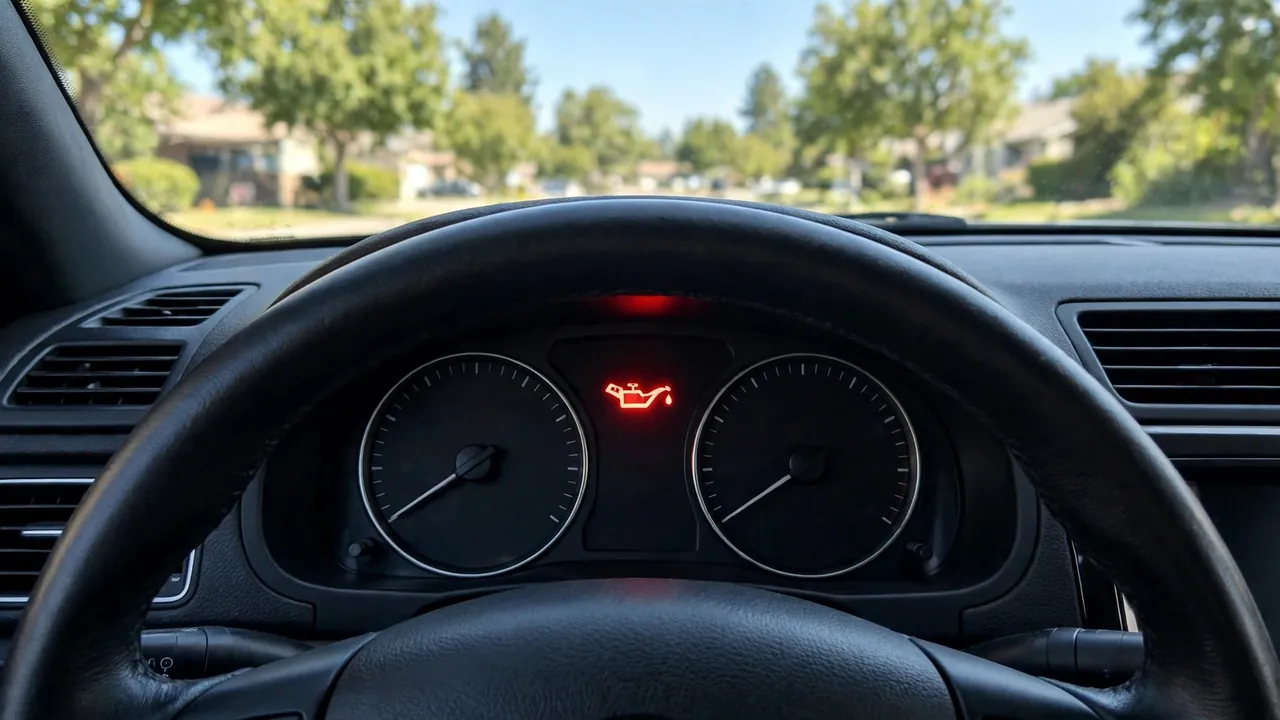
Pull over. Switch the engine off. Do not restart it. That is the entire first paragraph of this guide, and it is the only correct response to a red oil can on the dashboard. The light is not a polite suggestion and it is not a service reminder. It means oil pressure has dropped below the level the engine needs to protect its bearings, and unlike the yellow check-engine light, this one means stop the engine as soon as it is safe to do so. Driving even a few more kilometres with no oil pressure can score bearings and turn a small repair into a dead engine. Pull over, switch off, and check the dipstick before you do anything else. If the engine is making knocking or rattling noises, do not restart it at all. Call for a tow.
The light monitors pressure, not level, and that distinction matters, because the two have different causes. The light activates when oil pressure drops below a critical threshold, typically 5 to 7 psi, while normal pressure is roughly 10 to 15 psi at idle and 30 to 60 psi at 2,000 rpm. The causes range from trivial to terminal. The most common is simply low oil: a leak or consumption has dropped the level below the pickup tube, so the pump sucks air. Next is the oil pressure sensor itself, which can fail and trigger a false alarm. A clogged oil pickup screen, the wrong viscosity oil in a cold snap, or a failing pump can all drop real pressure, and worn main bearings on a high-kilometre engine let pressure bleed away internally no matter how much oil is in the sump. A clogged oil filter forces oil through the bypass valve, sending unfiltered oil through the engine. A large share of oil pressure complaints turn out to be a failed sensor or wiring fault, not a mechanical disaster, but you cannot assume that from the driver's seat. The only way to know is a mechanical gauge.
What you do in the first ten minutes matters more than anything a shop does later. Check the oil level on a level surface after the engine has sat for a few minutes. If it is below the minimum mark, top it up with the correct grade and see whether the light goes out at idle. If it does not, shut it off and call for a tow. Note when the light appears, because the pattern is diagnostic: only at hot idle points toward worn bearings or a weak pump, while a light that stays on from a cold start points toward the sensor, the pickup, or a serious internal fault. A light that flickers mostly at hot idle, or appears during hard braking or turns, often means the level is low enough to uncover the pickup. Tell the shop exactly what you saw; that detail shapes the whole diagnosis. The codes help too: P0520 to P0524 point directly at the oil pressure sensor or circuit, and a scan tool will show them. The leak and consumption paths are covered in Engine Oil Leaks: Gasket Repair Costs in Canada and High Oil Consumption: Causes and Repair Cost in Canada, because low oil is usually a leak or consumption problem before it is a pressure problem.
A shop will start with a diagnostic scan at $95 to $130 and a mechanical pressure gauge screwed in where the sensor sits, which separates a lying sensor from genuinely low pressure. The gauge test is the step that must not be skipped, and a shop that replaces the sensor without it is guessing. If the sensor is the problem, the bill stays small. Castrol puts sensor replacement at $198 to $251 US, RepairPal's national estimate is $207 to $261 US, and EngineerFix puts it at $130 to $370 US; converted at 1.43 Canadian dollars per US dollar, RepairPal's band is roughly $295 to $375 Canadian, and Canadian shops typically land at $200 to $300 with lower labour rates. If the level was simply low, a conventional oil change at $80 to $120 or a full synthetic change at $100 to $150 puts fresh oil in and resets the clock. An oil pump replacement is the middle step: EngineerFix puts it at $390 to $1,600 US, RepairPal's model pages put a Chevrolet Equinox at $609 to $788 US and a Silverado 1500 HD at $1,147 to $1,629 US, and Castrol puts it at $400 to more than $2,000 US depending on the vehicle. If pressure is genuinely low inside the engine, the repair climbs fast. A major engine rebuild runs $3,875 to $6,750 in Canada, and EngineerFix puts a rebuild at $3,500 to $6,000 US for worn bearings. That is why the light deserves an immediate stop rather than a hope that it goes away on its own. Check the oil every second fuel fill, use the correct viscosity, and treat this light the way you would a fire alarm. The RepairPrice calculator (calculator.php) will price the sensor or pump job for your exact car once the gauge test says which one you need.
Common questions:
Q: What does the oil pressure warning light mean? A: It means oil pressure has dropped below a safe threshold, typically 5 to 7 psi, while normal pressure is 10 to 15 psi at idle and 30 to 60 psi at 2,000 rpm. Stop the engine as soon as it is safe to do so.
Q: Can I drive with the oil pressure light on? A: No. Driving even a few more kilometres with no oil pressure can score bearings and destroy the engine. Pull over, switch off, check the dipstick, and call for a tow if the light does not go out.
Q: How much does it cost to fix an oil pressure warning light? A: It depends on the cause. A top-up costs almost nothing. A sensor replacement runs $200 to $300 in Canada (RepairPal: $207 to $261 US; Castrol: $198 to $251 US). An oil pump replacement runs $390 to $1,600 US according to EngineerFix, and more on trucks. Worn bearings mean an engine rebuild at $3,875 to $6,750 in Canada.
Q: Why does my oil pressure light flicker at idle? A: A flicker at hot idle usually means marginal pressure: low oil level, worn bearings, a weak pump, or a clogged pickup screen. A flicker with the engine sounding normal can also be a failing sensor, which a mechanical gauge test will confirm.
| Service | Typical range (CAD) | Notes |
|---|---|---|
| Diagnostic scan + gauge test | $95–$130 | Separates a lying sensor from real low pressure |
| Oil pressure sensor replacement | $200–$300 | Best-case outcome — a false alarm |
| Oil change, conventional | $80–$120 | If the level was simply low |
| Oil change, full synthetic | $100–$150 | Required by most cars built in the last decade |
| Oil pump replacement | $390–$1,600 (USD) | Castrol: to $2,000+ on some vehicles |
| Oil pan gasket | $550–$900 | Access to the pickup screen is through the pan |
| Major engine rebuild | $3,875–$6,750 | Genuinely low pressure from worn bearings |


 RepairPrice
