
Kitchen Renovation Cost in Canada
By Oleksandr Potapenko · 2026-11-16 · How we research prices
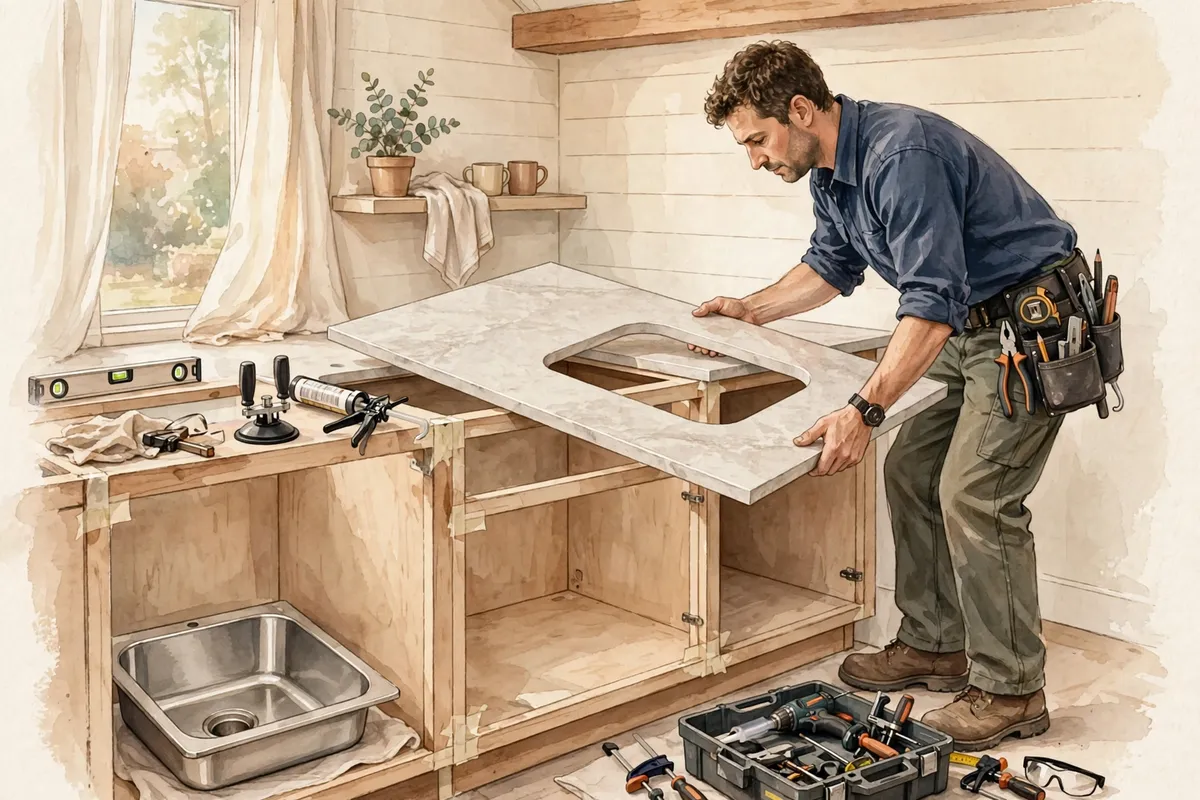
A kitchen renovation is the most expensive single room in most Canadian homes, and it is also the one buyers notice first. That combination is why it gets renovated more than any other room, and why it is also the easiest project to overspend on. The honest starting point is that there is no single official Canadian price for a kitchen renovation. No federal or provincial agency publishes a national kitchen price series, so every Canadian figure below is an estimate built from named Canadian cost guides and cross-checked against American data converted at 1.40 Canadian dollars per US dollar, the rate used throughout this guide.
The Canadian numbers cluster in a fairly tight band once you compare like with like. HomeStars, in its 2026 Canadian price guide, puts a basic kitchen update at $15,000 to $30,000, a mid-range renovation at $30,000 to $60,000, and a high-end kitchen above $80,000, with a reported national mid-range average of about $30,944. RenoQuotes, in its September 2026 guide, lands in almost the same place: a full renovation averaging $35,000 to $45,000 nationally, budget refreshes from $15,000 to $25,000, mid-range work at $30,000 to $55,000, and high-end kitchens from $65,000 up. Muninn, a calculator built by a working Canadian contractor, gives $18,000 to $30,000 for a basic refresh, $30,000 to $55,000 mid-range, $55,000 to $95,000 for a full renovation, and $95,000 to $200,000 or more for a high-end gut job. The three sources disagree at the edges, mostly because they define mid-range differently, but they agree on the middle: budget roughly $30,000 to $55,000 for a proper mid-range Canadian kitchen, and treat anything under $20,000 as a refresh, not a renovation.
The American benchmark tells the same story from a different angle, and it adds the one number Canadian guides rarely publish: what comes back at resale. Remodeling magazine's Cost vs. Value Report 2025, published by Zonda, prices a defined 200-square-foot kitchen with 30 linear feet of cabinets. A minor mid-range remodel cost US$28,458 nationally and was estimated to add US$32,141 in resale value, a 113 percent cost recovery. A major mid-range remodel cost US$82,793 and recovered 51 percent. A major upscale remodel cost US$164,104 and recovered 36 percent. Converted at 1.40, those are roughly $39,800, $115,900, and $229,700 Canadian. The pattern is the lesson: small, disciplined updates pay for themselves far better than full luxury rebuilds. The Appraisal Institute of Canada, cited by RenoQuotes and by CIBC, gives a similar message for Canada, putting kitchen returns at roughly 75 to 100 percent, and it offers a useful budgeting rule: a kitchen budget of 10 to 15 percent of the home's market value keeps the spend in proportion to the house.
Where does the money actually go? HomeStars, citing the National Kitchen and Bath Association, puts cabinetry and hardware at about 29 percent of the budget, making cabinets the largest single line in most jobs. HomeStars puts labour at 30 to 50 percent of the total, cabinet quality at $3,000 to $30,000 or more from stock to custom, countertop material at $20 to $155 per square foot installed, and a full appliance package at $8,000 to $40,000 from standard to professional grade. That spread explains why two kitchens of the same size can cost double each other: a stock-cabinet kitchen with laminate counters and a standard appliance package is a fundamentally different purchase from a custom-cabinet kitchen with stone counters and a professional range.
The single biggest cost decision is whether anything moves. Keeping the sink, stove, and fridge where they are is the cheapest choice you will make in the whole project. Moving a sink means new plumbing and drain work; moving a gas stove means a new gas line; removing a wall means an engineer's assessment and a beam if the wall is load-bearing, plus permits and inspections. HomeStars and RenoQuotes both put Toronto and Vancouver 25 to 40 percent above the national average on trade rates alone, so a mid-range budget that works in Edmonton or Winnipeg will be tight in the GTA. Add 15 to 25 percent for BC and Ontario metro markets, as Muninn advises, before you fall in love with a design.
Then there is the work nobody photographs. Once walls are open, electrical upgrades to current code, including GFCI protection and dedicated circuits, are often required. Older homes hide knob-and-tube wiring, asbestos flooring, or galvanized plumbing that has to go. HomeStars recommends a contingency of 10 to 15 percent of the budget for exactly this, and hidden work commonly adds $5,000 to $20,000 to a quote that looked complete. Permits are required for structural, plumbing, and electrical changes in most municipalities, and in Quebec the contractor must hold an RBQ licence. Order cabinets and appliances early, since lead times of 8 to 12 weeks are common, and plan for weeks without a functioning kitchen.
Buy it like a project, not like a shopping trip. Get three itemized quotes and compare them line by line, never by the bottom number alone, because the cheapest quote is often the one that left out demolition, disposal, or the electrical panel. Ask each contractor what is excluded, who coordinates the trades, how dust is controlled, and what the written schedule and payment milestones are. Price the big decisions separately before you commit: see Kitchen Countertop Replacement Cost in Canada for the countertop math, Kitchen Cabinet Refacing Cost in Canada if your boxes are sound and only the look is dated, and Kitchen Cabinet Painting Cost in Canada for the cheapest real refresh. You can also run your own numbers first with the RepairPrice home calculator (home-calculator.php) to see how scope changes move the total before you invite anyone into your kitchen.
Common questions:
How much does a kitchen renovation cost in Canada in 2026? Most Canadian homeowners spend $30,000 to $55,000 for a mid-range renovation, according to HomeStars and RenoQuotes. A cosmetic refresh runs $15,000 to $25,000, and a high-end or custom kitchen starts around $65,000 and can pass $100,000 in Toronto or Vancouver.
How long does a kitchen renovation take? A minor refresh takes 2 to 4 weeks, a partial renovation 4 to 8 weeks, and a full gut renovation 8 to 14 weeks or more, not counting the 8 to 12 weeks of cabinet and appliance lead time before work starts. Permit approval can add weeks in some cities.
Do I need a permit for a kitchen renovation in Canada? Yes, for structural, plumbing, electrical, or gas work in most municipalities. Painting, replacing a faucet, or swapping cabinet hardware does not need one. Your contractor should confirm the permit list with your city before demolition starts.
Does a kitchen renovation pay for itself? Partly. Remodeling magazine's Cost vs. Value Report 2025 found a minor mid-range remodel recovered 113 percent of its cost nationally, while a major mid-range remodel recovered 51 percent and an upscale one 36 percent. The Appraisal Institute of Canada puts Canadian kitchen returns at roughly 75 to 100 percent. Smaller, well-judged updates return more than luxury rebuilds.
| Renovation level | Typical range (CAD) | What it includes |
|---|---|---|
| Cosmetic refresh | $15,000–$30,000 | Paint, counters, hardware, backsplash |
| Mid-range renovation | $30,000–$55,000 | New cabinets, quartz, appliances, floor |
| High-end renovation | $65,000–$150,000+ | Custom cabinets, stone, layout changes |
| Moving plumbing / walls | $5,000–$20,000 extra | Plumbing, electrical, engineering |
| Contingency allowance | 10–15% of budget | Hidden conditions in older homes |




 RepairPrice
