
Hot Water Recirculation Pump Cost in Canada
By Oleksandr Potapenko · 2026-11-16 · How we research prices
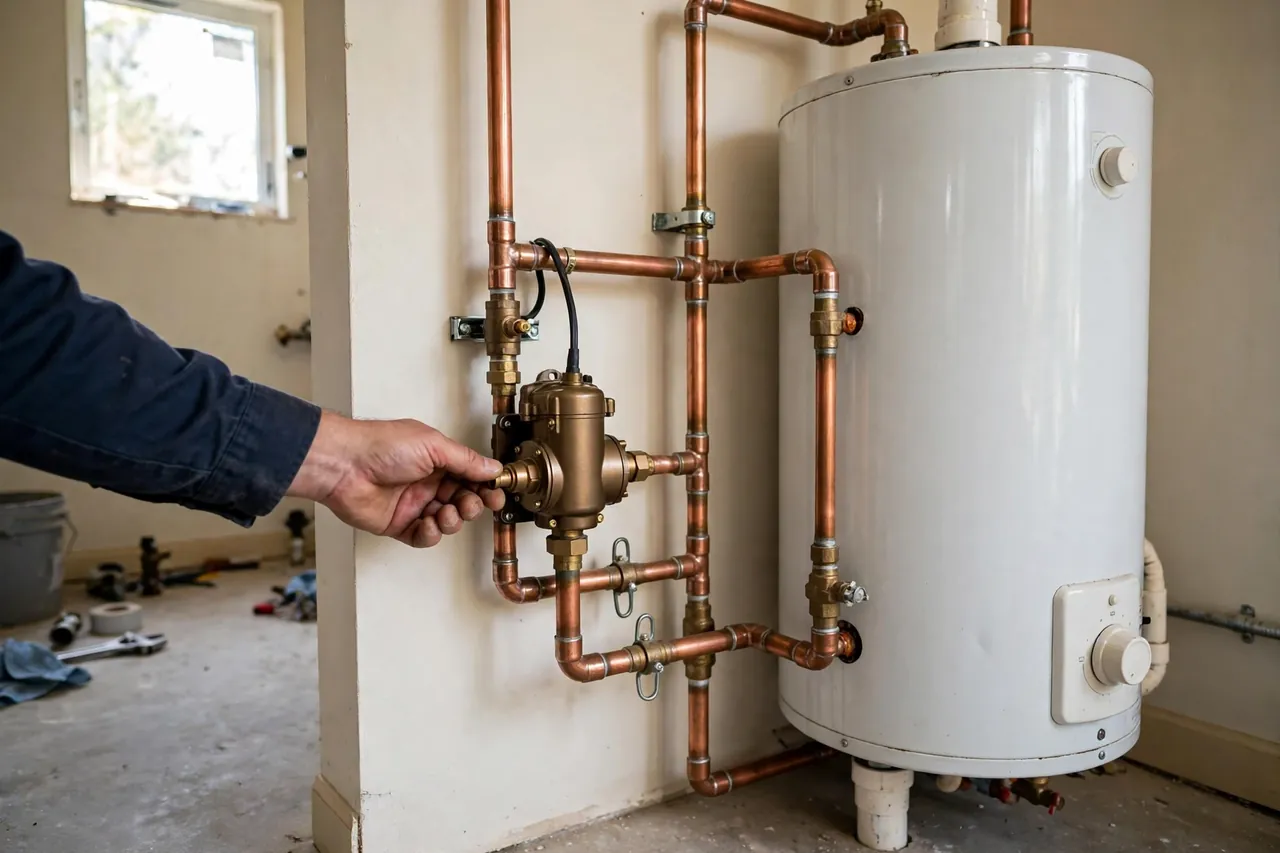
Waiting a minute for hot water is a small daily annoyance with a surprisingly large water bill attached to it. A hot water recirculation pump keeps hot water moving through the pipes so it is at the tap when you turn it on. The cost depends on which of the two systems your house can take. A crossover comfort kit, which uses the cold-water pipe as the return path, costs 200 to 300 USD in parts: about 150 to 220 USD for a Grundfos Comfort, Taco, or Watts pump kit and another 30 to 50 USD for the thermostatic crossover valve under the farthest fixture. Installed, CostToRenovate puts a budget under-sink comfort system at 400 USD, a mid-range system on an existing return line at 550 USD, and a premium demand-controlled system at 600 USD. A dedicated return loop is a different job: 150 to 300 USD if the return line already exists, and 800 to 2,000 USD with labour if a new return line has to be run through finished walls. Converted at 1.39, the crossover retrofit lands around 280 to 1,050 CAD installed, and the new return line around 1,110 to 2,780 CAD. Olson Superior Plumbing, a California plumbing contractor, prices the same two jobs at 300 to 800 USD installed for a crossover valve system and 800 to 2,000 USD or more for a dedicated return line, which converts to about 420 to 1,110 and 1,110 to 2,780 Canadian — the same shape as the CostToRenovate figures above. This Old House, citing Angi, puts a recirculation system more simply at 200 to 400 USD, the low end of the crossover range, for a straightforward install. There is no Canadian national series for recirculation pumps, so these converted US figures are the planning range, checked against the manufacturers' own list prices for Grundfos, Taco, and Watts kits.
The two systems solve the same problem in opposite ways, and the house decides which one fits. A dedicated return loop is a third pipe that runs from the farthest fixture back to the water heater, and the pump circulates hot water through it continuously or on a timer. It is the best system: near-instant hot water at every fixture, one pump serving the whole house, and the most water saved. It is also the system that needs the pipe, and running a new return line through a finished house is mostly wall work, not pump work, which is why it costs 800 to 2,000 USD. A crossover system needs no new pipe at all. The pump sits at the water heater or under the sink, and a thermostatic valve under the farthest fixture lets cooled hot water cross into the cold-water line and return to the heater that way. It installs in 30 to 60 minutes with basic hand tools, it works in any house including one on a slab foundation, and it is the only retrofit that makes sense when opening walls is out of the question. The trade-off is real: the cold-water tap runs lukewarm for a few seconds when the crossover is active, and the system is less efficient than a dedicated loop because it heats the cold line as well.
The energy question is where most of the marketing goes, and it deserves a straight answer. The pump motor is small, 25 to 40 watts, so the electricity to run it costs a few dollars a year even left on continuously. The energy cost is not the motor. It is the heat lost from the loop: an uninsulated recirculation loop loses 400 to 1,500 kWh a year in standby heat loss, which is the water heater reheating water that cooled in the pipes. That is why the controls matter more than the pump. A timer that runs the pump only in the morning and the evening, a thermostat that stops it when the loop is hot, or a demand control with a button or a motion sensor that runs it only when asked, cuts the standby loss to almost nothing. A demand-controlled system costs more upfront, 550 to 1,050 CAD installed, but it is the most energy- and water-efficient option, and it is the one to buy if the loop is long or uninsulated. Insulate the loop as well: foam pipe insulation at 1 to 3 CAD per foot is the cheapest energy saving in this guide.
The water saving is the number the manufacturers quote, and it is worth reading carefully. Watts claims savings of up to 15,000 gallons a year, Grundfos up to 10,000 gallons, and Taco up to 12,000 gallons. Those are manufacturer claims for a household that currently runs the tap for a minute before every shower and every hand wash, and the real saving depends on how far the farthest fixture is from the heater and how many times a day the tap runs. In a house where the bathroom is directly above the water heater, the saving is small. In a house where the farthest bathroom is 20 metres of pipe from the heater, the saving is large, and so is the annoyance being fixed. The honest way to value the system is not the gallons. It is the minutes: a minute a day of waiting, times four people, times 365 days, is a day a year spent standing at a tap.
The decision rule is about the house layout, not the pump. Buy a crossover comfort kit when the house is finished, the walls are closed, and the farthest fixture is slow: it is a 280 to 1,050 CAD retrofit that installs in an afternoon and needs no permit. Buy a dedicated loop when the house is being built or the walls are already open, when the marginal cost of the extra pipe run is only 75 to 300 USD during construction. Do not buy a crossover system for a tankless water heater without checking compatibility: the Watts 500800 explicitly states it is not designed for tankless heaters, because the low crossover flow may not be enough to activate the burner. And if the water heater is over 12 years old, replace the heater first: a recirculation pump on a dying tank is money spent on a system that has to be replumbed when the tank is replaced. Our guide Water Heater Tank Replacement Cost in Canada has the heater numbers, and Hot Water Recirculation Pump is the companion to Tankless Water Heater Installation Cost in Canada, where the tankless has its own built-in recirculation options. Check the combination in the RepairPrice home calculator (home-calculator.php).
Common questions:
Q: How much does a hot water recirculation pump cost in Canada?
A: A crossover comfort kit installed runs about 280 to 1,050 CAD. Olson Superior Plumbing prices a crossover system at 300 to 800 USD installed, about 420 to 1,110 Canadian. A pump on an existing dedicated return loop runs 210 to 420 CAD. A new dedicated return line through finished walls runs 1,100 to 2,800 CAD or more.
Q: How much water does a recirculation pump save?
A: Manufacturers claim 10,000 to 15,000 gallons a year: Watts up to 15,000, Grundfos up to 10,000, Taco up to 12,000. The real saving depends on the distance from the heater to the farthest fixture and how often the tap runs.
Q: Does a recirculation pump waste energy?
A: The motor uses 25 to 40 watts, a few dollars a year. The heat loss from an uninsulated loop is the real cost: 400 to 1,500 kWh a year. A timer, a thermostat, or a demand control, plus insulated pipes, cuts that to almost nothing.
Q: Can I install a recirculation pump myself?
A: A crossover kit is a 30- to 60-minute DIY job with basic hand tools. A dedicated return loop is a plumber's job. Check tankless compatibility first: some crossover systems do not work with tankless heaters.
| Service | Typical range (CAD) | Notes |
|---|---|---|
| Crossover comfort kit, installed | 280–1,050 | Pump kit 280–625 CAD; 1–3 hours |
| Pump on existing dedicated return loop | 210–420 | Pump and check valve only |
| New dedicated return line (retrofit) | 1,100–2,800+ | Mostly pipe and wall work, not the pump |
| Demand-controlled system (button / sensor) | 550–1,050 | Runs only when asked; lowest standby loss |
| Pump electricity (25–40 W) | A few dollars a year | The energy cost is the heated water, not the motor |

 RepairPrice
