
Brake Rotor Replacement Cost in the USA
By Oleksandr Potapenko · 2026-11-16 · How we research prices
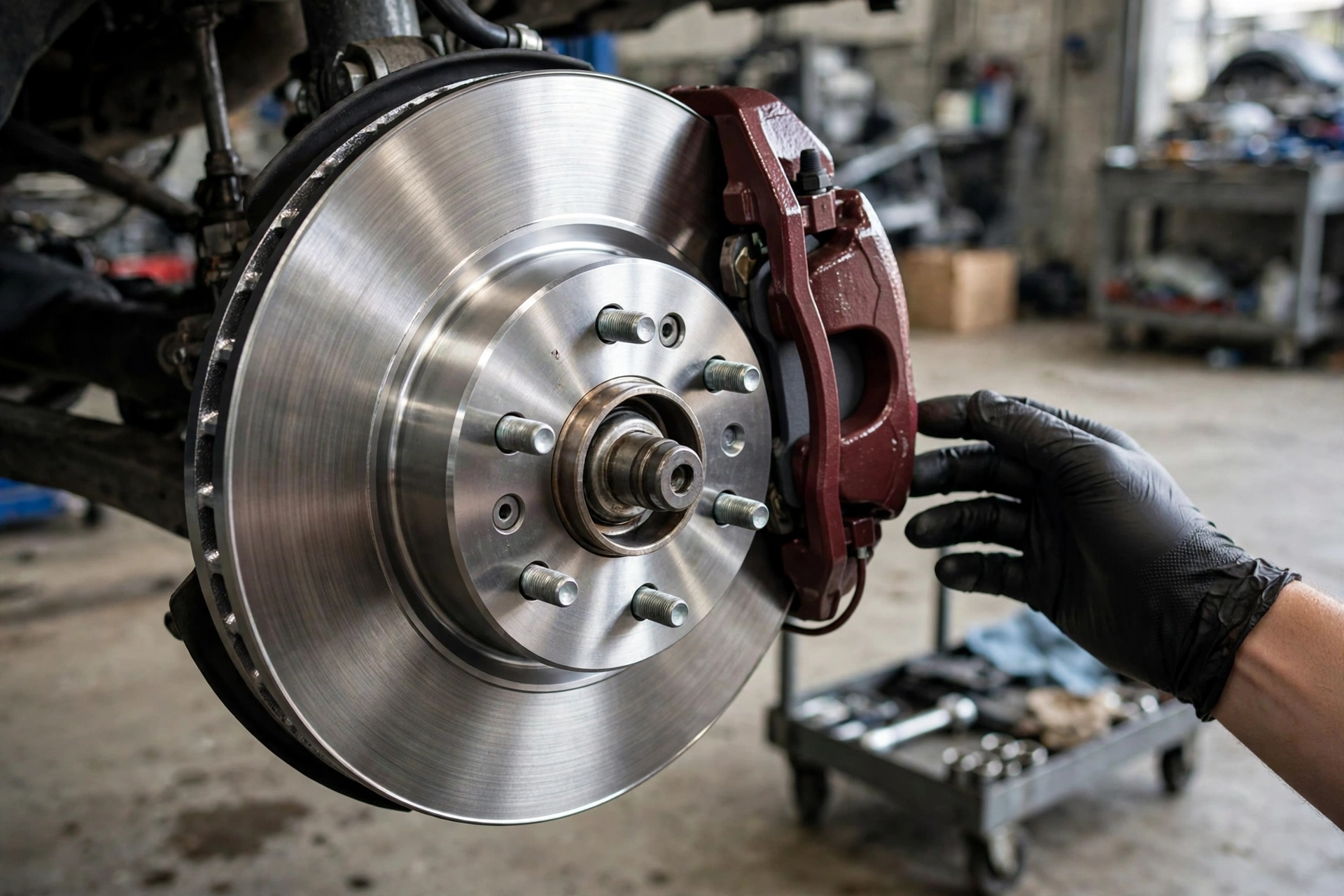
A 2019 Ford F-150 and a 2019 Honda Civic roll into the same shop on the same morning, both needing rotors. The F-150 leaves with a $470 to $539 caliper-era bill for its pads alone on RepairPal's pages, and its rotor job books higher still. The Civic leaves cheaper, and the difference is not the mechanic. It is the metal. Rotors are priced by size, by weight, and by what they are made of, and a rotor for a full-size truck is a different purchase from a rotor for a compact sedan. That is the first thing to understand about rotor prices: the car is the price.
RepairPal's national estimator, updated in September 2026, puts a brake rotor replacement at $574 to $698, with $168 to $247 of labour and $406 to $452 of parts. That is the anchor figure, and it is a rotor-only number. It does not include pads. ConsumerAffairs, working from the same RepairPal data, reports pads and rotors together at $901 to $1,092 per axle, or $1,818 to $2,184 for all four wheels. AAA puts the combined job lower, at $250 to $500 per axle, and NAPA at $300 to $600 per axle, while Jerry's April 2026 estimate puts it at $322 to $586 per axle. The gap between RepairPal and AAA is the part tier again. RepairPal's rotor figure prices new rotors at $406 to $452 a pair, which is original-equipment-grade money. AAA's range reflects the independent-shop reality, where a pair of good aftermarket rotors for a mainstream car costs $80 to $240 and the labour is an hour or so. Neither source is wrong. They are pricing different shopping baskets, and the honest planning range for rotors alone per axle at an independent shop is $450 to $900, with pads and rotors together at $500 to $1,400 per axle, and all four wheels at $1,000 to $2,800.
The model spread is where the money actually goes. A rotor for a Honda Civic is a small, light casting, and a pair costs $80 to $150 at retail. A rotor for a Chevrolet Silverado 1500 is larger, heavier, and ventilated differently, and a pair costs more. A rotor for a BMW or a Mercedes can cost $150 or more each, and on performance cars the rotors are drilled or slotted, which adds cost and means they cannot be resurfaced at all. A dealer pads-and-rotors job per axle runs $700 to $1,500, about 25 to 40 percent above the independent shop, and on a performance or luxury car it runs $800 to $2,000. The pattern is the same as every other brake job: the mainstream car is affordable, the truck is dearer, and the European car is dearest.
Resurfacing is the fork in the road, and it is disappearing. Resurfacing, machining the rotor face flat again, costs $20 to $60 per rotor in the United States, and $15 to $40 per rotor by some accounts, but it only works when the rotor is still above its minimum discard thickness, the number stamped on the rotor itself. Modern rotors are thinner than they used to be. Many are close to the minimum after one cut, or even before it, and a budget new rotor for a common car often costs about $42, which is roughly the same as the machining. A thinner rotor also holds less heat, so it may warp again sooner. Resurfacing still makes sense on an expensive rotor with plenty of thickness left, a truck rotor or a European rotor at $150 or more, where machining it back to flat for $40 is real money saved. On a common car, replacement is usually the better deal. Our guide Should I Replace Rotors With Brake Pads or Resurface Them? explains the micrometer measurement that decides it, and it is the one number worth asking for.
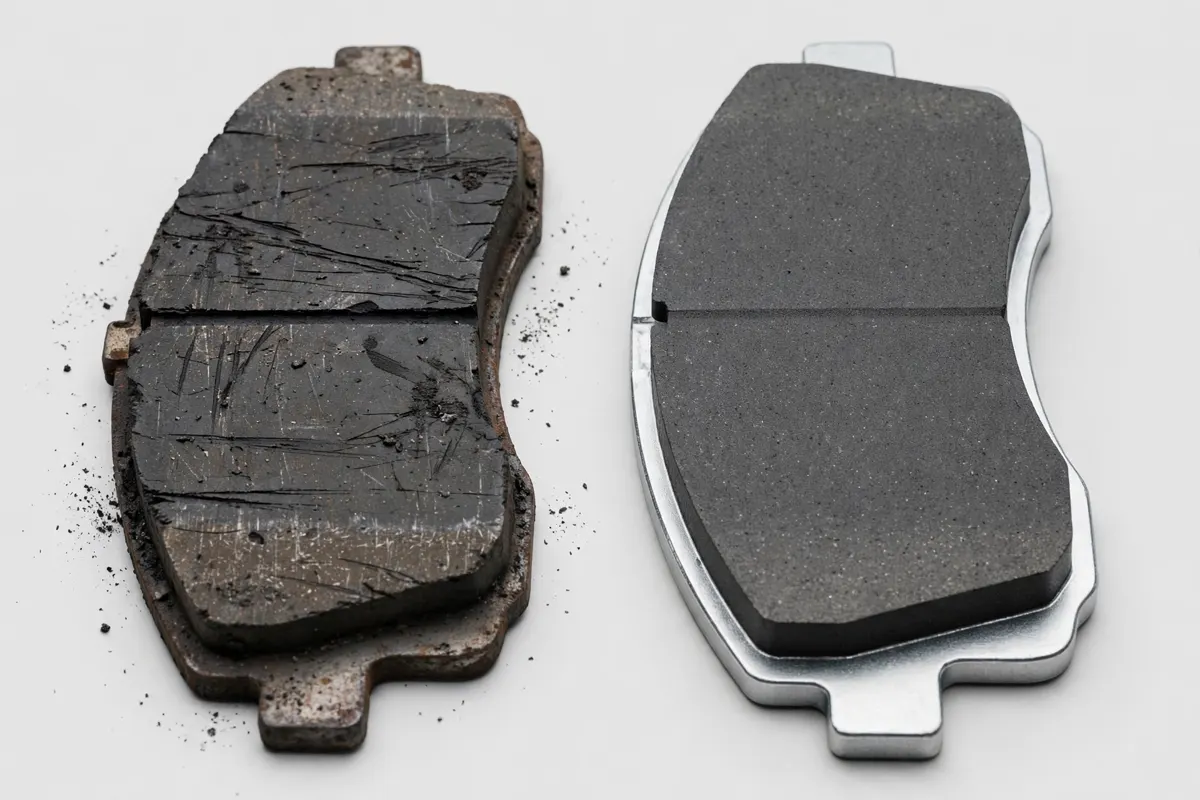
The life question matters too, because it tells you whether the shop's recommendation is reasonable. Rotors typically last 30,000 to 70,000 miles, often through two sets of pads, and AutoZone puts typical rotor life at about 60,000 miles. The RAC puts the range at 30,000 to 50,000 miles for replacement, with life up to about 80,000 miles in gentle use. If a shop tells you the rotors are finished at 25,000 miles on a car that has never ground its pads, ask for the measurement. The symptoms that genuinely mean new rotors are a pulsing pedal or a shaking steering wheel when braking, deep grooves you can feel with a fingernail, visible cracks, or a thickness reading at or below the minimum stamped on the rotor. Surface rust after a rainy week is not one of them; it cleans off in the first few stops.
The decision rule is practical. Ask for the rotor thickness measurement and the minimum stamped on the rotor, in writing, before you authorise the job. If the rotors are above minimum, smooth, and not pulsing, they can stay, and you pay for pads only. If they are above minimum and expensive to replace, resurfacing is a reasonable saving. If they are at or below minimum, cracked, deeply scored, or already machined once, replace them. And always replace rotors in pairs per axle, both fronts or both rears together, because mismatched rotors brake unevenly. If you want a price for your own car before you call around, the RepairPrice calculator (calculator.php) gives a fair range for your vehicle and ZIP code, and Brake Pad Replacement Cost in the USA gives the pad numbers that usually join the bill.
Common questions:
Q: How much does it cost to replace brake rotors in the USA? A: RepairPal's national average is $574 to $698 per axle for rotors alone. Pads and rotors together run $500 to $1,400 per axle at an independent shop, and all four wheels run $1,000 to $2,800. Dealers charge 25 to 40 percent more.
Q: Should I replace rotors with brake pads? A: Not always. If the rotors are smooth, thick enough, and not pulsing, they can stay, and many rotors last through two sets of pads. Replace them when they are at or below minimum thickness, cracked, deeply scored, or pulsing.
Q: Is it cheaper to resurface or replace rotors? A: Resurfacing costs $20 to $60 per rotor, but a budget new rotor for a common car often costs about the same, and a new rotor is thicker and holds more heat. Resurfacing makes sense mainly on expensive rotors with plenty of thickness left.
Q: How long do brake rotors last? A: Typically 30,000 to 70,000 miles, often through two sets of pads. AutoZone puts typical life at about 60,000 miles. Driving style, pad material, and whether the pads were ever allowed to grind all affect it.
| Job | Typical range (USD) | What moves the price |
|---|---|---|
| Rotors only, per axle | $450–$900 | RepairPal average $574–$698 |
| Pads + rotors, per axle | $500–$1,400 | Most common full-axle job |
| All four wheels, pads + rotors | $1,000–$2,800 | Mainstream cars; trucks and SUVs higher |
| Rotor resurfacing, per rotor | $20–$60 | Only if thickness and surface allow |
| Dealer, pads + rotors per axle | $700–$1,500 | 25–40% above independent shops |
| Performance / luxury cars | $800–$2,000 | Drilled or slotted rotors, dealer-only labour |
 RepairPrice
