
Why Do Brakes Cost $1,000 in the USA?
By Oleksandr Potapenko · 2026-11-16 · How we research prices
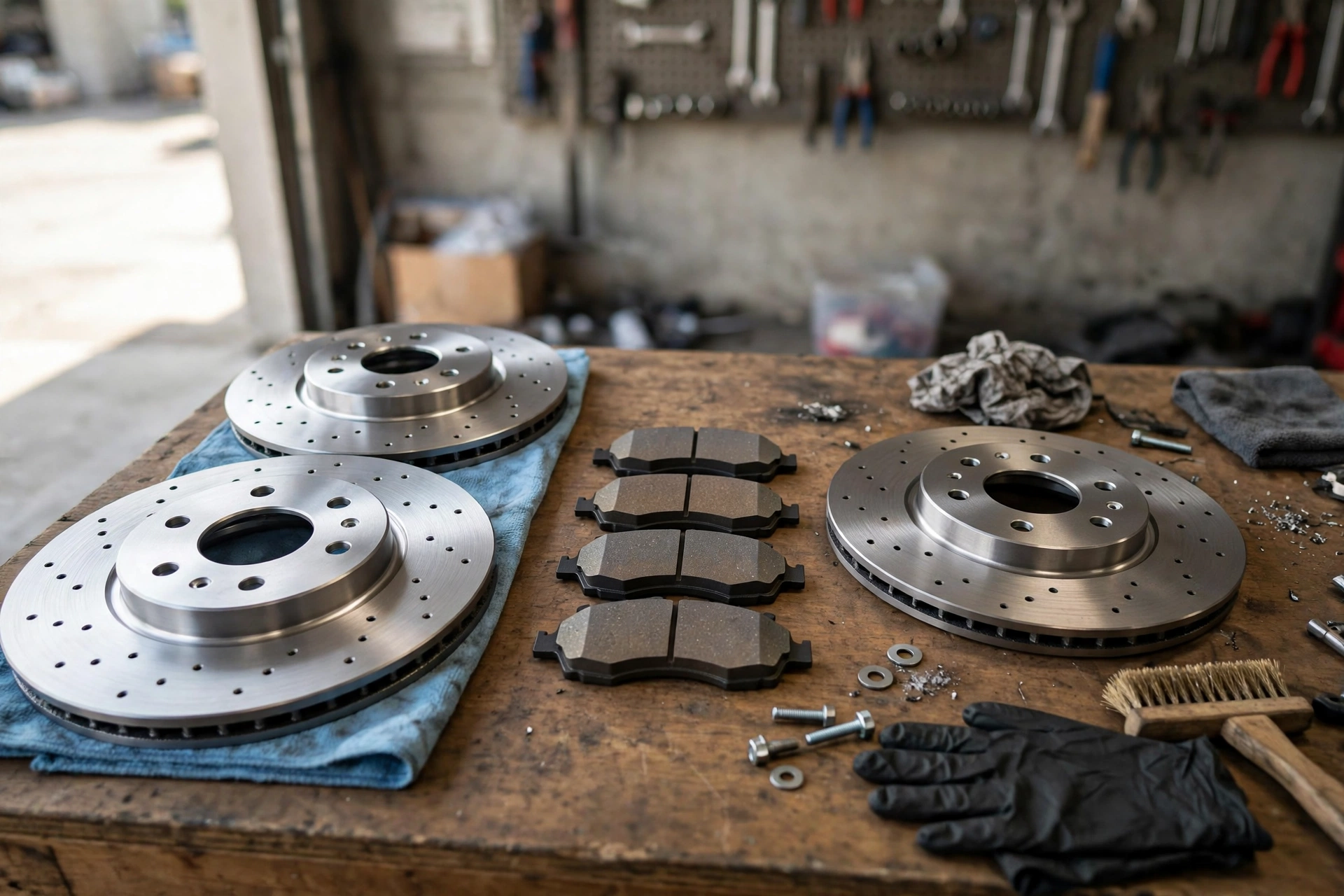
Open the invoice and read it like an autopsy. A $1,000 brake bill is almost never one thing that costs $1,000. It is four or five ordinary things that arrived together, and once you can see the parts, the number stops feeling like a scam and starts feeling like arithmetic. That is the whole secret of this question.
Start with the simplest job. Pads only, one axle, runs $150 to $300 at an independent shop, and RepairPal's national average is $335 to $394. That job can never honestly reach $1,000, and if someone quotes you $1,000 for pads on one axle, get a second opinion before you agree to anything. Add rotors to that axle and the job becomes $250 to $500 per axle by AAA's figures, or $322 to $586 by Jerry's April 2026 estimate. Still not $1,000. Do both axles, pads and rotors on all four wheels, and now you are at $600 to $1,000 at an independent shop on a mainstream car, and $1,818 to $2,184 by ConsumerAffairs' figures, which price the job with original-equipment rotors through RepairPal's estimator. That is the first way a brake job reaches four figures: it is not one axle, it is the whole car.
The second way is the caliper. A stuck caliper adds $150 to $300 per corner on its own at an independent shop, and a full seized-caliper rescue, caliper plus the pads and rotors it damaged, runs $600 to $1,200. RepairPal's national average for one caliper is $898 to $968, with about $749 of that in new original-equipment parts, which is why a single caliper at a dealer can push a whole brake job past $1,000 by itself. Our guide Brake Caliper Replacement Cost in the USA explains the gap between that figure and the $250 to $450 an independent shop charges for the same corner with a remanufactured caliper. Add a fluid flush, $80 to $150 at an independent shop or $173 to $205 by Kelley Blue Book's national estimate, and a $700 pad-and-rotor job becomes a $900 to $1,500 job. None of the individual lines is outrageous. The total is the sum of a system that wore out together.
The third way is the car itself. A dealer brake job on a luxury or European car runs $1,000 to $2,000, and that is a normal dealer price. The parts are dearer, the rotors are larger, the labour rate is $165 an hour or more, and cars with electronic parking brakes need a scan tool to retract the calipers, which adds time. A BMW 3 Series brake fluid service alone runs $175 to $240 by RepairPal's figures, against $109 to $134 for a Toyota Camry, because the BMW needs DOT 4 LV fluid and a longer procedure. A 2026 Chevrolet Blazer master cylinder runs $2,131 to $2,322 in Denver, against $614 to $773 for a Honda Civic, because the Blazer's cylinder is integrated with an expensive electronic module. The car you drive is the price you pay, and a brake job on a German luxury sedan was never going to cost what it costs on a Civic.
The fourth way is labour, and it is the one most drivers never see. Tekmetric's 2026 data puts the national average shop rate at $132 an hour, with a range of $85 to $197 by state. A four-wheel pad-and-rotor job books three to four hours of labour. At $85 an hour, that is $255 to $340. At $197 an hour, it is $591 to $788. Same job, same parts, $300 of difference, and the only thing that changed was the ZIP code. Dealers add 25 to 40 percent on top of the independent rate. Add shop fees, disposal fees, and tax, which RepairPal's estimates exclude, and a $900 quote becomes a $1,050 invoice. That is not padding. It is the difference between an estimate and a bill.
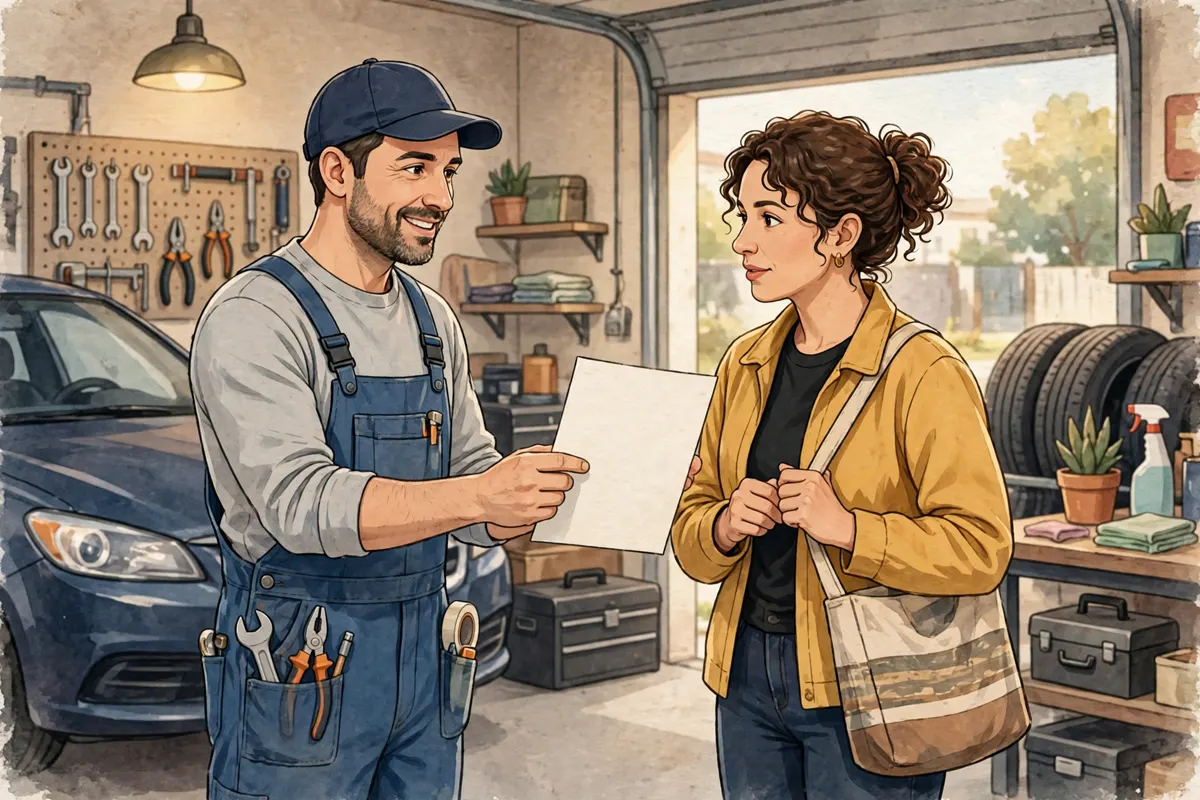
So how do you know whether your $1,000 is fair? Read the invoice line by line. Count the axles: one axle at $1,000 is wrong, four wheels at $1,000 is normal. Count the parts: pads, rotors, hardware, calipers, fluid, each on its own line. Check the part tier: original-equipment parts cost roughly twice aftermarket parts, and the invoice should say which you bought. Check the labour rate and the booked hours: three to four hours for all four wheels is normal, six hours is not. And compare the quote with a second shop before you authorise it. A second quote costs a phone call, and it is the single most effective way to test a brake price. If you want a price for your own car first, the RepairPrice calculator (calculator.php) gives a fair range for your vehicle and ZIP code, and Is $900 Too Much for Brakes and Rotors? works through the same question from the other side of the border.
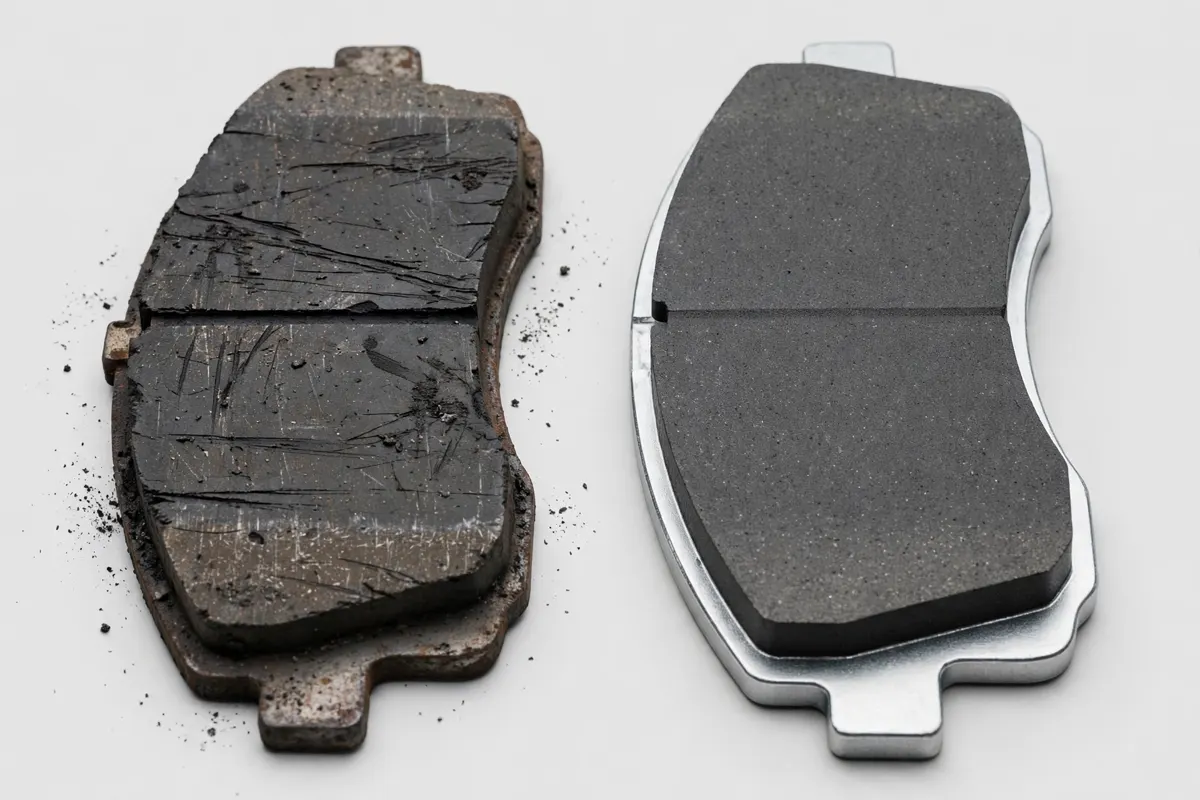
The decision rule is short. Pads only, one axle, $1,000: walk away. Pads and rotors, all four wheels, $1,000 at an independent shop: fair on a mainstream car, and good value on an SUV or truck. Pads, rotors, a caliper, and a flush, $1,000 to $1,500: fair, and the caliper is doing most of the work. Dealer, luxury car, $1,000 to $2,000: normal, and the only way to cut it is an independent shop with the right scan tool. And whatever the number, ask for the old parts back and the rotor measurements on the invoice. A shop that shows you a scored rotor and a pad worn to the backing plate has earned the price.
Common questions:
Q: Why do brakes cost $1,000 in the USA? A: Usually because the job covers all four wheels with pads and rotors, not one axle, or because a stuck caliper and a fluid flush joined the bill. Pads and rotors on all four wheels run $600 to $1,000 at an independent shop, and a caliper adds $150 to $300 per corner.
Q: Is $1,000 too much for brakes? A: For pads only on one axle, yes, that is far too much. For pads and rotors on all four wheels, no, it is a normal price. For a dealer job on a luxury car, $1,000 to $2,000 is the usual range.
Q: What makes a brake job so expensive? A: Four things: the scope, whether it is one axle or all four wheels; the parts, original-equipment versus aftermarket; the vehicle, because luxury and European cars cost more; and the labour rate, which runs $85 to $197 an hour by state.
Q: How can I lower the cost of a brake job? A: Get two itemised quotes and compare line by line. Ask whether the rotors can be reused or resurfaced instead of replaced. Use a good independent shop instead of a dealer, and ask for remanufactured calipers instead of new original-equipment ones.
| Brake job | Typical range (USD) | When it reaches $1,000 |
|---|---|---|
| Pads only, one axle | $150–$300 | Never $1,000 — get a second opinion |
| Pads + rotors, one axle | $250–$500 | Fair at a dealership on a truck |
| Pads + rotors, all four wheels | $600–$1,000 | Mainstream car, independent shop |
| All four + caliper + fluid flush | $900–$1,500 | Stuck caliper adds $150–$300 per corner |
| Dealer, luxury / European | $1,000–$2,000 | Factory parts + $165+/hr labor |
 RepairPrice
