
Toilet Replacement and Installation Cost in Canada
By Oleksandr Potapenko · 2026-11-16 · How we research prices
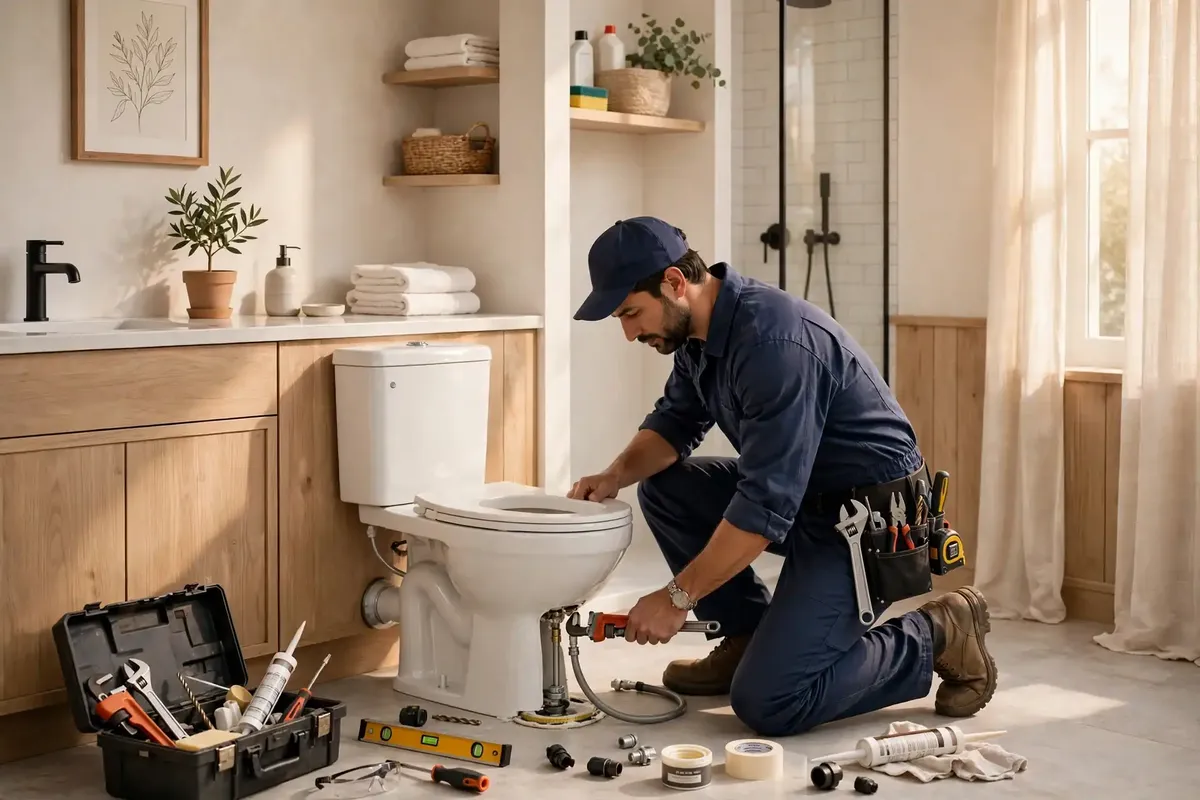
Replacing a toilet is one of the few home jobs where the fixture and the labour cost almost the same, which is why quotes look confusing until you split them apart. HomeAdvisor and Angi put a standard installation at 224 to 531 USD, averaging around 370 USD. HomeGuide puts installation at 250 to 750 USD, and breaks it down as 100 to 500 USD for the unit and 150 to 450 USD for labour. Converted at 1.39, the standard job lands around 310 to 740 CAD, averaging about 515 CAD. A budget two-piece round-front toilet costs 100 to 200 USD for the unit, a comfort-height elongated model 200 to 500 USD, a one-piece 300 to 800 USD, and a smart toilet with bidet functions 800 to 2,500 USD. Labour is 60 to 70 percent of the total on a standard job, and the job takes one to two hours under normal conditions. There is no Canadian national series for toilet installation, so these are converted US figures checked against Canadian plumber rates of 105 to 175 CAD per hour: one to two hours of labour plus a 150 to 500 CAD fixture reproduces the same band almost exactly.
The fixture is where the money quietly moves. A basic two-piece toilet from a big-box store is the cheapest way to replace a toilet, and it flushes perfectly well. What you pay for as you go up the range is not flushing power but comfort and cleaning: an elongated bowl, which most adults find more comfortable; comfort height, about 43 to 48 cm to the seat instead of the standard 38 to 41 cm, which matters for knees and backs; a one-piece design with no seam between tank and bowl, which is easier to clean and harder to leak; and a skirted base, which hides the trapway and looks better but costs more to install because the bolts are harder to reach. A bidet seat adds 300 to 1,000 CAD or more on top of the toilet, and needs an electrical outlet nearby if it is heated. None of this changes the flush. Decide what you are paying for before you shop, or the showroom will decide for you.
What actually goes wrong on installation day is rarely the toilet. It is what is underneath it. A cracked or corroded flange costs 50 to 150 USD to repair, or 100 to 350 USD to replace, according to Angi. A flange sitting below the finished floor, common after new flooring is laid over the old, needs an extender at 20 to 50 USD or a full replacement at 100 to 350 USD. Subfloor rot from a slow wax-ring leak costs 100 to 800 USD to repair, or about 140 to 1,110 CAD, and turns a two-hour job into a full day. None of this is visible until the old toilet comes out, which is why a good quote includes a line for "flange and floor condition to be confirmed on removal" rather than pretending the surprise cannot happen. Insist on a new wax ring and a new braided stainless supply line every time: the ring costs 5 to 10 USD and the line 8 to 15 USD, and reusing either one is the most common cause of a leak a month later.
Two practical questions decide whether the job is easy or expensive. First, is the rough-in the standard 30 cm, or 12 inches, from the finished wall to the centre of the flange bolts? Most Canadian homes are 12-inch rough-in, but older homes sometimes have 10-inch or 14-inch, and a toilet made for the wrong rough-in either will not fit or will sit centimetres off the wall with a gap behind it. Measure before you buy. Second, is anything being moved? A direct replacement in the same footprint needs no permit in most Canadian municipalities. Moving the toilet even 15 cm means moving the drain, cutting the floor, and getting a permit, and the job stops being a toilet replacement and becomes a small renovation.
The decision rule is about the toilet you already have. If it is under 15 years old, flushes well, and the problem is a fill valve or a flapper, repair it: see Running or Leaking Toilet Repair Cost in Canada, where the average repair runs about 375 CAD. Replace it when the bowl is cracked, when it uses 13 litres per flush, when it needs its second repair in a year, or when you are renovating the bathroom anyway and the toilet is the cheapest thing in the room to upgrade. A modern WaterSense toilet uses 4.8 litres per flush and saves a family of four roughly 13,000 litres a year, which matters on a metered bill and matters more in a house on a well or septic system. Get three quotes, ask each one to separate the fixture from the labour, and check the total in the RepairPrice home calculator (home-calculator.php) before you book.
Common questions:
Q: How much does it cost to replace a toilet in Canada?
A: A standard two-piece toilet installed runs about 310 to 740 CAD, averaging around 515 CAD, based on HomeAdvisor and Angi figures converted at 1.39. Premium one-piece and comfort-height models run 700 to 1,650 CAD installed, and smart toilets with bidets considerably more.
Q: How long does it take to replace a toilet?
A: One to two hours for a direct swap on a sound flange. Add half a day if the flange is cracked or the subfloor is rotted, and a full day if the drain is being moved.
Q: Do I need a permit to replace a toilet?
A: No, for a direct replacement in the same footprint in most Canadian municipalities. Moving the drain or the toilet location requires a plumbing permit and an inspection.
Q: What is a toilet rough-in and why does it matter?
A: The distance from the finished wall to the centre of the flange bolts, usually 30 cm or 12 inches in Canada. Buy a toilet made for your rough-in or it will not fit flush against the wall.
| Item | Typical range (CAD) | Notes |
|---|---|---|
| Standard toilet fixture | 150–500 | Two-piece, round or elongated bowl |
| Premium / comfort-height / one-piece | 500–1,200+ | Bidet seats add more |
| Labour: removal + install + disposal | 300–600 | Includes wax ring and supply line |
| Extras: flange or shut-off repair | 100–400 | Found once the old toilet is out |

 RepairPrice
