
Smoke and CO Detector Installation Cost in Canada
By Oleksandr Potapenko · 2026-11-16 · How we research prices
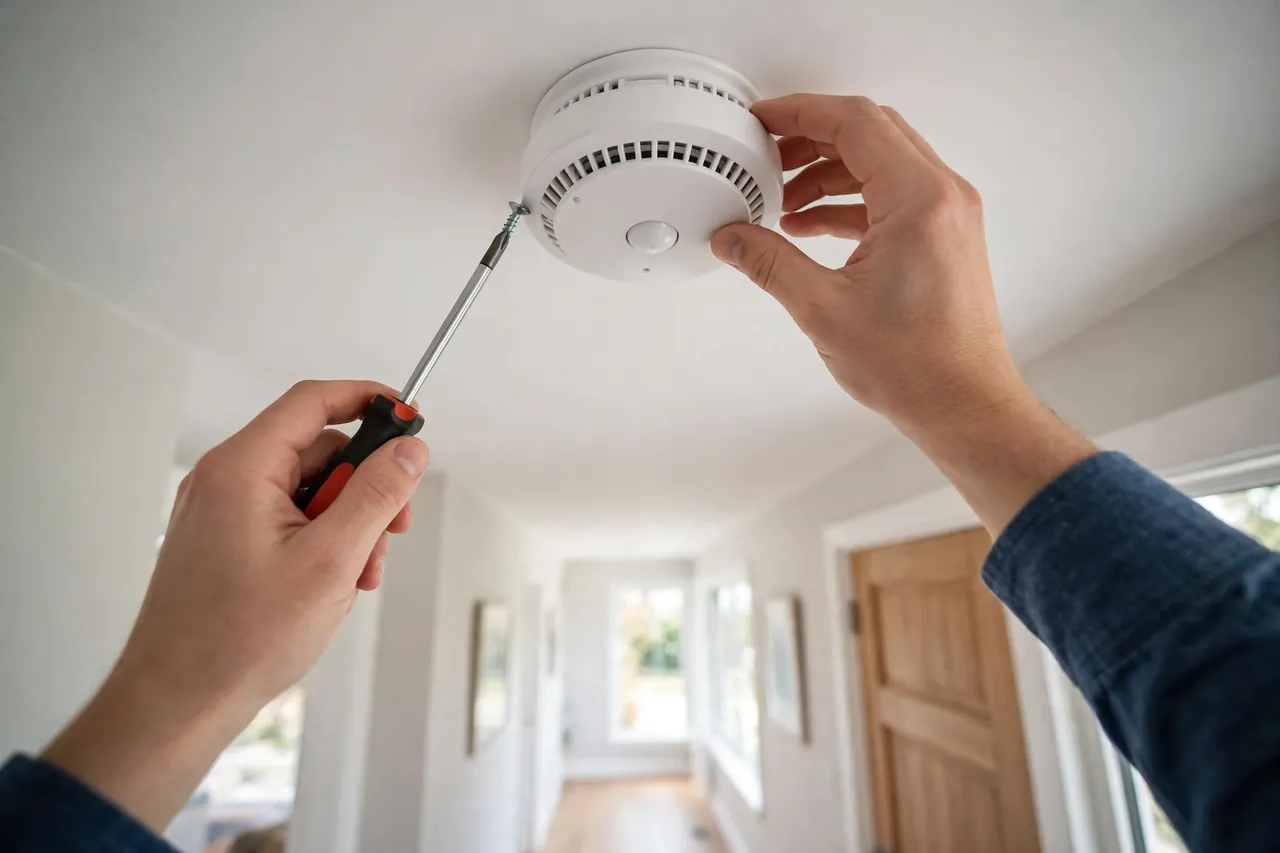
Smoke and carbon monoxide detectors are the cheapest life-safety equipment in the house, and they are also the equipment most likely to be expired, painted over, or missing a battery on the night they are needed. The device itself costs less than a dinner out. The installation is where the money goes, and only when the detectors are hardwired and interconnected. A battery detector is a do-it-yourself job that takes minutes: twist the old unit off its bracket, twist the new one on, test it, and you are done. A hardwired interconnected system, the kind the building code requires in new construction, is an electrician's job, because it involves 120-volt wiring and a permit. Calgary Electrical Services quotes $75 to $150 CAD per unit installed for a complete hardwired system, and The Wire Guys in British Columbia charge $135 an hour for a Red Seal electrician plus a helper, with a separate $165 diagnostic for tracing a faulty alarm. Home Depot Canada puts fire alarm installation and replacement at $150 to $250 CAD per component, with a completely new system with a control panel at $3,500 or more. The Kidde C3010-CA carbon monoxide alarm, a 10-year sealed-battery unit, lists around C$50 to C$60 at Canadian retail, and the First Alert CO605 plug-in with 9-volt backup lists around C$50 at Canadian Tire. A hardwired Kidde combination smoke and CO alarm, model 30CUA10-VCA with a sealed 10-year backup battery and voice alerts in English and French, lists at $89.96 CAD.
The code is the part that surprises people, because it is stricter than most homeowners think. In British Columbia, homes built after March 31, 1979 must have smoke alarms wired into the electrical system and interconnected, so that every unit sounds together rather than one at a time. In Alberta, carbon monoxide alarms are required in all homes with a fuel-burning appliance, an attached garage, or any other potential source of carbon monoxide, installed outside each sleeping area, and new construction and major renovations require hardwired CO alarms with battery backup, interconnected with the smoke alarm system. In Ontario, the Fire Code requires working smoke alarms on every level of the home. The practical minimum everywhere is one working smoke alarm on every storey that has a bedroom, plus one outside each sleeping area, and at least one carbon monoxide alarm on every level and near sleeping areas. A combination smoke and CO alarm does both jobs in one spot and reduces the number of devices on the ceiling.
The replacement schedule is the detail that catches even careful homeowners. Smoke alarms should be replaced after about 10 years, and carbon monoxide alarms after roughly 7 to 10 years, because the sensors degrade over time, and the manufacture date is printed on the back of the unit. The Wire Guys in BC replace a set together when several units are past their ten-year date, because interconnected alarms in an older home are linked and a mixed set causes nuisance alarms and confusion about which unit is sounding. Test every alarm monthly with the test button, and replace the batteries twice a year unless the unit has a sealed 10-year battery, which skips the battery change entirely. Health Canada's carbon monoxide guidance is blunt: the gas is produced whenever any fuel burns, it cannot be seen or smelled, and health officials commonly cite at least 50 Canadian deaths a year. Ontario's Technical Standards and Safety Authority has warned that plug-in alarms stop working in an outage unless they have battery backup, which is why a battery-backed unit matters precisely when the furnace is the thing that failed.
The decision rule is to match the device to the house. If the house already has hardwired interconnected alarms, replace them like-for-like with the same brand family, because interconnection compatibility varies by model and a mismatched unit may not trigger the rest of the system. If the house has battery alarms only, buy 10-year sealed-battery units and replace the whole set on the same day so the replacement dates line up. If the house has a fuel-burning appliance, an attached garage, or a wood stove, add combination smoke and CO alarms rather than smoke-only units. A permit is required for new hardwired work in most jurisdictions, and in BC the permit comes from Technical Safety BC, while in Calgary the electrical permit and inspection by a Safety Codes Officer apply. Get the quote in writing with the unit count, the model, and whether the permit is included. Our guide Outlet and GFCI Outlet Installation Cost in Canada covers the small electrical jobs that ride along well on the same visit, and How Much Does an Electrician Cost Per Hour in Canada covers the hourly rate behind the labour. For a rough number before you call, the RepairPrice home calculator (home-calculator.php) gives a fair range for your city.
Common questions:
Q: How much does it cost to install smoke and CO detectors in Canada? A: A battery detector is a do-it-yourself job with zero labour cost, and the device runs C$50 to C$90. A hardwired interconnected system costs $75 to $150 CAD per unit installed according to Calgary Electrical Services, and Home Depot Canada quotes $150 to $250 CAD per component for professional installation.
Q: How often should smoke detectors be replaced? A: After about 10 years, and carbon monoxide alarms after roughly 7 to 10 years, because the sensors degrade. Check the manufacture date on the back of the unit. Test monthly with the test button, and replace batteries twice a year unless the unit has a sealed 10-year battery.
Q: Where should carbon monoxide detectors be installed? A: At least one on every level and near sleeping areas, and outside each sleeping area in homes with a fuel-burning appliance, an attached garage or another CO source. In Alberta the building code requires CO alarms outside each sleeping area, and new construction requires hardwired units with battery backup.
Q: Do I need hardwired smoke detectors or are battery ones enough? A: Battery units with a 10-year sealed battery are acceptable in existing homes in most provinces, but new construction and major renovations require hardwired interconnected alarms with battery backup. Hardwired units are safer because every alarm sounds together, and they keep working during a power outage if they have battery backup.
| Service | Typical range (CAD) | Notes |
|---|---|---|
| Battery detector, DIY swap | 30–90 device | Minutes; test monthly, replace every 10 years |
| Hardwired unit, installed | 75–150 each | Electrician; interconnect and permit extra |
| Combination smoke + CO, hardwired | 90–200 each | One device, two hazards |
| Full hardwired system, 4–6 units | 400–900 total | Interconnected, permit included |

 RepairPrice
