
Run-Flat Tires: Pros, Cons and Cost in Canada
By Oleksandr Potapenko · 2026-11-16 · How we research prices
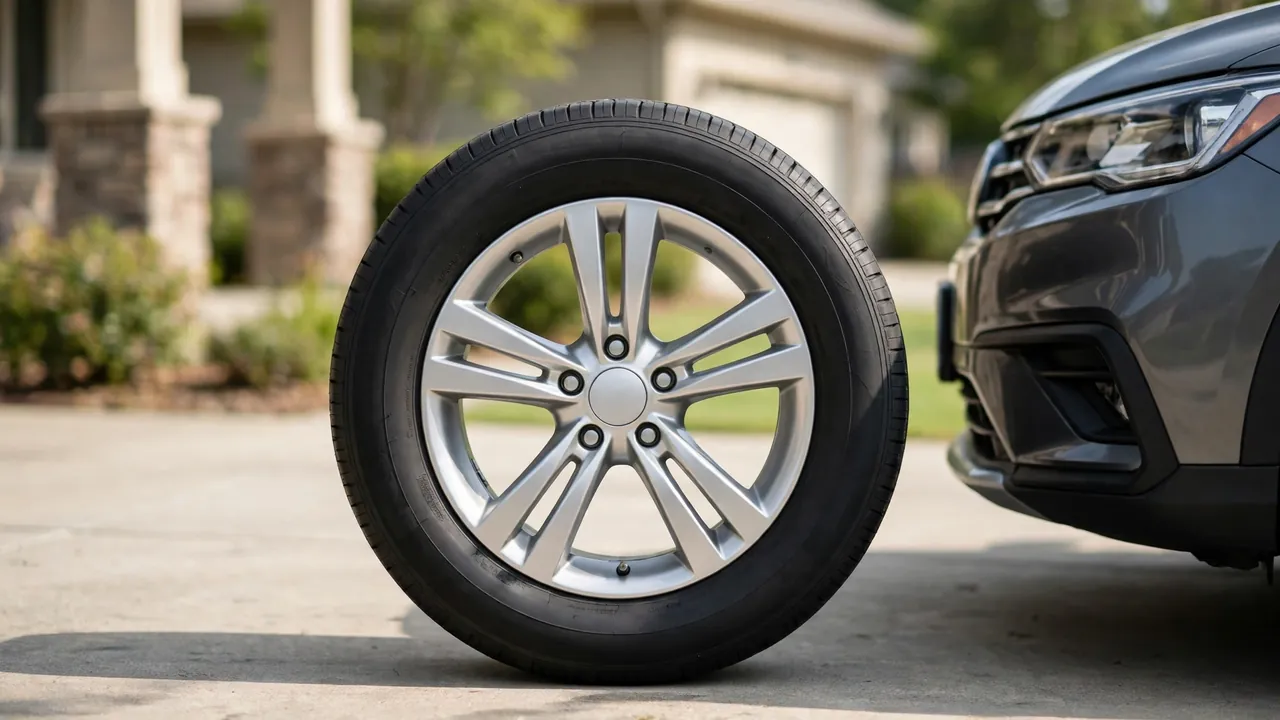
The nail goes in on the highway, the tire pressure monitoring light comes on, and nothing happens. No thump, no pull, no drama — you just keep driving. That is the entire sales pitch for run-flat tires, and for the driver it happens to on a dark road in January, it is worth every dollar. A run-flat has reinforced sidewalls that carry the weight of the car even with no air pressure at all, and most are rated for about 80 km at up to 80 km/h after a complete loss of pressure — the industry standard is 50 miles at 50 mph, and BMW quotes the same limit for its Self-Supporting Runflat specification. That is enough to get off the highway, reach a town, or drive home in most of Canada, instead of changing a wheel on the shoulder in minus 25. For cars that come with no spare tire at all — which is most cars fitted with run-flats from the factory, including most modern BMWs and MINIs — it is the only plan B you have.
The trade-offs are real, and they start with money. Run-flats typically cost 30 to 50 percent more than the equivalent standard tire, according to Tire Rack and Discount Tire pricing compiled in 2026: a set of four run-flats for a BMW 3 Series runs roughly $1,200 to $1,800 installed in the U.S., against $700 to $1,100 for the same size in regular tires, and a single premium run-flat commonly runs $200 to $450 against $130 to $300 for a standard tire. In Canada, a set of four all-seasons installed runs $595 to $1,230 for standard tires, and run-flats push toward the top of that range and beyond it, especially in larger sizes. The premium does not stop at purchase. Consumer Reports tire testing, reported in 2026 comparisons, found run-flats wear out roughly 6,000 miles sooner on average — about 40,000 miles against about 46,000 for regular tires — so you pay more per tire and replace them sooner, which compounds across every set you will ever buy for the car.
The second trade-off is ride quality. The stiff sidewall that holds the car up with no air is the same sidewall that transmits more road vibration into the cabin every day you drive on it. Owners of BMWs on 19-inch wheels report potholes feeling sharper and small bumps feeling harsher, and the difference is most noticeable on exactly the rough, frost-heaved roads Canada is famous for. The third trade-off is repairability, and it is the one that costs owners the most surprise money. Most run-flat tires cannot be repaired once they have been driven deflated: Bridgestone, Michelin, Pirelli, Continental and Goodyear all advise replacement after zero-pressure running, because the reinforced sidewall hides internal abrasion that a plug repair could fail on weeks later at highway speed. A nail that would be a $40 to $70 patch-plug repair on a conventional tire — see Tire Puncture: Repair or Replace in Canada? — becomes a $200 to $450 replacement on a run-flat. The one exception is narrow: Michelin allows repair of its Zero Pressure tires under specific criteria, tread only, and only if the tire was not driven flat.
So should you keep them? The decision rule depends on what your car was designed around. If your BMW, MINI, Lexus or Cadillac came with run-flats and no spare, keep run-flats unless you buy a spare kit or a sealant kit and a roadside assistance plan to replace the safety net you are removing — switching to standard tires saves roughly $35 to $50 per tire, or $140 to $200 a set, and rides softer, but leaves you with no way to deal with a flat beyond a tow truck. If your car came with a spare or a sealant kit, standard tires are the better buy on cost, comfort and tread life, and there is no reason to pay the run-flat premium. Whichever you choose, your TPMS system is not optional with run-flats: a flat run-flat looks and drives almost normally, so the sensor is your only warning, and a dead sensor is a safety problem — see TPMS Sensor and TPMS Light: Replacement Cost in Canada. Check the installed price for your exact size on the RepairPrice calculator (calculator.php), and ask the shop to confirm the run-flat marking on the sidewall — RFT, ROF, ZP, SSR or EMT — before you pay.
Common questions:
Q: How far can you drive on a run-flat tire? A: About 80 km (50 miles) at up to 80 km/h (50 mph) after a complete loss of pressure, per the industry standard and BMW's own specification. That is a ceiling, not a target — slow down immediately and avoid hard cornering, curbs and potholes.
Q: Can run-flat tires be repaired? A: Almost never once driven flat. Bridgestone, Michelin, Pirelli, Continental and Goodyear all advise replacement after zero-pressure running, because the reinforced sidewall hides internal damage. Michelin allows repair of its Zero Pressure tires only under narrow criteria, tread only, and only if not driven flat.
Q: How much more do run-flat tires cost? A: Typically 30 to 50 percent more than the equivalent standard tire, per Tire Rack and Discount Tire pricing. A set of four for a BMW 3 Series runs about $1,200 to $1,800 installed in the U.S., against $700 to $1,100 for regular tires, and they also wear out about 6,000 miles sooner according to Consumer Reports testing.
Q: Can I replace run-flat tires with regular tires? A: Yes, if your car was designed for them the suspension is tuned for the stiffer sidewall, so the ride will feel softer and handling will change slightly. But you lose your only flat-tire plan unless you also buy a spare kit or sealant kit — most run-flat cars have no spare in the trunk.
| Item | Typical range (CAD) | Notes |
|---|---|---|
| One new tire + mounting and balancing | $150–$400+ | Run-flats sit at the top of the range |
| Set of 4, installed, car | $595–$1,230 | Run-flats push toward the upper end |
| Tread puncture repair, conventional tire | $40–$70 | Internal patch-plug, tread only |
| Same repair, larger or run-flat tires | $50–$95 | Often refused once driven while flat |
| One TPMS sensor, car | $115–$230 | Your only warning — a flat run-flat looks normal |
| Wheel balancing, set of 4, car | $55–$110 | After any tire replacement |


 RepairPrice
