
How Old Is Too Old for Tires? The DOT Code Explained
By Oleksandr Potapenko · 2026-11-16 · How we research prices
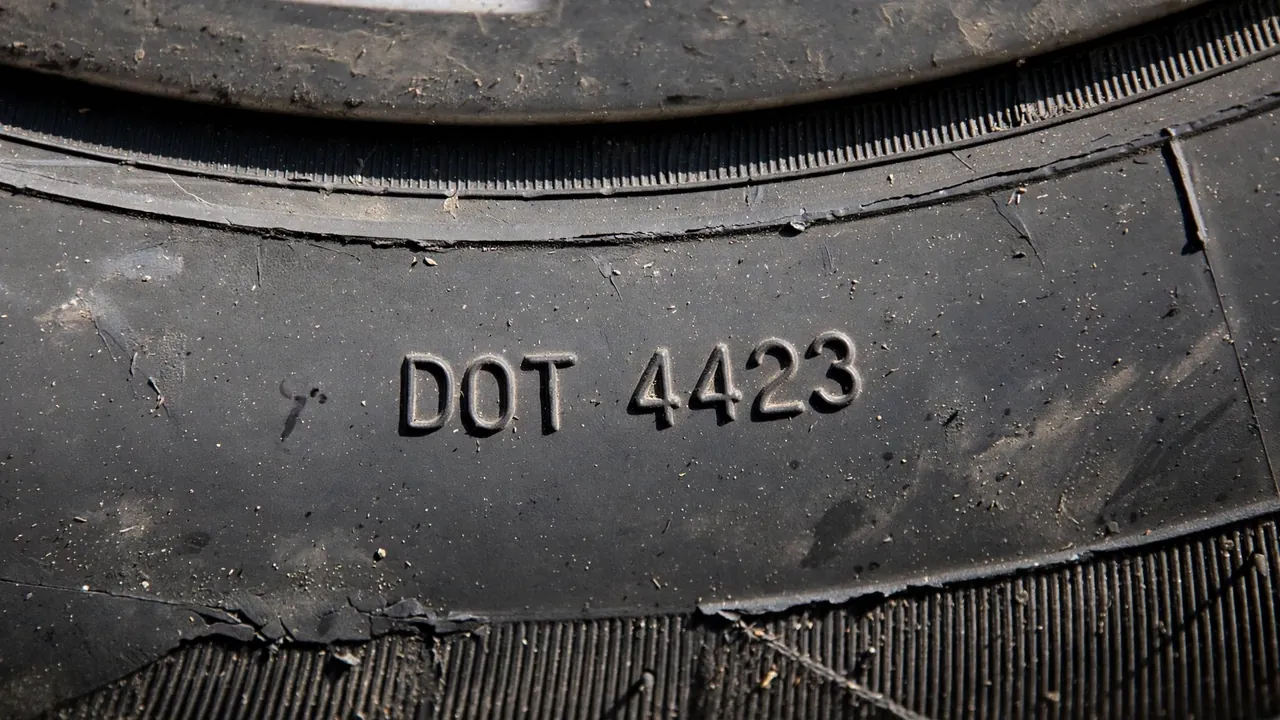
The tire looks fine. The tread is deep, the sidewalls are clean, there is not a crack in sight — and it is still dangerous. That is the trap of tire age: rubber hardens and oxidizes whether the tire is driven or not, and the loss of grip happens inside the compound, where you cannot see it. The U.S. National Highway Traffic Safety Administration warns that aging cannot be detected just by looking, which is why every tire carries its own birth certificate molded into the sidewall. Learning to read it takes thirty seconds, and it is the difference between buying a bargain and buying a blowout — especially on used tires, where a "nearly new" set can be eight years old.
Find the code that starts with DOT on the sidewall. It is the Tire Identification Number, and its last four digits are the date: the first two are the week of the year, the last two are the year. DOT 2319 means the 23rd week of 2019; DOT 4714 means the 47th week of 2014. A three-digit code means the tire was made before 2000, and Bridgestone says it should be replaced on age alone. Since September 2009, U.S. Federal Motor Vehicle Safety Standard 139 has required the full number, date included, on the intended outboard sidewall — the side facing out — so on most cars you can read it without jacking anything up. If the DOT code is on the inside face, the tire was mounted with the date hidden, and any tire shop will read it for you in a minute.
So how old is too old? There is no federal age limit in the United States or Canada, and the guidance splits into a clear pattern that is worth knowing in full. Most automakers print about six years in their owner's manuals — Ford, Hyundai, Mazda, GMC and Tesla manuals all say replace at about six years, and Toyota and Lexus say a tire over six years old must be checked by a qualified technician. The tire makers draw the line differently: Michelin, Bridgestone, Continental and Pirelli all say to have tires professionally inspected yearly after five years and to replace them by ten years from the date of manufacture, whatever the tread looks like, spare included. The U.S. Tire Manufacturers Association takes a third position, arguing that calendar age alone cannot predict service life and setting no fixed limit. The National Transportation Safety Board has called the industry's guidance inconsistent and confusing, and it is — but the practical framework is simple. Treat five years as the inspection milestone, six years as the point where your carmaker may want replacement, and ten years as the hard maximum that every tire maker agrees on.
Heat and sunlight move the clock faster. A tire that spent its life in Arizona or in a sunny driveway ages faster than one garaged in Edmonton, and a spare that has never touched the road still ages from the day it was molded — most manufacturers put the spare on the same 6-to-10-year schedule. The warning signs that age has caught up are cracking between the tread blocks, fine cracks in the sidewall, a hard and shiny tread surface, and any vibration or wobble that a balance cannot cure. But the absence of cracks proves nothing: NHTSA's point is that internal degradation does not always show on the surface, which is why the date, not the appearance, is the deciding evidence.
The decision rule is a calendar, not a feeling. Before you buy used tires, read all four DOT codes and walk away from anything over six years old, no matter how deep the tread — that "bargain" set is a set someone else aged out of. On your own car, check the codes at every seasonal changeover, write the dates down, and plan replacement at six years if your owner's manual says so, or at ten years at the absolute latest. A set of four new all-seasons installed runs roughly $595 to $1,230 in Canada and a winter set $695 to $1,430, so budgeting for age-based replacement is not a surprise bill if you see it coming two seasons ahead. Price it on the RepairPrice calculator (calculator.php), and if the tire is also punctured or worn, read Tire Puncture: Repair or Replace in Canada? first — age changes that decision too.
Common questions:
Q: How do I read the DOT date code on a tire? A: Find the code starting with DOT on the sidewall. The last four digits are the date: the first two are the week, the last two are the year. DOT 2319 means the 23rd week of 2019. A three-digit code means the tire was made before 2000.
Q: How old is too old for tires? A: There is no legal age limit, but Michelin, Bridgestone, Continental and Pirelli say inspect yearly after five years and replace by ten years from manufacture, regardless of tread. Many automakers, including Ford, Mazda, GMC and Tesla, say replace at about six years. Ten years is the hard maximum everyone agrees on.
Q: Do tires expire if they are never used? A: Yes. Rubber oxidizes whether the tire is driven or not, so a spare that has never touched the road still ages from its manufacture date, and most manufacturers put it on the same 6-to-10-year schedule.
Q: Is it safe to buy used tires? A: Only if you check the DOT codes first. Walk away from anything over six years old, anything with sidewall cracking, and any set with mismatched dates or models. A used tire with deep tread but an old date code is not a bargain.
| Item | Typical range (CAD) | Notes |
|---|---|---|
| All-season set of 4, installed, car | $595–$1,230 | Tires $500–$1,100 + mounting and balancing |
| Winter set of 4, installed, car | $695–$1,430 | Winter compound and tread cost more |
| Seasonal changeover, car | $75–$105 | Wheels already mounted, about 0.8 h labour |
| Tire rotation, car | $40–$50 | Every 8,000–12,000 km |
| Wheel balancing, set of 4, car | $55–$110 | Vibration at 90–110 km/h |
| One TPMS sensor, car | $115–$230 | Sensor brand, programming included |




 RepairPrice
