
Radon Mitigation Cost in Canada
By Oleksandr Potapenko · 2026-11-16 · How we research prices
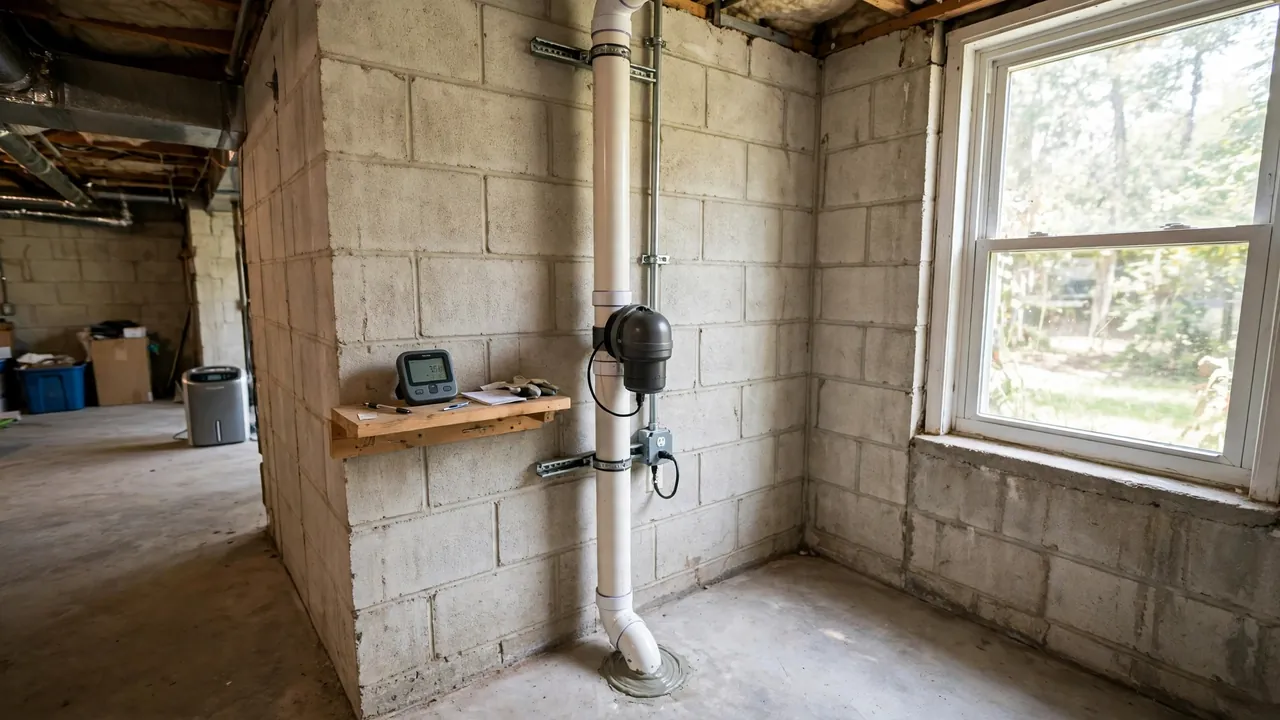
Radon is the second leading cause of lung cancer in Canada, and you cannot see it, smell it or taste it, which is why the only question that matters is the number on a test. Radon is a naturally occurring radioactive gas that seeps out of bedrock and soil and collects in basements and ground floors, and Health Canada attributes about 16 percent of lung cancer deaths in Canada to radon exposure. The 2024 Cross Canada Survey of Radon, the largest national dataset published so far, analysed 69,478 long-term radon tests and found that 17.8 percent of Canadian homes had radon at or above the national guideline of 200 becquerels per cubic metre, the level at which Health Canada recommends fixing the home. That is roughly one home in six, and the share is higher in the Prairies, parts of British Columbia and the Atlantic provinces, where the geology puts more radon into the soil. Health Canada lowered its guideline from 800 to 200 becquerels per cubic metre in 2007 after reviewing the evidence, and the guideline is an action level, not a safe level: there is no level of radon that is completely risk-free, and lower is always better.
Testing comes first, and the test that matters is the long one. Health Canada recommends a long-term test of at least three months, usually 91 days, ideally over the fall and winter when the windows stay closed and the levels run highest. A mail-in kit costs about 40 to 100 Canadian dollars including the lab analysis, and the device goes in the lowest level of the home that is regularly used for more than four hours a day. A short-term test of a few days can tell you whether you have a serious problem, but it cannot tell you your annual average, and it is the annual average that the 200 guideline is written against. Retest every five years, or after major retrofit work, because air sealing and insulation change how a house breathes and can change the radon level in either direction.
The fix is a system, not a filter, and it is the same system everywhere in Canada. Active sub-slab depressurization, a pipe through the basement floor with a small fan that draws radon from under the slab and vents it outside, is the method Health Canada recommends, and Health Canada reports it cuts radon by more than 80 percent in most homes, with reductions of 80 to 99 percent in well-installed systems. Health Canada's Radon Reduction Guide puts a standard system at about 2,000 to 3,000 Canadian dollars including labour, and Take Action on Radon reports an average of about 2,700 dollars across hundreds of systems installed from 2013 to 2021, with complex jobs running higher. Local installers in higher-cost regions quote more: Kootenay Energy in the BC Interior reports 2,500 to 4,500 dollars, and Guelph installers report 2,800 to 3,800 dollars. The fan runs 24 hours a day, it uses about as much electricity as a light bulb, and it needs replacing every five to ten years.
Two money details are worth knowing before you book. First, there is no federal grant or tax credit for radon repairs, but the Canadian Lung Association's Lungs Matter program pays up to 1,500 dollars toward mitigation for households below their provincial median income or for people diagnosed with lung cancer, with a certified long-term test above 200 becquerels per cubic metre required and limited funding. Second, if your Ontario home was built after February 2021, the Tarion new home warranty covers up to 50,000 dollars of mitigation, paid by your builder, inside the seven-year warranty term, when a certified test shows radon at or above 200 becquerels per cubic metre. The credential to check is C-NRPP, the Canadian National Radon Proficiency Program: Health Canada recommends using a mitigation professional certified through C-NRPP, and it is the national standard for this work. Get two quotes from C-NRPP professionals, ask each one to include the post-mitigation retest in the price, and do not skip that retest: a short-term test right after the install, followed by a long-term test in the next heating season, is how you know the system works. Price the job with the RepairPrice home calculator (home-calculator.php) and test before you finish the basement, because the pipe is far cheaper to install in an unfinished basement, as explained in "Basement Renovation and Finishing Cost in Canada".
Common questions:
What is a safe radon level in Canada? Health Canada recommends action above 200 becquerels per cubic metre, and there is no level that is completely risk-free. The 2024 Cross Canada Survey found 17.8 percent of Canadian homes at or above 200.
How much does radon mitigation cost in Canada? A standard sub-slab depressurization system costs about 2,000 to 3,000 Canadian dollars according to Health Canada, with an average of about 2,700 dollars reported by Take Action on Radon. Complex homes and higher-cost regions run 2,500 to 4,500 dollars.
How long should a radon test run? Health Canada recommends a long-term test of at least 91 days, ideally over the fall and winter. A mail-in kit costs about 40 to 100 dollars including the lab.
Is there financial help for radon mitigation? There is no federal grant, but the Canadian Lung Association's Lungs Matter program pays up to 1,500 dollars for eligible households, and Ontario's Tarion warranty covers up to 50,000 dollars for homes built after February 2021.
| Service | Typical range (CAD) | Notes |
|---|---|---|
| Long-term radon test kit | $40–$100 | 91 days, lab analysis included |
| Professional radon test | $150–$300 | Certified measurement |
| Mitigation system, standard | $2,000–$3,000 | Sub-slab depressurization |
| Mitigation, complex or high-cost region | $2,500–$4,500 | Layout, access, depth |
| Post-mitigation retest | $40–$300 | Do not skip it |
| Fan replacement | $300–$600 | Every 5–10 years |

 RepairPrice
