
HRV / ERV Installation Cost in Canada
By Oleksandr Potapenko · 2026-11-16 · How we research prices
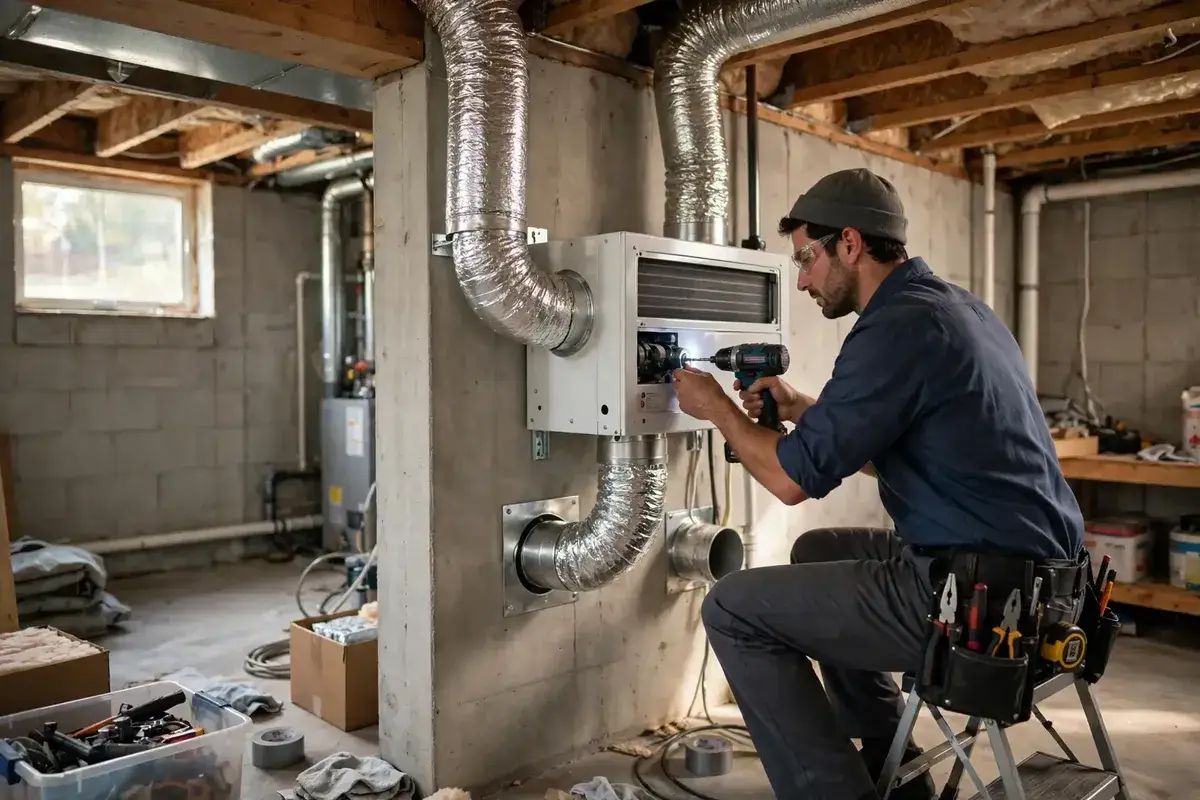
Modern Canadian homes are built tight, and tight homes have an air problem that no furnace can fix. Sealed against the cold, they trap moisture, odours, cooking fumes and pollutants, and opening a window in January is not a ventilation strategy. A heat recovery ventilator, HRV, or an energy recovery ventilator, ERV, is the machine that solves it: it continuously exhausts stale air and brings in fresh air while recovering most of the heat, and in the ERV's case some of the humidity, from the outgoing stream. The installed cost in Canada is 2,500 to 5,500 CAD all-in for a retrofit, according to a London, Ontario HVAC guide, and the Ontario numbers are tighter: Aire One, a GTA contractor, puts an HRV at 2,500 to 4,200 CAD installed and an ERV at 2,800 to 4,500 CAD, with the unit itself at 800 to 2,500 CAD. Ottawa HVAC Pro gives 2,500 to 4,500 CAD for a complete HRV system. A Kitchener HVAC guide gives a wider 2,250 to 7,500 CAD, which covers complex retrofits with extensive new ductwork. There is no single national Canadian price series for this work, so the CAD ranges here are estimates built from Canadian contractor guides, cross-checked against converted US figures from HomeAdvisor and Fixr at roughly 1.40 CAD per US dollar. Retrofits in finished homes cost more than installations in new construction, where ducts are open and planned, and a new-construction install typically runs 2,000 to 4,000 CAD.
HRV versus ERV is a climate choice, and it is the decision most often made badly. An HRV transfers heat only, which suits cold, dry winters: it recovers heat without returning humidity to the house. An ERV transfers heat and a portion of the moisture, which helps in humid summers and in homes that get too dry in winter, but in very cold climates an ERV's moisture transfer can frost the core if the unit is not rated for it. Aire One's GTA guide is direct about the point: your installer should recommend by climate zone, not by inventory. In most of Ontario and the Prairies, the HRV is the default. In humid southern Ontario summers and in homes with persistent winter dryness, the ERV earns its premium, which Aire One puts at roughly 300 CAD over the equivalent HRV.
Balancing and controls matter as much as the unit, and they are the line items that separate a good quote from a cheap one. An unbalanced system pressurises or depressurises the house, and a basic wall control that nobody adjusts wastes the investment. Aire One puts balancing and a humidity control at 300 to 800 CAD, and it should be in the quote, not added later. Ask for commissioning and balancing in writing, plus a humidity-sensing or timer control, and ask how the system is set for winter and summer. The operating cost is small: Aire One puts it at about 3 to 10 CAD a month, roughly 30 to 90 watts on low speed, plus your electricity rate. Maintenance is homeowner work: clean the filters every few months and the core once or twice a year, following the manufacturer's instructions, with a professional service visit at 0 to 200 CAD if you do not do it yourself.
The decision rule is simple. If your windows condense in winter, if the house smells stale, if the bathroom mirror stays fogged long after a shower, or if someone in the house has allergies that improve when they leave, get a ventilation assessment before you buy a purifier or a humidifier, because the HRV or ERV may be the fix for all of them at once. If you already have a whole-home humidifier, tell the installer: the two systems have to be balanced together, or they will fight each other all winter. And if your home is older and leaky, an HRV will not help much until the air leaks are found, which is why our guide "Home Energy Audit Cost in Canada (EnerGuide)" pairs naturally with this one. "Whole-Home Humidifier Installation Cost in Canada" covers the humidity half of the equation, and "Duct Sealing Cost in Canada" covers the leaks that make ventilation harder than it needs to be. You can sanity-check any quote against the RepairPrice home calculator (home-calculator.php) before you sign.
Common questions:
How much does an HRV cost to install in Canada?
Typically 2,500 to 4,200 CAD installed for an HRV, according to Aire One's GTA guide, and 2,500 to 5,500 CAD for a retrofit in a finished home. The unit itself costs 800 to 2,500 CAD, with labour, ductwork, exterior vents, controls and balancing making up the rest.
What is the difference between an HRV and an ERV?
An HRV transfers heat only. An ERV transfers heat and some moisture. HRVs suit cold, dry winters. ERVs help in humid summers and in homes that get too dry in winter, but can frost in very cold climates if not rated for it.
Do I need an HRV in my house?
If your home is modern and airtight, and you have winter window condensation, stale air, or lingering cooking and bathroom odours, yes. Older leaky homes ventilate themselves, badly, and should fix air leaks first.
How much does an HRV cost to run?
About 3 to 10 CAD a month, according to Aire One, roughly 30 to 90 watts on low speed. Filters need cleaning every few months and the core once or twice a year.
| Item | Typical range (CAD) | Notes |
|---|---|---|
| HRV / ERV unit | 800–2,500 | Aire One GTA; size and features drive cost |
| HRV install all-in (retrofit) | 2,500–4,200 | Aire One; finished-home retrofits cost more |
| ERV install all-in (retrofit) | 2,800–4,500 | About 300 CAD premium over equivalent HRV |
| New construction install | 2,000–4,000 | Ducts open and planned |
| Balancing + humidity control | 300–800 | Should be in the quote |

 RepairPrice
