
Why EVs Wear Tires Faster (and What It Costs)
By Oleksandr Potapenko · 2026-11-16 · How we research prices
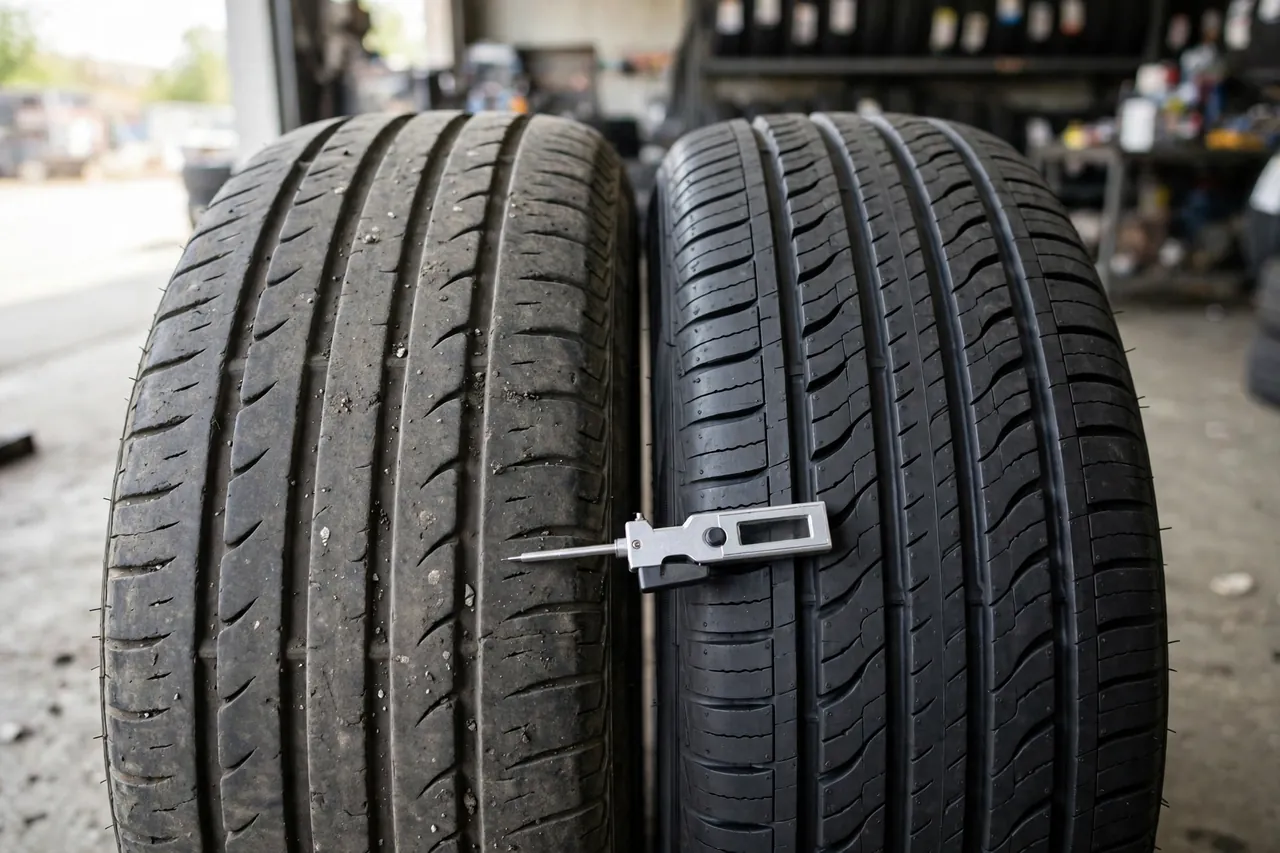
The first surprise of electric car ownership is not the charging — it is the tires. Owners who expected their EV to cost less in maintenance find themselves buying tires a year earlier than they did on their gas car, and the forums are full of the same question: is my car eating tires, or is it just me? The answer is that the car really is harder on tires, and the evidence is no longer anecdotal. The physics points one way and the data follows it.
The physics is weight plus torque. A battery pack adds 600 to 1,500 pounds over a comparable gas car — a Tesla Model 3 weighs over 4,000 pounds where a Toyota Corolla of roughly the same size comes in around 3,000 — and every one of those pounds presses down through the same four contact patches. An electric motor also delivers full torque instantly, from a standstill, so the smooth silent launch that makes an EV feel quick is also the launch that scrubs rubber off the tread. Regenerative braking adds a third load, shifting braking forces to the driven axle. Emissions Analytics, a vehicle testing organization, found that for every extra 450 kg — about 1,000 lbs — added to a car, tire wear increases by roughly 20 percent. That single finding explains most of the gap by itself.
The field data lines up behind it. A 2022 study published in Science of the Total Environment measured average tread wear of 201.7 milligrams per kilometre for a tested EV, versus 158.9 for the gasoline car — approximately 27 percent higher. Fleet management company Epyx reported in 2025 that electric company cars received their first tire replacement at an average of about 23,100 km, versus 29,500 km for combustion cars — roughly 22 percent fewer kilometres between tire changes. Consumer Reports surveyed EV owners and found that more than 30 percent replaced their tires sooner than expected, with over half of those replacements happening at or before 30,000 miles, against a typical gas car reaching 40,000 to 60,000 miles on all-season tires. Michelin and Hyundai have both publicly cited the 20 percent mark, and Pirelli estimates regular tires wear 5 to 20 percent faster than EV-specific tires when mounted on an electric vehicle. The industry's working figure is that EV tires wear out 20 to 30 percent faster than comparable gas car tires — the studies cluster there even though no two measure exactly the same thing, and the honest range to plan around is one extra set of tires every four or five years of ownership.
What does that cost in Canada? A set of four new tires installed on a car runs roughly $595 to $1,230, and a winter set $695 to $1,430, so an EV owner who replaces tires at 35,000 km instead of 50,000 km is spending roughly $200 to $400 more per year on tires than the gas-car driver next door, depending on the tire. The Model 3 makes the point sharply: owner reports put rear tires fading in the 15,000 to 20,000 mile range for brisk drivers, while calmer drivers reach 25,000 to 30,000 miles or more, and performance trims on soft summer compounds sit at the bottom of that range. A Tesla Model Y owner budgeting $1,200 a set every 25,000 miles spends about $3,600 on tires over five years where a gas crossover owner spends about $2,400 — the difference is the EV tire tax, and it is worth knowing before you buy the car, not after.
There are ways to narrow the gap, and they are all unglamorous. Buy EV-specific tires — Michelin's e.Primacy, Goodyear's EfficientGrip Performance, Continental's EcoContact 6, Pirelli's Elect range — which use harder compounds and reinforced construction to resist the extra load; Pirelli's estimate says they last 5 to 20 percent longer on an EV than regular tires. Rotate every 8,000 to 10,000 km, not the 12,000 km you got away with on a gas car, because torque wears the driven axle first and uneven wear is what kills a set early — see Tire Rotation and Balancing Cost in Canada. Keep pressures at the placard number and check them monthly, since under-inflation multiplies wear on a heavy car. Drive gently for the first few hundred kilometres after fitting new tires, and resist the launch: full-throttle starts are the single most expensive habit an EV owner has. And get an alignment with new tires and after any hard pothole hit — see Wheel Alignment Cost in Canada — because a heavy car with a toe error scrubs rubber twice as fast. Run the numbers for your car on the RepairPrice calculator (calculator.php) before your next set, and budget one extra set per ownership cycle: the EV saves you money on oil changes and brakes, and spends some of it back on tires.
Common questions:
Q: Do EVs wear tires faster than gas cars? A: Yes, by roughly 20 to 30 percent. Emissions Analytics found tire wear rises about 20 percent for every extra 1,000 lbs of weight; a Korean study measured 27 percent higher tread wear on an EV, and fleet data from Epyx showed first tire replacement at 23,100 km for EVs against 29,500 km for gas cars.
Q: How long do Tesla Model 3 tires last? A: Typically 25,000 to 40,000 miles for ordinary driving, and 15,000 to 20,000 miles on the rear tires for brisk drivers or performance trims, according to owner reports. Conservative driving and rotation every 6,250 miles push toward the higher end.
Q: Are EV-specific tires worth it? A: Yes. Pirelli estimates regular tires wear 5 to 20 percent faster than EV-specific tires on an electric vehicle, and EV tires from Michelin, Goodyear, Continental and Pirelli use harder compounds built for the extra weight and torque.
Q: How often should I rotate tires on an EV? A: Every 8,000 to 10,000 km, or about every 6,000 miles — more often than on a gas car, because instant torque wears the driven axle first. Skipping rotation is the fastest way to kill an EV tire set early.
| Item | Typical range (CAD) | Notes |
|---|---|---|
| New tires, set of 4 (installed), car | $595–$1,230 | EVs replace them more often |
| Winter tires, set of 4 (installed), car | $695–$1,430 | About $100–$200 more than all-seasons |
| Tire rotation, car | $40–$50 | Every 8,000–12,000 km |
| Wheel alignment, car | $95–$150 | With new tires, or after a hard pothole hit |
| Wheel balancing, set of 4, car | $55–$110 | With every tire change |
| Tire puncture repair, car | $40–$70 | Tread punctures under ~6 mm |


 RepairPrice
