
Duct Sealing Cost in Canada
By Oleksandr Potapenko · 2026-11-16 · How we research prices
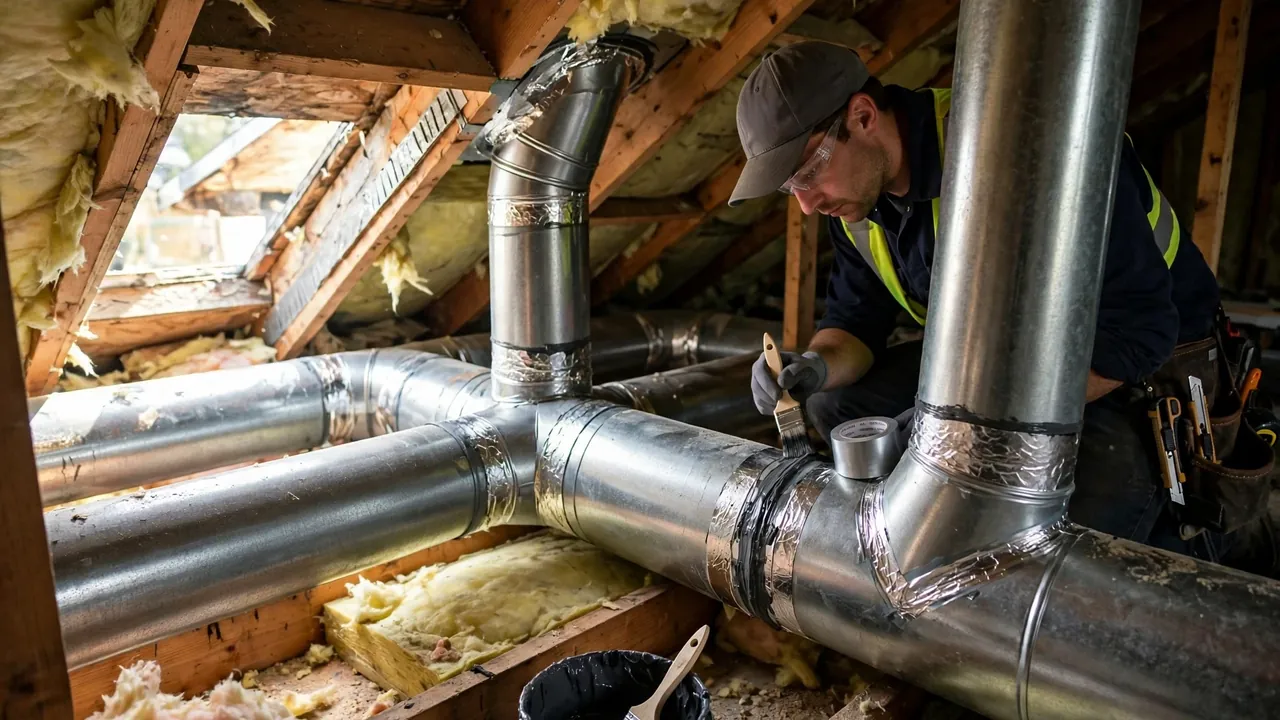
Leaky ducts are the invisible energy waste in most Canadian homes, and the number that explains why is a US Department of Energy figure that has survived every challenge: leaky ducts can waste 25 to 40 percent of the energy a heating or cooling system uses. The average house loses a large share of its heated air through gaps in the ductwork, joints that were never sealed, connections that have worked loose over decades, and ducts running through cold attics and crawl spaces. The rooms farthest from the furnace stay cold, the furnace runs longer, and the dust that gets pulled in through the leaks ends up in the air you breathe. Sealing the ducts fixes all three at once, and it is one of the cheapest energy upgrades a house can get.
There are two ways to seal ducts, and the choice is the price. The manual way is mastic, a thick paste brushed over every joint and seam, plus foil tape on the accessible runs. It is labour-intensive and it only reaches the ducts you can see. The aerosol way, often sold under the Aeroseal name, pressurizes the duct system and sprays a sealant mist inside; the mist collects at the leaks and seals them from the inside, including the runs hidden inside walls and floors. Whole-house air sealing runs 800 to 2,500 CAD in Canadian guides, and duct sealing sits in the same range: manual sealing at the lower end for a small accessible system, aerosol sealing at the higher end for a whole house. There is no single national Canadian price series for duct sealing, so the CAD ranges here are estimates built from Canadian air-sealing guides and converted US figures from HomeAdvisor and Fixr at roughly 1.40 CAD per US dollar, which put aerosol duct sealing in the same 1,500 to 2,500 CAD band for a typical house. Get the method named on the quote, because manual and aerosol are different jobs at different prices.
A blower-door test runs 300 to 500 CAD and is the right first step, and the reason is simple: it measures how much air the house leaks, and paired with a duct leakage test, it shows whether the ducts are actually the problem or whether the leaks are in the walls and attic instead. Sealing the ducts of a house whose real problem is a leaky attic is money spent on the wrong fix. The attic is the bigger prize in most homes: a full air-seal, insulation and ventilation upgrade runs 2,000 to 6,000 CAD and cuts heating costs by 15 to 25 percent, and duct sealing is often done as part of that job. Our guide "Attic Insulation Cost in Canada" covers the insulation half, and "Home Energy Audit Cost in Canada (EnerGuide)" explains the audit that bundles the blower-door test with the duct test.
The signs that your ducts need sealing are easy to spot. Some rooms are always cold while others are fine. The furnace runs constantly on cold nights but the house never feels warm. There is dust on the furniture a day after cleaning, or a musty smell when the heat kicks in. If two or three of those are true, get the duct test, not a quote for sealing, a test. A reputable company will test first and seal second, and will re-test after the work to show you the leakage number dropped. If a company quotes sealing without testing, it is selling you a product, not a solution. And if the ducts are old, damaged, or lined with asbestos, sealing is the wrong answer entirely: replacement or professional abatement comes first, and our guide "Asbestos Removal Cost in Canada" covers the abatement side. A furnace tune-up at 120 to 250 CAD is worth booking while the ducts are being worked on, since the technician is already in the system. You can sanity-check any quote against the RepairPrice home calculator (home-calculator.php) before you sign.
Common questions:
How much does duct sealing cost in Canada?
Typically 800 to 2,500 CAD, with manual mastic sealing at the lower end for a small accessible system and aerosol sealing at the higher end for a whole house. The estimate is built from Canadian air-sealing guides and converted US figures from HomeAdvisor and Fixr.
How much energy do leaky ducts waste?
The US Department of Energy estimates leaky ducts can waste 25 to 40 percent of the energy a heating or cooling system uses, because heated or cooled air escapes before it reaches the rooms, and unconditioned air is pulled in through the leaks.
What is Aeroseal and is it worth it?
Aeroseal is an aerosol duct sealing method that pressurizes the duct system and sprays a sealant mist inside, sealing leaks from the inside, including runs hidden in walls and floors that manual mastic cannot reach. It costs more than manual sealing and is worth it when much of the ductwork is inaccessible.
How do I know if my ducts are leaking?
Some rooms are always cold, the furnace runs constantly on cold nights, dust returns a day after cleaning, or there is a musty smell when the heat kicks in. A duct leakage test, paired with a blower-door test at 300 to 500 CAD, gives the answer as a number.
| Service | Typical range (CAD) | Notes |
|---|---|---|
| Manual duct sealing, mastic and tape | 800–1,500 | Lower end for small accessible systems |
| Aerosol duct sealing (Aeroseal) | 1,500–2,500 | Whole house; seals hidden runs from inside |
| Blower-door test | 300–500 | Test first — often bundled with an audit |
| Attic air-seal + insulation | 2,000–6,000 | The bigger prize; cuts heating 15–25% |
| Whole-house air sealing | 800–2,500 | House size and leak severity drive cost |



 RepairPrice
