
How Much Does Drain Cleaning Cost in Canada?
By Oleksandr Potapenko · 2026-11-16 · How we research prices
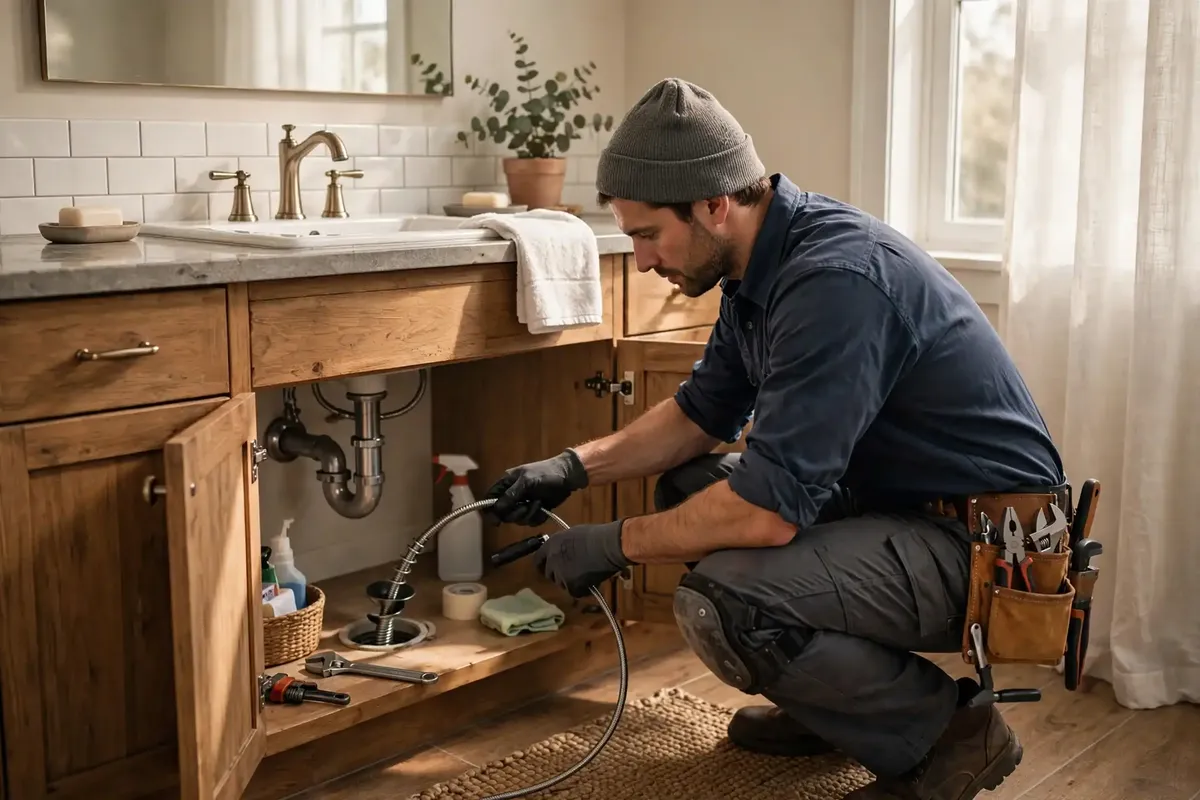
A slow drain is a small problem with a price tag that depends entirely on where the clog sits. HomeGuide's 2026 drain cleaning guide puts a simple sink, tub, or toilet clog at 100 to 275 USD, and a main drain line or multi-fixture blockage at 175 to 600 USD. HomeAdvisor's numbers break down the same way by fixture: a kitchen sink around 110 to 215 USD, a toilet around 110 to 275 USD, and a main line anywhere from 100 to 800 USD. Converted at 1.39 CAD per dollar, the single-drain job lands around 140 to 385 CAD and the main line around 245 to 835 CAD. Canadian market reporting lines up with that: Hamilton and Ottawa contractor data puts standard drain cleaning at 150 to 350 CAD, with a basic snake at 150 to 200 CAD.
There is no single Canadian national price series for drain cleaning, so the honest way to read these figures is as a converted US range cross-checked against Canadian city pricing. The two agree well enough that the Canadian band of 150 to 350 CAD for a standard call is a safe planning number, with the main line and hydro-jetting above it. If a quote for a single slow sink comes in at 600 CAD with no camera work and no explanation, that is the moment to get a second quote.
The method is what moves the price, and it is worth knowing the three rungs before anyone quotes. Snaking, or cabling, is the first rung: a flexible steel cable with a cutting head, fed down the drain to break up or pull out the blockage. HomeGuide puts basic snaking at 100 to 275 USD, and a 2025 analysis of more than 30,000 verified US service calls found a national average of 242 USD for standard residential drain cleaning. It takes 30 to 60 minutes for a single fixture and it fixes most clogs. The second rung is hydro-jetting: water at 3,000 to 4,000 PSI scours grease and scale off the pipe walls. HomeGuide puts it at 600 to 1,400 USD, averaging about 1,000 USD, or roughly 835 to 1,950 CAD. That is a different job from snaking, and it is the right one for a line that keeps clogging because the walls themselves are coated. The third rung is the camera, covered in our guide Drain Camera Inspection Cost in Canada, which usually runs 175 to 700 CAD and tells you whether the clog is grease, roots, or a collapsed pipe.
What actually clogs a drain is less mysterious than it feels. Kitchen sinks clog on grease and food debris, which is why HomeAdvisor's kitchen-sink band is the narrowest and cheapest. Bathroom drains clog on hair and soap scum. Main lines clog on tree roots, which is a different problem entirely: roots enter through clay-tile joints in older homes, and cutting them costs an extra 75 to 150 USD on top of the cleaning, according to Hamilton contractor reporting. A clog that returns within weeks of a snake is almost never a new clog. It is the same clog, incompletely cleared, or a structural problem the snake cannot fix. That is when the camera earns its money.
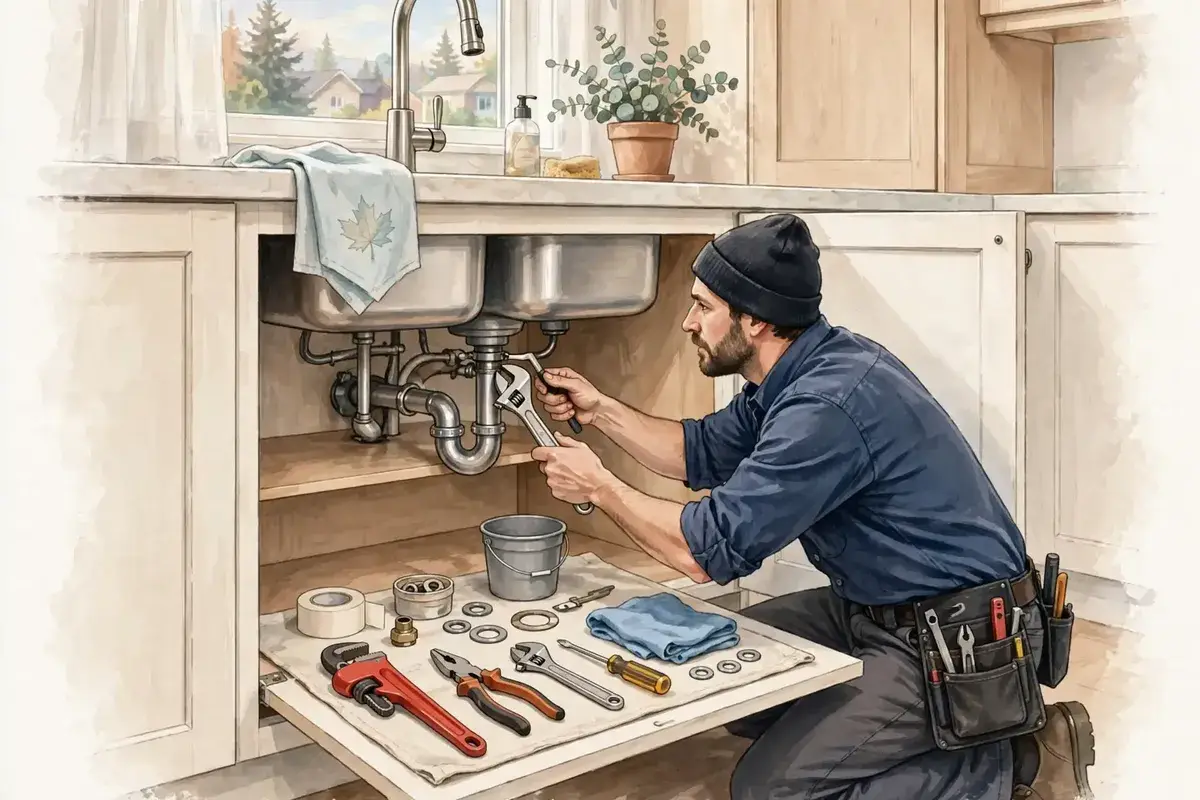
The decision rule is straightforward. Try the cheap fixes first, in order: a plunger, then removing and cleaning the trap under the sink, then a drain snake you can rent or buy. Never pour chemical drain cleaner into a line you may later need a plumber to open; caustic chemicals sit in the trap, burn skin, and damage older pipes, and most plumbers charge more when they have to work around them. Call a pro when more than one fixture is slow at the same time, when water backs up into a lower fixture, or when the same drain clogs twice in a season. Those are main-line symptoms, and main-line work is not a DIY job. And if the house is older than about 40 years and has never had a camera inspection, get one: Ottawa reporting recommends it specifically for homes of that age with clay or cast-iron laterals.
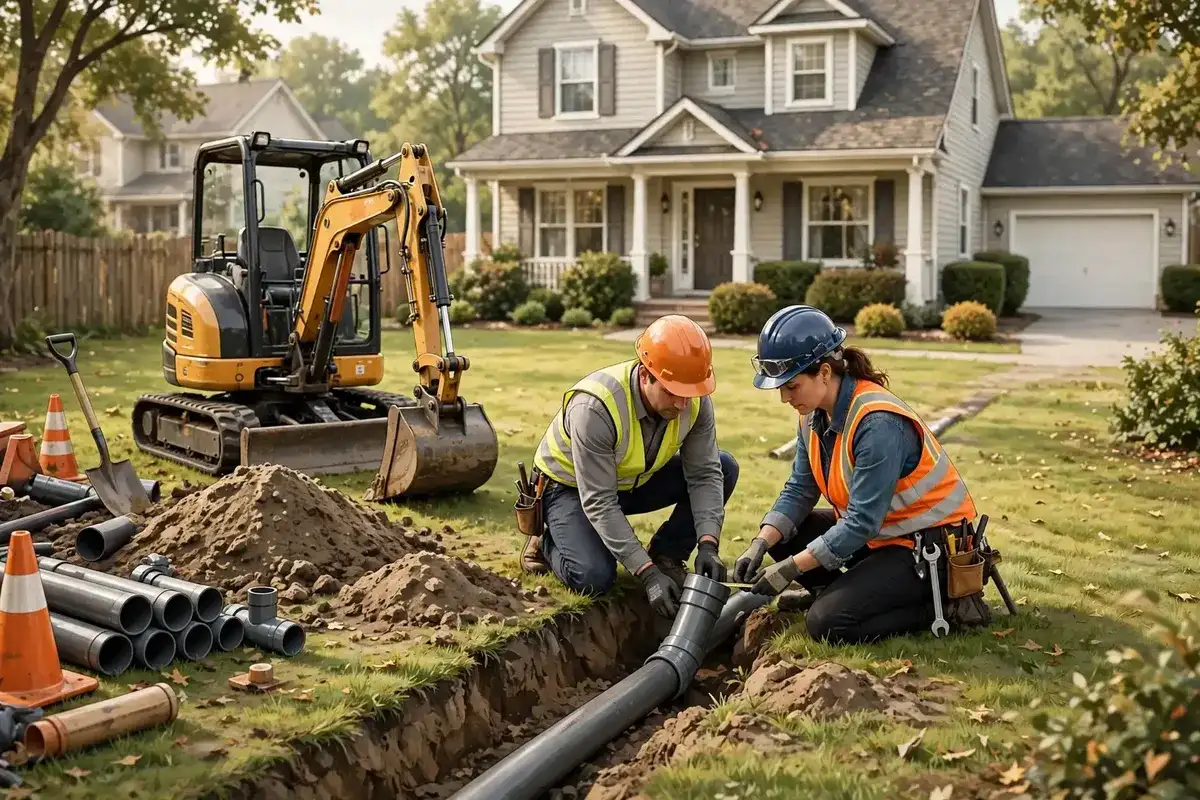
Prevention is cheaper than any of this. A mesh strainer in every sink and shower catches the hair and food that cause most clogs. Grease goes in the garbage, never down the sink: it solidifies in the pipe and no amount of hot water undoes that. Once a year, a professional cleaning of the main line in a root-prone house costs less than one emergency Sunday visit. Check the numbers for your situation in the RepairPrice home calculator (home-calculator.php), and if the clog turns out to be a sewer problem rather than a drain problem, read Sewer Line Repair and Replacement Cost in Canada: Trenchless vs Digging before you approve anything.
Common questions:
Q: How much does it cost to unclog a drain in Canada?
A: A single drain typically costs 150 to 350 CAD. A main line runs 250 to 850 CAD, and hydro-jetting 800 to 1,950 CAD. HomeGuide's US figures, converted at 1.39, match Canadian city pricing closely.
Q: Is hydro-jetting worth it?
A: For a line that keeps clogging after snaking, yes. Snaking punches a hole through the blockage; jetting at 3,000 to 4,000 PSI cleans the pipe walls. It costs roughly three to four times a snake, but it is the only method that removes the grease and scale causing repeat clogs.
Q: Can I use chemical drain cleaner?
A: You can, but you should not. Caustic cleaners damage older pipes, burn skin, and make the eventual plumber visit more expensive and more dangerous. A plunger and a cleaned trap fix most clogs without chemicals.
Q: Why does my drain keep clogging?
A: Usually one of three things: grease or scale coating the pipe walls, tree roots in the main line, or a structural defect like a sagging or collapsed section. A camera inspection, 175 to 700 CAD, tells you which one it is.
| Job | Typical range (CAD) | What moves the price |
|---|---|---|
| Single drain (sink, tub, toilet) | 150–350 | Severity, access, time on site |
| Main sewer line clearing | 300–700 | Length, roots, equipment needed |
| Camera inspection | 150–350 | Often credited toward a repair |
| Hydro-jetting a line | 400–900 | Grease or scale build-up, line length |

 RepairPrice
