
Dashcam Installation Cost in Canada
By Oleksandr Potapenko · 2026-11-16 · How we research prices
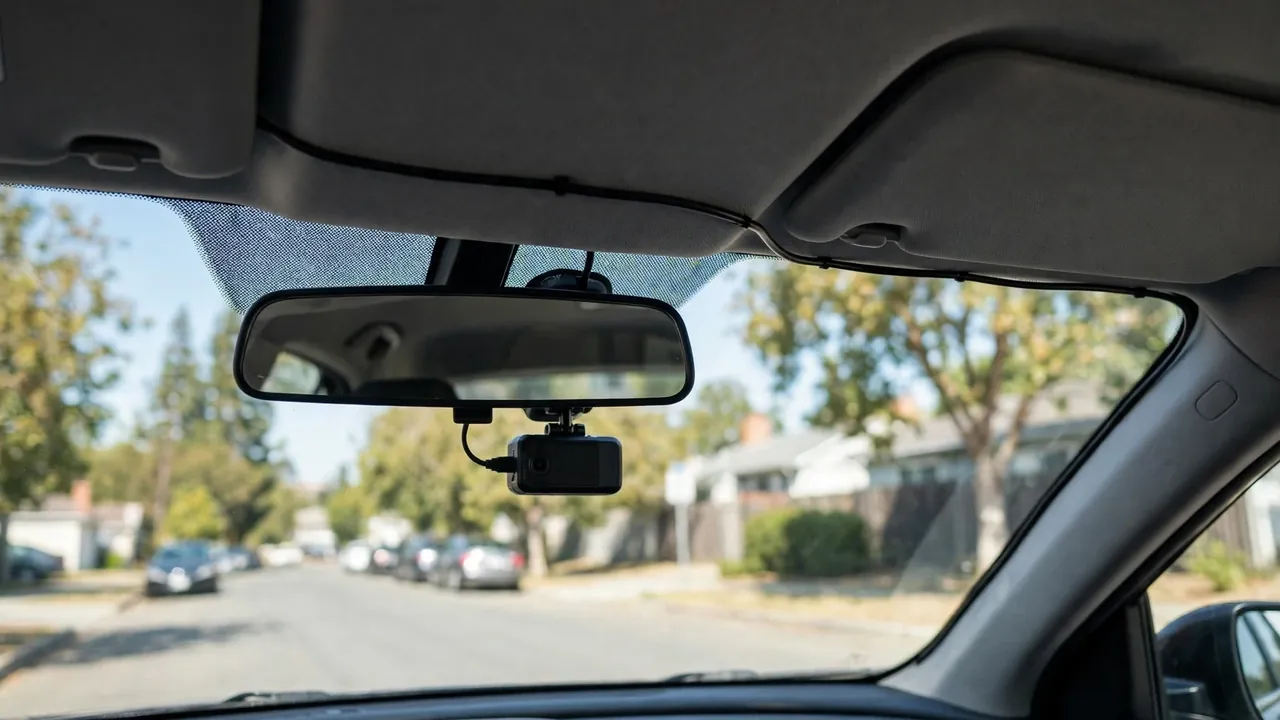
A dashcam is the cheapest witness you will ever hire. In a collision dispute, a parking-lot hit-and-run, or an insurance claim where the other driver tells a different story, thirty seconds of video ends the argument. The camera itself is the easy purchase; the installation is where the money and the mistakes live. A camera dangling from a cigarette-lighter cable works, but it is ugly, it blocks the socket, and it stops recording the moment you turn the car off. A proper hardwired install hides the cable, frees the socket, and unlocks parking mode, the feature that records while the car is parked. The question is not whether to install a dashcam, but how far to take the install.
The prices come from real Canadian installers, and they cluster tightly. A plug-in install, windshield mount and 12-volt socket, costs $50 to $140 for half an hour to an hour of work. A hardwired install, fuse box connection with parking mode and a rear cable, costs $150 to $350 and takes 1.5 to 2.5 hours. A British Columbia pricing guide puts professional plug-and-play at $50 to $100, hardwired at $100 to $250 or more, and multi-camera systems at $200 to $500 or more. Actual shop price lists confirm it: a London, Ontario mobile installer charges $80 for a front camera plug-in, $130 hardwired, and $20 extra for a rear camera. Safe Drive Solutions in Mission, BC starts at $225 plus tax for one channel, $280 for two, and $310 for three. Lockdown Security Canada in Markham charges a flat $210 for a three-channel front, cabin, and rear install, about two hours, with a lifetime installation warranty. Vancouver Dash Cam lists $125 for one channel and $165 for two. Toronto installers typically charge $100 to $250 depending on complexity. The camera itself is extra in all of these prices, and a good front-and-rear camera costs $150 to $400 before installation.
Parking mode is the feature that sells the hardwired install, and it is also the feature that causes the most trouble when it is done badly. Parking mode records when the car is off, triggered by motion or impact, which is what catches the parking-lot hit-and-run. But a camera left recording all night will drain the battery, and a dead battery on a cold morning is a high price for a video you may never need. A proper install hardwires to a fused source with a low-voltage cutoff, so parking mode stops before the battery runs low. Ask the installer explicitly: does this install include a low-voltage cutoff, and at what voltage does it cut out. If the answer is vague, or the installer plans to wire the camera to a constant power source with no cutoff, walk away. The same question applies to the rear camera cable: it should run behind the trim and the headliner, never across the airbag, and a good installer will tell you that unprompted.
The camera choice matters as much as the install. Buy a camera with a capacitor rather than a battery if you park in summer heat or winter cold, since lithium batteries swell and fail in temperature extremes. Buy a high-endurance memory card, not a regular one, because continuous recording writes and overwrites constantly and a standard card dies in months. Check whether the camera has GPS, which stamps speed and location on the footage and strengthens an insurance claim, and whether it records in true 1080p or better on both channels, since a rear camera that records at low resolution is little use for reading a licence plate. A front-only camera is enough for collision disputes; a front-and-rear setup is the right call if you drive in the city, park on the street, or want protection against rear-end disputes. A three-channel setup adds a cabin camera, which matters for rideshare drivers and families, and costs little extra once the installer is already running the rear cable.
The decision rule is simple. If you just want a record of collisions while driving, buy a front camera and have it plugged in or hardwired for $50 to $140, and you are done. If you park on the street, in a parkade, or anywhere a hit-and-run is plausible, pay for the hardwired install with parking mode and a low-voltage cutoff, $150 to $350, and add the rear camera for $20 to $100 more. If you drive for rideshare or want cabin coverage, go three-channel for $210 to $350 installed. In every case, get the install done by a specialist who warranties the work, not by a generalist who treats it as an afterthought, and confirm the price includes hiding the cables and setting up parking mode. A camera that falls off the windshield in July heat or drains the battery in January is worse than no camera at all, because it gives you confidence you do not have. Check any quote against the RepairPrice calculator (calculator.php). And if your car already has a backup camera that is failing, see Backup Camera Not Working: Replacement Cost in Canada, which covers the factory camera system rather than an add-on.
Common questions:
Q: How much does dashcam installation cost in Canada? A: A plug-in install costs $50 to $140, and a hardwired install with parking mode costs $150 to $350. Real shop price lists confirm it: $80 plug-in or $130 hardwired in London, Ontario; $225 and up for one channel in Mission, BC; a flat $210 for three channels in Markham. The camera itself is extra.
Q: Will a hardwired dashcam drain my battery? A: Not when it is set up properly. A correct install uses a fused source with a low-voltage cutoff, so parking mode stops before the battery runs low. Ask the installer to confirm the cutoff is included and at what voltage it triggers.
Q: Do I need a rear camera too? A: For collision disputes, a front camera is enough. For city driving, street parking, or rear-end disputes, a front-and-rear setup is worth the extra $20 to $100 in installation, since the rear cable is run once and the protection is permanent.
Q: What memory card should I use in a dashcam? A: A high-endurance card rated for continuous recording. A regular card wears out in months under constant writing and overwriting, and a dead card means no footage when you need it most.
| Service | Typical range (CAD) | Notes |
|---|---|---|
| Plug-in install, 0.5–1 h | $50–$140 | Windshield mount, 12-volt socket; no parking mode |
| Hardwired install, 1 channel, 1.5–2.5 h | $150–$350 | Fuse box, parking mode with low-voltage cutoff |
| Front + rear camera install | $165–$300 | Rear cable routed behind trim; $20–$100 over front-only |
| Three-channel install (front, cabin, rear) | $210–$350 | About 2 hours; flat rate at some GTA shops |
| Camera and memory card | $150–$400 + card | Buy a high-endurance card for continuous recording |

 RepairPrice
