
Chimney Liner Replacement Cost in Canada
By Oleksandr Potapenko · 2026-11-16 · How we research prices
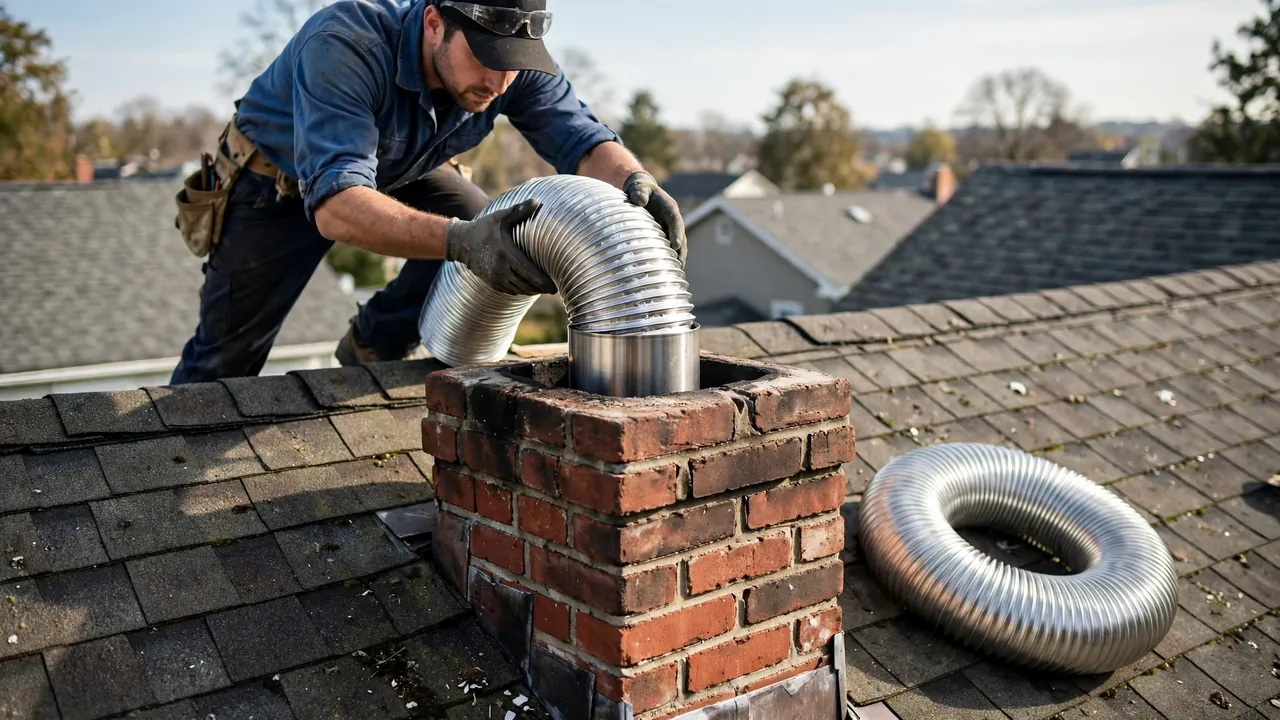
A chimney liner is the pipe inside the chimney, and it is the part of the chimney that decides whether your house is safe. It carries smoke, heat and combustion gases up and out, and it keeps them away from the brick, the mortar and the wooden framing of your house. An older Canadian home often has a clay tile liner, and clay cracks with age and freeze-thaw cycles. A cracked or missing liner is not a cosmetic problem. It lets heat and carbon monoxide leak into the walls, it lets acidic flue gases eat the mortar from the inside, and it is the reason a chimney fire can spread from the flue into the house itself. A chimney sweep who tells you the liner is cracked is not upselling you. They are telling you the chimney is not safe to use until it is fixed.
HomeAdvisor, in its 2025 chimney liner guide, puts professional installation at $1,500 to $5,000, with most homeowners spending around $2,500 and high-end installations reaching $7,000. Angi, in its September 2026 update, agrees closely: $1,500 to $5,000, with an average of $2,500. The material breakdown explains why the range is so wide. HomeAdvisor prices rigid stainless steel liners at $20 to $40 per linear foot and flexible stainless liners at $40 to $90 per linear foot, while EngineerFix prices flexible stainless steel at $20 to $90 per linear foot depending on grade and wall thickness, with labour at $500 to $1,500. Aluminium liners are cheapest at $10 to $30 per linear foot, but they are restricted to medium-heat gas appliances, because they cannot handle wood smoke or oil exhaust. Converted at roughly 1.40, HomeAdvisor's US band becomes about $2,100 to $7,000 in Canadian dollars, which sits above the older Canadian source figures. Canadian cross-checks are lower: a Canadian furnace guide prices chimney liner work and abandonment at $900 to $2,800 in the context of oil-to-gas conversions in Ontario and Quebec, which is a simpler job than a full wood-burning reline. The honest 2026 Canadian planning range for a full stainless steel liner replacement is $2,000 to $6,000 installed, with a typical 20-foot chimney at $2,500 to $4,000. There is no single Canadian national price series for chimney liners, so these are estimates from named US guides cross-checked against Canadian installer figures, and the height of your chimney is the number that matters most.
The alloy grade is the detail that separates a liner that lasts 15 years from one that lasts 30. Stainless steel liners come in two common grades: 304L, the standard grade for wood-burning appliances, and 316Ti, the more corrosion-resistant grade for oil or coal, which commands a higher price. Walker Metalsmith, a liner supplier, prices 6-inch 304 stainless at $30 to $40 per linear foot and 6-inch 316 stainless at $40 to $50, with a 20-foot chimney at $600 to $800 in material for 304 and $800 to $1,000 for 316, before installation. Insulation matters just as much: a stainless liner usually needs an insulation wrap to meet code and to improve draft, and the insulation blanket kit adds $200 to $400 in material. An uninsulated liner in a cold Canadian chimney condenses flue gases, and the condensate is acidic enough to corrode even stainless steel over time. If your quote does not mention insulation, ask why. A liner without insulation in an exterior chimney is a liner that will fail early, and the installer who omits it is either cutting corners or does not know the code.
The alternatives are worth understanding before you choose. A clay tile liner is the original equipment in most older homes, and retrofitting a new clay liner costs $2,500 to $5,000, because the old tiles have to come out and the new ones go in through the top, which is destructive, slow work. A cast-in-place, or pour-in-place, liner is a cement mixture pumped into the flue around an inflatable form, and it costs $3,500 to $7,000. It is the right choice when the flue is too damaged or too irregular for a steel liner, and it adds structural strength to a weak chimney, but it is permanent in a way steel is not, and it needs a specialist crew. An aluminium liner is the budget option for a gas furnace only: it is light, cheap and easy to install, but it cannot be used with wood, pellet or oil, and a gas appliance that is later replaced with a wood stove will need the liner replaced again. The decision is really about the fuel: wood and oil need stainless steel, gas can use aluminium, and a damaged flue needs cast-in-place.
Here is the decision rule. Replace the liner now, before the next heating season, if a chimney inspection or a WETT inspection finds cracked or missing clay tiles, if you can see daylight through the flue from below, if the mortar inside the flue is crumbling, or if you are installing a new wood stove, insert or furnace that changes the flue size or the exhaust temperature. A new appliance with the wrong liner is a dangerous combination, and in Ontario, TSSA gas rules mean a furnace change can require a liner upgrade, while in British Columbia, Technical Safety BC oversees the same question. Do not use the fireplace or the furnace until the liner is fixed: carbon monoxide is colourless and odourless, and a cracked liner is one of the ways it gets into a house. If the chimney also needs repointing, read Chimney Repair and Repointing Cost in Canada and quote both jobs together, because the scaffolding is already up and the mason and the chimney sweep can coordinate. If the leak is at the roof rather than in the flue, Roof Leak Repair Cost in Canada covers chimney flashing, which is a different job from the liner and is often confused with it.
Before you hire, ask for the liner specification in writing: the alloy grade, 304L or 316Ti, the diameter, the length, and whether insulation is included. Ask whether a permit is required in your municipality, because many require one for a relining, with fees of $50 to $200, and ask whether the price includes a camera inspection before and after, because a liner installed blind is a liner installed on faith. Ask for the warranty in writing: a quality stainless liner carries a lifetime warranty from the manufacturer, but the warranty is only as good as the installation, and it is usually void if the liner is installed without insulation where insulation is required. Get three written quotes, compare them with the RepairPrice home calculator at home-calculator.php, and be suspicious of any quote that is far below the others: on liner work, that gap is usually a thinner wall, the wrong alloy, or missing insulation. A chimney liner is not the place to save $500. It is the pipe that keeps the fire in the chimney and the carbon monoxide out of your house.
Common questions:
How much does a chimney liner replacement cost in Canada? HomeAdvisor and Angi both put the US range at $1,500 to $5,000, averaging $2,500, which converts to roughly $2,100 to $7,000 in Canadian dollars. Canadian cross-checks for simpler gas conversions run $900 to $2,800. Budget $2,000 to $6,000 installed for a full stainless steel liner in 2026, with a typical 20-foot chimney at $2,500 to $4,000.
How long does a stainless steel chimney liner last? Angi puts stainless steel liners at 15 to 20 years as a conservative figure, but a quality 316Ti liner with insulation commonly lasts 25 years or more, and manufacturers often offer a lifetime warranty. Lifespan depends on the fuel, the alloy grade and whether the liner is insulated.
Do I need a chimney liner? Yes, if you burn wood, oil or gas in a masonry chimney. The liner protects the brick and mortar from heat and acidic gases and keeps carbon monoxide out of the house. A chimney with a cracked or missing liner is not safe to use, and a WETT inspection will flag it.
Can I install a chimney liner myself? A flexible liner kit can be bought for $500 to $900 in material, but installation means working on the roof, sizing the liner to the appliance, insulating it, and connecting it to code. Most homeowners should hire a certified chimney professional, and a permit and inspection are required in many municipalities.
| Job | Typical range (CAD) | What moves the price |
|---|---|---|
| Stainless steel liner, installed (typical) | $2,000–$6,000 | Most homes; 20-ft chimney $2,500–$4,000 (HomeAdvisor / Angi, converted) |
| Flexible stainless liner, per linear foot | $40–$90 | Grade and wall thickness (HomeAdvisor) |
| Rigid stainless liner, per linear foot | $20–$40 | Straight flues; less common in retrofits |
| Aluminium liner, per linear foot | $10–$30 | Gas appliances only; not for wood or oil |
| Insulation blanket kit | $200–$400 | Required for code and draft on exterior chimneys |
| Clay tile reline | $2,500–$5,000 | Destructive, slow; old tiles removed |
| Cast-in-place liner | $3,500–$7,000 | Damaged or irregular flues; adds strength |
| Permit, where required | $50–$200 | Municipal; many require one for relining |

 RepairPrice
