
Basement Insulation Cost in Canada
By Oleksandr Potapenko · 2026-11-16 · How we research prices
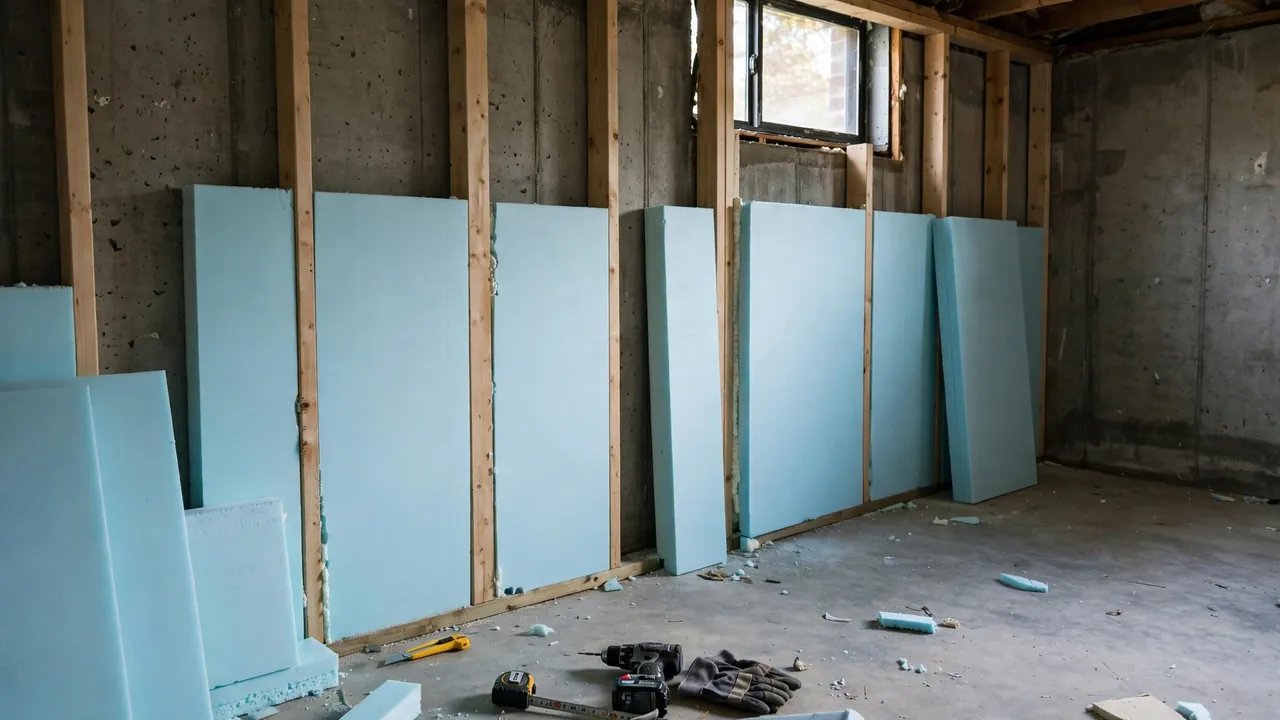
Basement insulation is the job that most often gets done backwards in Canada: the framing goes up, the batts go in, the drywall goes on, and two winters later the wall is wet behind the drywall and the homeowner is paying for mold remediation. The mistake is the assembly, not the material. Concrete is cold and it wicks moisture, so any insulation that sits directly against it without a vapour strategy will get wet, and wet insulation does not insulate. The assembly that works, and the one the National Building Code and Natural Resources Canada point to, is rigid foam against the concrete first, then a framed wall with batt insulation in front of it, with the foam acting as both the insulation and the vapour control. HomeGuide prices basement insulation at 1 to 3 US dollars per square foot of wall surface installed, which converts to roughly 1.40 to 4.20 Canadian dollars, and spray foam at 2 to 5 US dollars per square foot, or 2.80 to 7.00 Canadian. The material is cheap. The assembly is the job.
A note on the numbers: Canada has no single national price series for this work, so the Canadian ranges below are estimates. They start from verified US figures published by HomeAdvisor, Angi, HomeGuide and Fixr, converted at about 1.40 Canadian dollars per US dollar, and are cross-checked against Canadian contractor listings and provincial program figures where those exist.
Converted at about 1.40, insulating a typical basement's walls lands at roughly 2,000 to 6,000 Canadian dollars for rigid foam plus batts, spray foam at 4,000 to 10,000 dollars for the same area, and a full finished basement, framing, insulation, drywall and floor, at 35 to 75 dollars per square foot, which is the same range priced in our guide "Basement Renovation and Finishing Cost in Canada". The R-value target for basement walls in cold climates is around R-20 to R-25 in total, which is roughly two inches of rigid foam at R-5 per inch plus a 2-by-4 wall with R-12 batts. Two inches of foam matters more than the extra batt, because the foam is what keeps the concrete-side surface warm enough that condensation does not form, and condensation is the moisture source that ruins basement walls. A vapour barrier on the warm side of the wall, over the batts, is the old detail that traps moisture; the foam on the cold side is the new detail that prevents it. If a contractor proposes batts straight against the concrete with poly on the inside, that is a 1980s assembly, and it is the one that grows mold.
Water comes before insulation, with no exceptions. A basement that has ever leaked, shown efflorescence, or smelled musty needs the water fixed first, and our guide "Basement Waterproofing Cost in Canada" prices that work at 5,000 to 12,000 dollars for an interior system and 12,000 to 25,000 dollars for exterior work. Insulating a wet wall is how a 4,000-dollar insulation job becomes a 15,000-dollar mold job, priced in "Mold Removal and Remediation Cost in Canada". Radon is the second test before the walls go up: test before you finish, because a mitigation system is far cheaper to install in an unfinished basement, and our guide "Radon Mitigation Cost in Canada" explains Health Canada's 200 becquerels per cubic metre guideline. The rim joist, where the framing meets the foundation at the top of the wall, deserves its own attention: it is the leakiest and coldest part of the basement, it needs foam and air sealing, not batts stuffed into the cavity, and it is the detail that separates a warm basement from a drafty one.
The decision rule is the assembly, in order. One, fix the water and test for radon. Two, rigid foam against the concrete, sealed at the seams, two inches in cold climates. Three, frame the wall in front of the foam, leaving a small gap so the framing never touches the concrete. Four, batts in the framed wall. Five, drywall, with no interior poly vapour barrier over the batts when foam is already on the cold side. Spray foam is the shortcut that does steps two through four in one pass, and it is worth the premium when the wall is irregular, the rim joists are complex, or the space is tight, but it is not magic: it still needs the water fixed first, and it still needs a thermal barrier, usually drywall, over it for fire code. Get two quotes for the same assembly, ask for the foam thickness and type in writing, and confirm the permit is included, because a finished basement needs one. Price the assembly with the RepairPrice home calculator (home-calculator.php) and read "Basement Waterproofing Cost in Canada" before you spend a dollar on insulation.
Common questions:
How much does basement insulation cost in Canada? About 2,000 to 6,000 Canadian dollars for rigid foam plus batts on a typical basement's walls, converted from HomeGuide US figures at about 1.40. Spray foam runs 4,000 to 10,000 dollars for the same area.
What is the best way to insulate a basement wall? Rigid foam against the concrete first, then a framed wall with batts in front of it. The foam is both the insulation and the vapour control, and it keeps the concrete-side surface warm enough to prevent condensation.
Can I put fibreglass batts directly against a concrete wall? No. Batts against cold concrete get wet, and wet insulation does not insulate. That assembly is the one that grows mold behind the drywall.
Should I fix water problems before insulating the basement? Always, with no exceptions. Insulating a wet wall turns a 4,000-dollar insulation job into a 15,000-dollar mold job. Waterproofing and radon testing come before the insulation.
| Job | Typical range (CAD) | Notes |
|---|---|---|
| Rigid foam + batts, typical basement | $2,000–$6,000 | Foam first, then framed wall |
| Spray foam, typical basement | $4,000–$10,000 | One pass, seals rim joists |
| Rigid foam, per sq ft of wall | $1.40–$4.20 | Two inches in cold climates |
| Rim joist foam + air sealing | $500–$1,500 | Leakiest part of the basement |
| Full finished basement, per sq ft | $35–$75 | Framing, insulation, drywall, floor |
| Sump pump with battery backup | $1,500–$3,000 | Fix water first, insulate second |

 RepairPrice
