
Winter Washer Fluid and Wipers in Canada
By Oleksandr Potapenko · 2026-11-16 · How we research prices
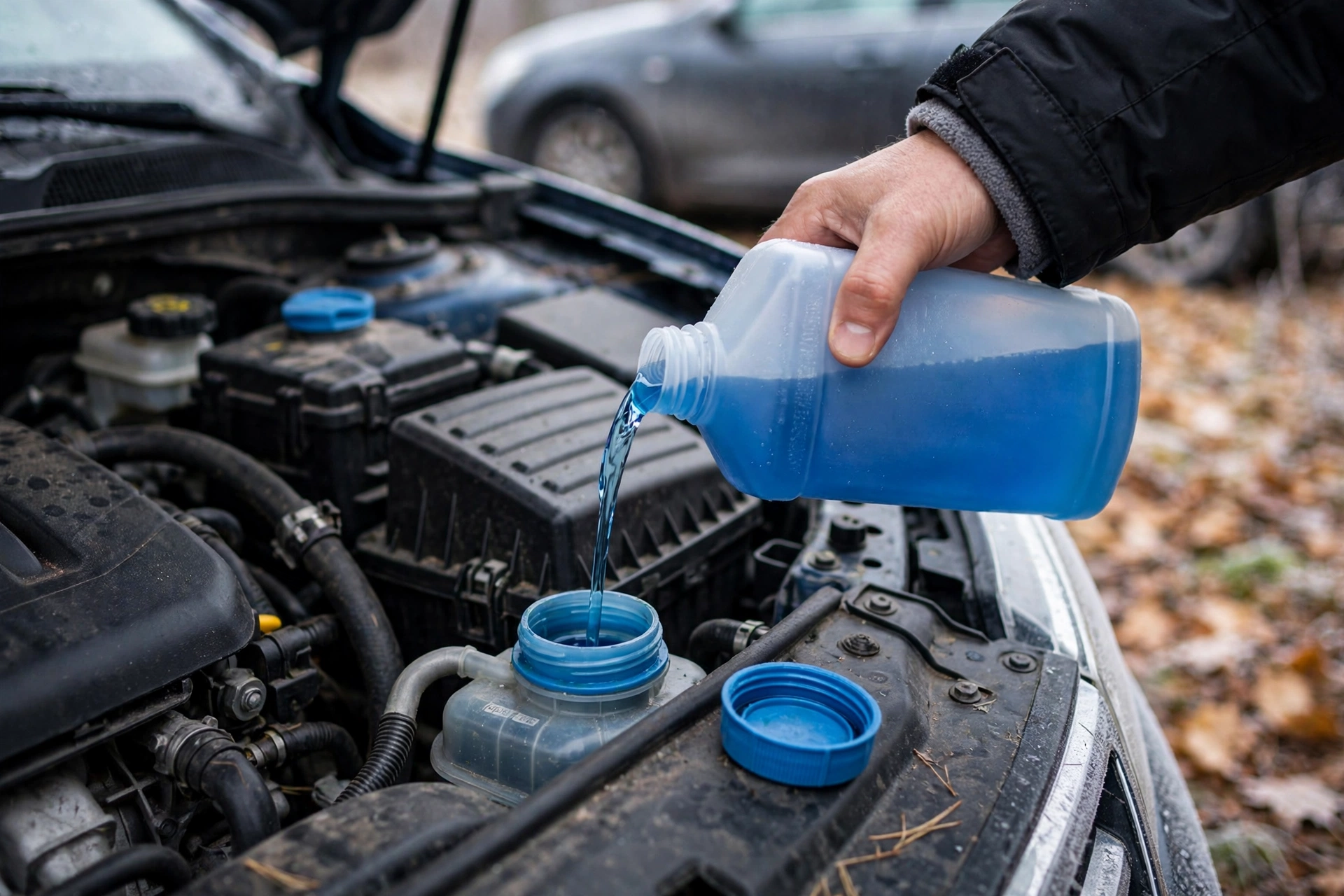
A jug of winter washer fluid costs about six dollars. A cracked windshield costs hundreds. That is the whole economics of this guide, and it is why the cheapest winter preparation in Canada is also the one people most often skip: swapping the summer fluid out in October, before the first freeze turns the reservoir, the lines and the nozzles into a block of ice.
Start with the fluid, because the rating on the jug is the only thing that matters. Transport Canada's winter driving guide recommends keeping the reservoir topped up with fluid rated in the minus-40°C range, and carrying a spare jug in the vehicle — the fluid is on Transport Canada's winter driving emergency kit list. The minus-40 rating is not marketing: it is the minimum threshold for reliable performance across most of Canada in the harshest months, and Prairie drivers should look for minus-45. The retail prices are small and specific. Garage Canada 360's 2026 comparison of winter fluids sold in Canada puts Rain-X ClearView De-Icer at $8 to $12 per 3.78-litre jug, Rain-X Winter Shield at $9 to $13, Prestone De-Icer at $7 to $11, and Canadian Tire's house brand MotoMaster Winter — rated to minus 45 — at $6 to $10. The MotoMaster jug offers nearly identical freeze protection to the premium Rain-X at two to three dollars less, which makes it the value pick for most drivers. Summer fluid, by contrast, is usually rated only to around zero or minus a few degrees, and it freezes in the lines and the reservoir the first cold night it meets.
The swap itself takes five minutes and costs nothing beyond the jug. Do it in October, before the first freeze, and run the washers for a few seconds after filling so the winter fluid reaches the nozzles and the lines — topping up the reservoir without flushing the lines leaves summer fluid sitting in the nozzles, where it freezes first. If you topped up with summer fluid by mistake, dilute it as much as you can with winter fluid and switch early. And one safety note that matters: Health Canada lists windshield washer fluid among products that can contain methanol, which it calls acutely toxic if swallowed, so store jugs out of children's reach and never siphon by mouth.
If the fluid is already frozen, park somewhere warm and wait. Never pour boiling water on the windshield, because the thermal shock can crack the glass — a de-icer spray for $5 to $10 clears it faster and safely. If the pump is silent when you pull the stalk, check the fuse first; a frozen pump that keeps running can burn out, and that turns a six-dollar jug into a repair. Our guide "Wiper Blades and Wiper Motor Replacement Costs" covers the pump and motor prices if it has already gone that far.
Wipers matter just as much as the fluid, and the same October timing applies. Winter blades have a rubber boot over the frame so ice cannot jam the joints, and they keep contact with curved windshields better in the cold. The prices are concrete: The Canada Report's 2026 roundup of winter blades sold in Canada lists the PEAK Snow Beast at $22.06, the Michelin RainForce at $28.19, the TRICO Ice at $36.49 and the Bosch ICON pair at $64.00 — the Bosch set carries a 4.4-star average across more than 28,000 Amazon.ca ratings, the deepest track record in the guide. Budget winter blades typically run about $20 to $30 per blade, premium options $30 to $65, and Rank-It.ca's Canadian review puts the general range at $12 to $40 per blade, or $8 to $10 at the very cheapest end. The SAAQ, Quebec's auto insurance board, recommends replacing blades when they streak, skip, make noise or show physical damage, and replacing them at least annually, with fall as the ideal time because summer heat and sunlight deteriorate the rubber. Conventional wisdom says every six to twelve months; in Canada, the honest version is every fall, before the first freezing rain.
The decision rule is to spend under $50 in October and never think about it again: one jug of minus-40 or minus-45 fluid, a pair of winter blades, and a spare jug in the trunk. Skip the heated wiper systems — The Canada Report lists one at $258, roughly four times what a good pair of conventional blades costs, and it solves a problem a $22 blade already solves. When you park in snow, lift the blades off the glass so they do not freeze down overnight, and never use the wipers to clear heavy snow off the windshield — the weight burns the wiper motor, and a motor costs far more than the minute it takes to brush the snow off by hand. The whole job is under $20 if you do it yourself in October; the expensive version is ignoring it. If a shop quotes you for a wiper motor or a pump instead, check the fair range for your exact car in the RepairPrice calculator (calculator.php) before you authorize the work. For the rest of the winter checklist — battery, tires, coolant — see "Winter Car Prep in Canada: What Actually Matters".
Common questions:
Q: What winter washer fluid rating do I need in Canada? A: Fluid rated to minus 40°C, which is what Transport Canada's winter driving guide recommends. Prairie drivers should look for minus 45 — Canadian Tire's MotoMaster Winter is rated to minus 45 and costs $6 to $10 a jug. Summer fluid freezes in the lines on the first cold night.
Q: How do I switch to winter washer fluid? A: Top up or refill the reservoir with winter fluid in October, then run the washers for a few seconds so the winter fluid reaches the nozzles and the lines. If you only top up the reservoir, summer fluid stays in the lines and freezes there first.
Q: My washer fluid is frozen — what do I do? A: Park somewhere warm and wait for it to thaw. Never pour boiling water on the windshield: the thermal shock can crack the glass. A de-icer spray for $5 to $10 clears the glass safely. If the pump is silent, check the fuse first — a frozen pump that keeps running can burn out.
Q: How often should I replace wiper blades in Canada? A: At least once a year, in the fall, according to the SAAQ — summer heat and sunlight deteriorate the rubber, so fall is the ideal time. Replace sooner if blades streak, skip, chatter or show cracked or torn rubber. A pair of winter blades costs $22 to $64 depending on the brand.
| Item | Typical range (CAD) | Notes |
|---|---|---|
| Winter washer fluid, per jug (3.78 L) | $6–$13 | MotoMaster Winter −45°C $6–$10; Rain-X De-Icer −40°C $8–$12 (Garage Canada 360) |
| De-icer spray | $5–$10 | Clears glass fast, no hot water needed |
| Winter wiper blades, pair | $22–$64 | PEAK Snow Beast $22.06; Bosch ICON pair $64.00 (The Canada Report) |
| Single blade, budget to premium | $12–$40 | Rank-It.ca Canadian review; premium $30–$65 per blade |
| Frozen lines, DIY thaw | $0 | Warm garage and patience |
| Boiling water on the windshield | Never | Thermal shock cracks the glass |


 RepairPrice
