
Trailer Hitch Installation Cost in Canada
By Oleksandr Potapenko · 2026-11-16 · How we research prices
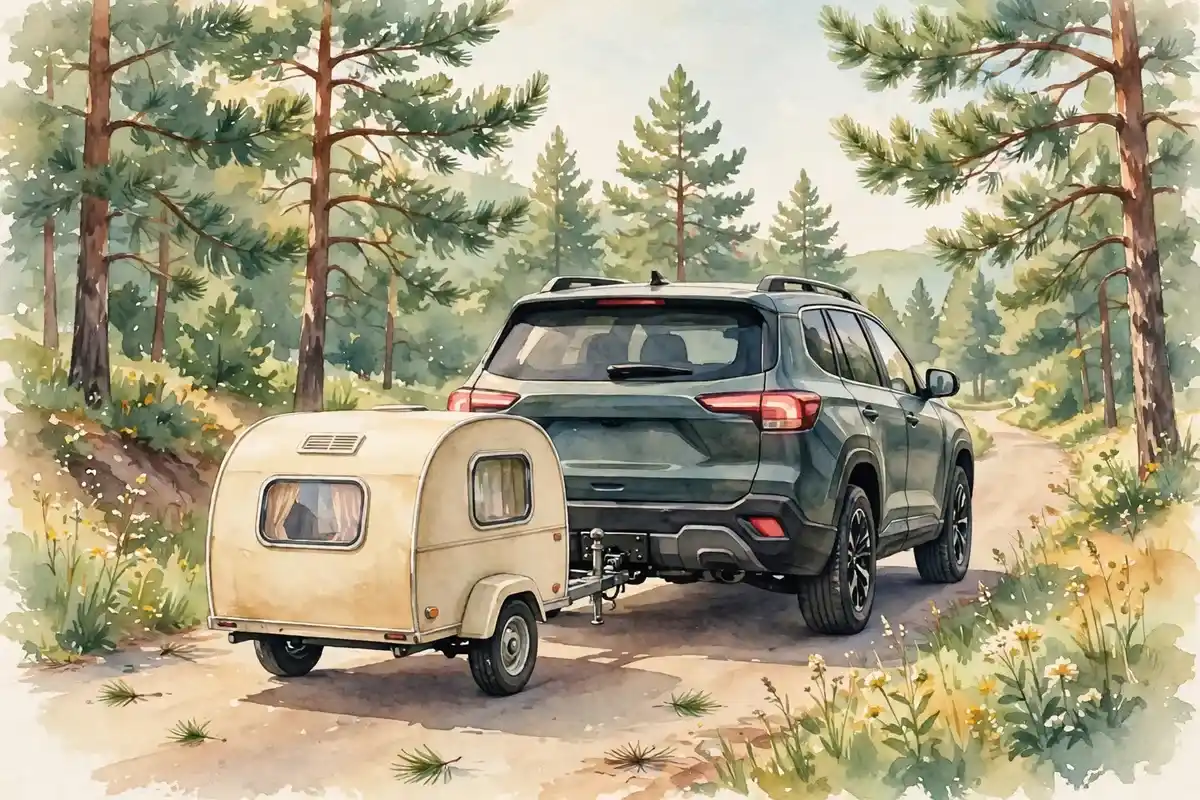
A trailer hitch installed in Canada in 2026 typically costs $350 to $700 Canadian for a standard car or SUV with basic four-pin lighting wiring, and $700 to $1,000 or more once you add seven-pin wiring, a brake controller, or a hidden or factory-style hitch. That is the short answer, and it is built from two kinds of evidence that agree with each other: the big installers' published ranges and real Canadian shop prices. U-Haul's 2026 hitch selection guide puts installed hitches at $180 to $550 US, with the hitch itself at $100 to $300, towing accessories at $30 to $50, and installation labour at $50 to $200. Converted at roughly 1.35 Canadian dollars per US dollar, that is about $240 to $740 Canadian before tax. A November 2026 pricing review of U-Haul installation puts a basic receiver at $300 to $650 US installed, and a complete towing setup with four-pin wiring, a ball mount, and a hitch ball at $500 to $900 US. The Canadian shop prices sit inside the same band: Automotive Outfitters in Ottawa lists a Curt hitch installed at $349 to $599 plus tax depending on vehicle and hitch class, with four-way trailer wiring at about $200 extra. Peninsula Hitch in British Columbia lists installation labour only at $150 to $250 for a standard or front hitch, $200 to $350 for heavy-duty Class 4 and 5 hitches, and $350 to $550 for Tesla and stealth hitches, at a $140-an-hour labour rate.
The hitch class is the first thing that moves the price, and it is decided by what you tow, not by what you drive. A Class 1 hitch, rated to about 2,000 lb, suits a small car pulling a light utility trailer or a bike rack, and the hardware runs $150 to $250 US. A Class 2 hitch, to about 3,500 lb, suits a sedan or small SUV and runs $200 to $350. A Class 3 hitch, to about 5,000 to 8,000 lb depending on the vehicle, is the standard choice for mid-size SUVs and trucks, and the hardware runs $250 to $500. Class 4 and 5 hitches, for heavy trucks and large trailers, run $400 to $800 or more for the hardware alone. Buying a bigger class than you need does not buy you more towing capacity. Your usable limit is set by the lowest-rated part of the whole towing system, the vehicle, the receiver, the ball mount, the hitch ball, the coupler, the trailer, the tires, and the payload allowance, and above all by the vehicle manufacturer's own tow rating. A Class 3 hitch on a car rated to tow 1,500 lb still tows 1,500 lb.
The second thing that moves the price is the wiring. Four-pin wiring runs the trailer's brake lights, turn signals, and running lights, and it is enough for a small utility trailer without its own brakes. It is included in most installed quotes. Seven-pin wiring adds a brake-controller circuit, a charging line, and reverse lights, and it is required for larger trailers with electric brakes. Add a brake controller, the device in the cab that operates the trailer brakes, and the job jumps by several hundred dollars in parts and labour. ThePricer's November 2026 review puts a complete setup with seven-pin wiring and a brake controller above $1,000 US. If you are towing a boat or a camper with brakes, budget for it from the start, because a hitch without the right wiring is a hitch you cannot legally use for that trailer.
The third thing is the vehicle itself. Some cars take a bolt-on hitch in under two hours. Others need the bumper removed, the fascia trimmed, or an exhaust lowered, and the labour climbs to three or four hours. Luxury cars and Teslas are the expensive end: Peninsula Hitch charges $350 to $550 in labour alone for Tesla and stealth hitches, because the fit is hidden behind the bumper and the work is fiddly. A dealer installation is the most expensive route of all, typically $750 to $1,200 or more US for a complete job, according to 2026 pricing comparisons, and it buys the factory part and the factory warranty. A U-Haul centre or a trusted independent mechanic, at $350 to $700 Canadian for most cars, is the better value for most people, and U-Haul backs its hitches with an optional lifetime warranty plan that covers replacement including labour.
The decision rule is short. First, find your vehicle's tow rating in the owner's manual and buy the hitch class that matches it, not a bigger one. Second, decide the wiring by the trailer, not by the price: four-pin for a small utility trailer, seven-pin plus a brake controller for anything with brakes. Third, get the installed quote in writing with the hitch class, the wiring type, and the labour hours named, and compare it with the Ottawa benchmark of $349 to $599 installed for a Curt hitch. Fourth, never tow above the lowest-rated component, and never let anyone tell you a bigger hitch raises your car's tow rating. It does not. If you are choosing between a hitch and a roof rack for bikes, or wondering whether your car can tow at all, check the tow rating first, then run the installed price through the RepairPrice calculator at calculator.php and compare it with the other accessory guides on the site.
Common questions:
Q: How much does trailer hitch installation cost in Canada?
A: Typically $350 to $700 Canadian installed for a standard car or SUV with basic four-pin wiring, and $700 to $1,000 or more with seven-pin wiring, a brake controller, or a hidden hitch. U-Haul's 2026 guide puts installed hitches at $180 to $550 US, and Automotive Outfitters in Ottawa lists a Curt hitch installed at $349 to $599 plus tax, with four-way wiring at about $200 extra.
Q: How much does U-Haul charge to install a hitch?
A: U-Haul's 2026 guide puts the hitch itself at $100 to $300 US, accessories at $30 to $50, and installation labour at $50 to $200, for a typical installed range of $180 to $550 US. A November 2026 pricing review puts a basic U-Haul receiver installation at $300 to $650 US, and a complete setup with wiring at $500 to $900 US. The exact price depends on your year, make, and model, and U-Haul quotes it per vehicle.
Q: Do I need four-pin or seven-pin wiring?
A: Four-pin wiring runs the trailer's brake lights, turn signals, and running lights, and it is enough for a small utility trailer without its own brakes. Seven-pin wiring adds a brake-controller circuit, a charging line, and reverse lights, and it is required for larger trailers with electric brakes. If your trailer has brakes, you need seven-pin wiring and a brake controller, and the job costs several hundred dollars more.
Q: Does a bigger hitch let my car tow more?
A: No. Your usable towing limit is set by the lowest-rated part of the whole system, and above all by the vehicle manufacturer's own tow rating. A Class 3 hitch on a car rated to tow 1,500 lb still tows 1,500 lb. Buy the hitch class that matches your vehicle's rating and your trailer's weight, not a bigger one.
| Vehicle | Typical installed range | What moves the price |
|---|---|---|
| Standard car | $350–$650 CAD | Class 1–2 hitch $150–$350 US hardware, ~2 h labour; U-Haul guide $180–$550 US installed |
| SUV / truck | $450–$800 CAD | Class 3 hitch $250–$500 US hardware, 4-pin wiring often included |
| Luxury / Tesla / stealth hitch | $700–$1,100 CAD | Hidden fit, bumper work; Peninsula Hitch labour $350–$550 alone |
| 4-pin wiring (basic lights) | Included in most quotes; ~$200 extra in Ottawa | Enough for small utility trailers without brakes |
| 7-pin + brake controller | $300+ extra; complete setup over $1,000 US | Required for larger trailers with brakes |

 RepairPrice
