
Oxygen Sensor Replacement Cost in the USA
By Oleksandr Potapenko · 2026-11-13 · How we research prices
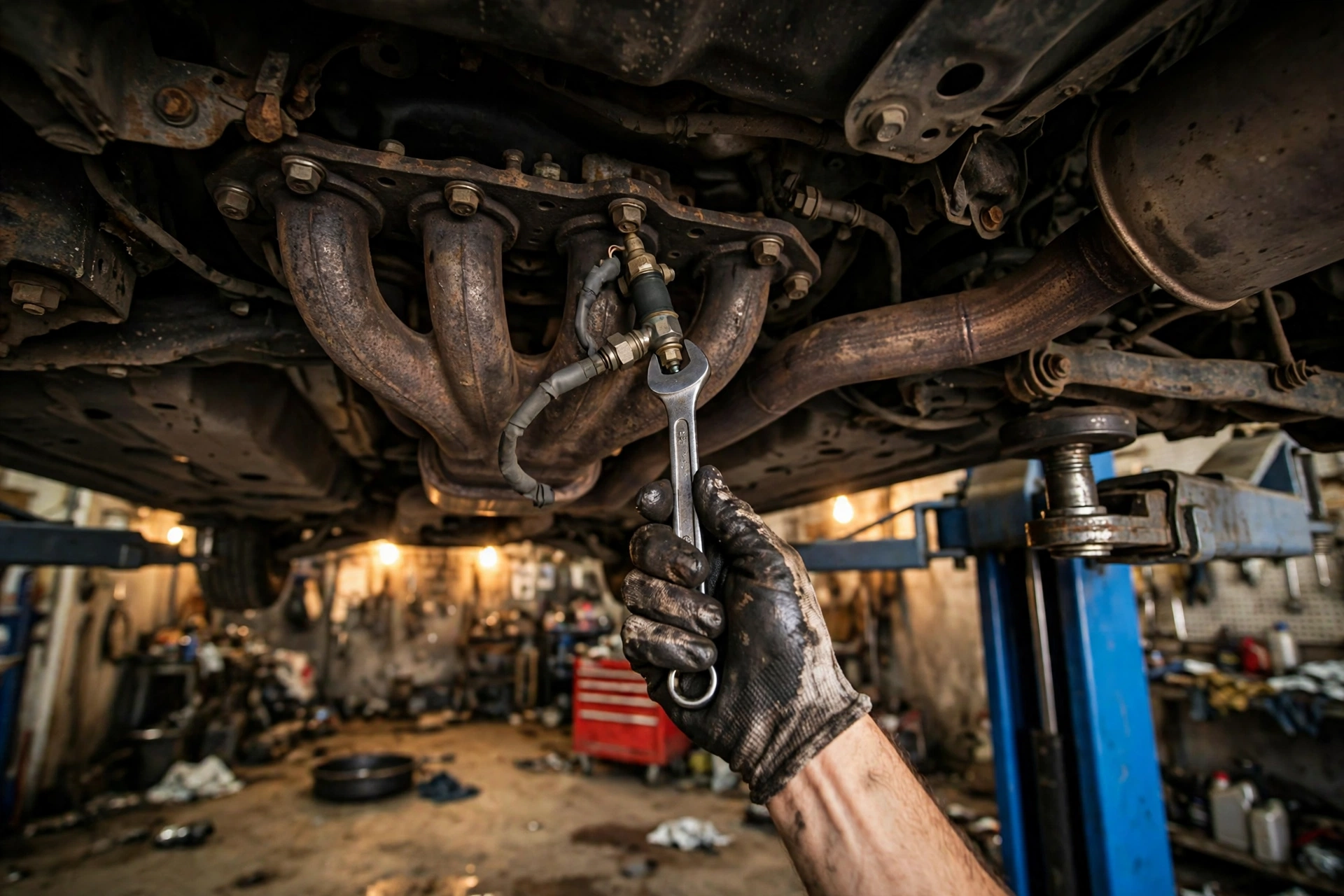
The oxygen sensor measures how much oxygen is left in the exhaust and tells the engine computer how to set the fuel mixture. Too rich and you waste fuel, too lean and the engine runs hot and rough. Most cars have two to four of them, and when one fails the check-engine light comes on, fuel economy drops and the car can fail an emissions test. The price spread is the story of this guide, because a single sensor can cost $96 or $818 depending on the car, and the difference is not the shop, it is the sensor and the access. A single sensor typically costs $250 to $550 replaced at a US shop, according to ThePricer's October 2026 survey of ten sources, while AAA puts a representative oxygen sensor repair at $350 to $400. Real-invoice data from ARI puts the median at $212, the low end of the range, for the simplest cars with the easiest sensors to reach. ARI analysed 556,458 invoices from 3,622 independent shops between November 2025 and October 2026, and its typical oxygen sensor range is $143 to $314. The gap between the $212 median and the $350 to $400 AAA figure is the gap between a simple downstream sensor on a common car and a wideband sensor on a Toyota or a European car, and it is worth understanding before you approve a quote.
The car and the sensor type explain the spread, and RepairPal's September 2026 model pages make it concrete. A 1992 Pontiac Grand Am runs $96 to $139. A 1995 Chevrolet Impala runs $126 to $241. A 2010 Jeep Patriot runs $123 to $321 and a 1997 Toyota Tacoma $232 to $307. A 2007 Ford Escape runs $270 to $377 and a 1997 Jeep Cherokee $255 to $430. A 1999 Dodge Grand Caravan runs $385 to $414 and a 2000 Honda Civic $268 to $662. At the top end, a 2013 Toyota Highlander runs $704 to $818 and a 2017 Audi A4 $633 to $667, including a roughly $560 part. The expensive ones are wideband air-fuel ratio sensors, which cost far more than a basic narrowband sensor and are common on Toyotas and European cars. The part itself is $40 to $350 for many common applications. A Bosch direct-fit wideband sensor retails for $109.99, but some original-equipment sensors cost several hundred dollars, and that is before labour. Labour is usually half an hour to an hour and a half, unless the sensor is seized in the exhaust or buried behind the intake, in which case the bill grows. In Canada the same job runs roughly $175 to $350 Canadian for a typical car, and the Canadian figures, including a real Ontario invoice for a 2016 RAV4 at $214 including tax, are covered in O2 and MAF Sensor Replacement Cost.
There are two kinds to know about: the upstream sensor, before the catalytic converter, which controls the fuel mixture and affects fuel economy directly; and the downstream sensor, after the converter, which monitors whether the converter is still working. They fail differently and cost differently, so a quote should say which one is being replaced. The decision rule is to replace only the failed sensor, except on a high-mileage car, where the matching sensor on the other bank is often close behind, and doing both upstream sensors together can save a second labour charge later. Always fix what killed the sensor: a sensor fouled by burning oil or coolant will fail again within months if the leak is not fixed, and the oil story is covered in High Oil Consumption: Causes and Repair Cost in Canada. And check the warranty before you pay: most oxygen sensors are covered only 2 years or 24,000 miles, not the federal 8-year or 80,000-mile warranty for major emissions components, so a car just out of warranty pays out of pocket. The expensive mistake is ignoring it. A dead sensor can overheat and kill the catalytic converter, turning a $350 job into a $1,000-plus one, and in most states a lit check-engine light is an automatic emissions test failure, so the sensor has to be fixed before the test anyway. Check the fair price range for an oxygen sensor on your specific car on the RepairPrice calculator (calculator.php) before you approve the quote.
Common questions:
Q: How many oxygen sensors does a car have? A: Usually two to four: one upstream and one downstream sensor per exhaust bank. The upstream sensor controls the fuel mixture, the downstream sensor monitors whether the catalytic converter is still working.
Q: How long do oxygen sensors last? A: On cars built since 1996, often 100,000 miles or more. Wideband sensors on Toyotas and European cars can fail sooner, and a sensor fouled by burning oil or coolant will fail again within months if the leak is not fixed.
Q: Can you drive with a bad oxygen sensor? A: Short trips are usually fine, but fuel economy drops, the engine can run rough, and the catalytic converter is at risk, so it is a this-week repair, not a someday one.
Q: Will a bad oxygen sensor fail an emissions test? A: In most states a lit check-engine light is an automatic fail, so the sensor has to be fixed before the test anyway. A failed sensor is also one of the most common reasons a car fails an emissions test.
| Sensor / vehicle | Typical range (USD) | Notes |
|---|---|---|
| One sensor, replaced (ARI median) | $212 | Real-invoice median; typical $250–$550 |
| One sensor, replaced (AAA) | $350–$400 | Representative repair, parts + labour |
| Sensor part only, common cars | $40–$350 | Bosch wideband retails at $109.99 |
| Wideband air-fuel ratio sensor | $300–$600+ | Common on Toyota and European cars |
| Pontiac Grand Am 1992 | $96–$139 | RepairPal model page, Sep 2026 |
| Toyota Tacoma 1997 | $232–$307 | RepairPal model page, Sep 2026 |
| Ford Escape 2007 | $270–$377 | RepairPal model page, Sep 2026 |
| Dodge Grand Caravan 1999 | $385–$414 | RepairPal model page, Sep 2026 |
| Honda Civic 2000 | $268–$662 | Wide range — sensor type and access |
| Audi A4 2017 | $633–$667 | Part alone about $560 |
| Toyota Highlander 2013 | $704–$818 | Wideband sensor, difficult access |


 RepairPrice
