
OBD2 Scanner: Diagnose Your Car Yourself
By Oleksandr Potapenko · 2026-11-16 · How we research prices
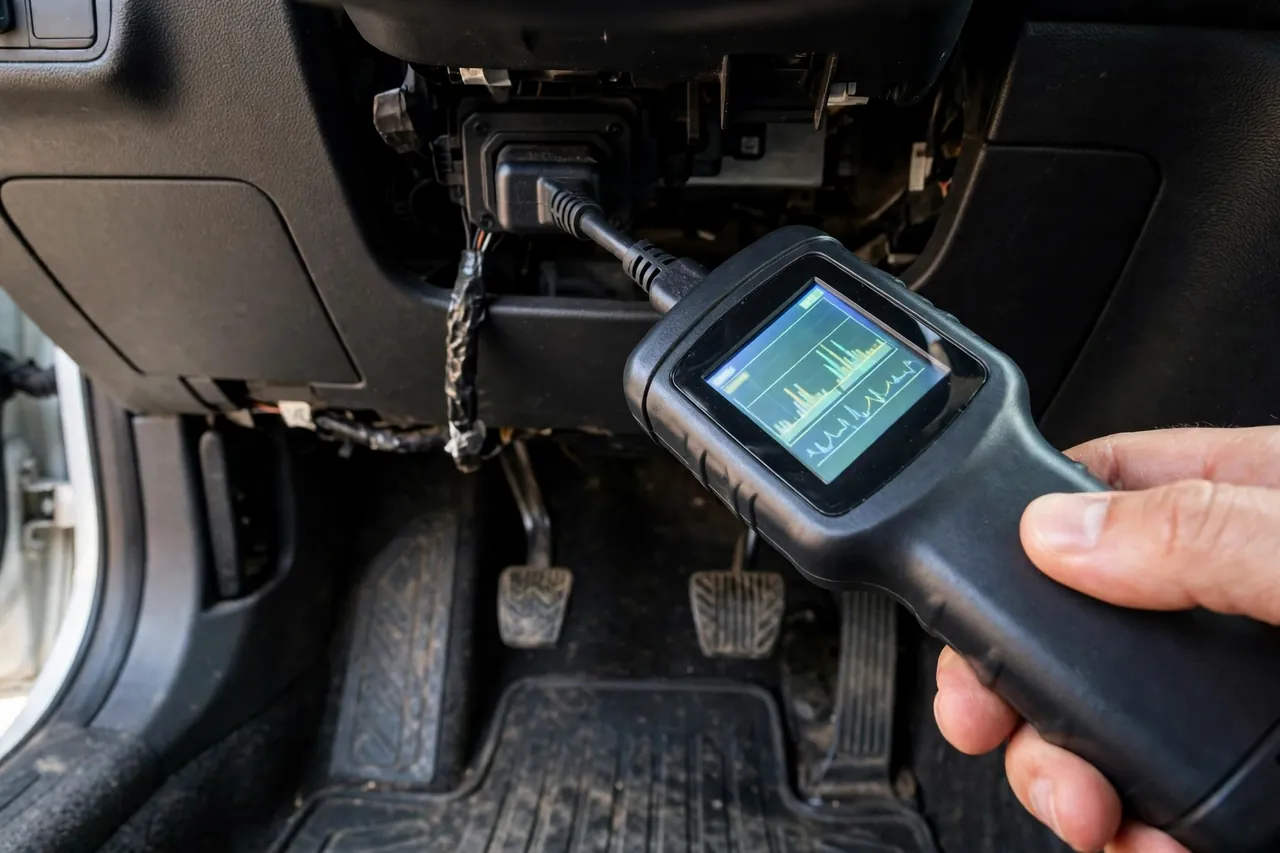
One shop visit pays for the scanner. A professional check engine diagnosis runs about $100 to $180 CAD in Canada, and RepairPal puts general diagnosis at $122 to $179 USD in the United States, so a $100 scanner pays for itself the first time the light comes on — and the second time, and the third. That is the whole case for owning an OBD2 scanner, and it is a good case. The case against it is shorter and worth hearing too: a scanner tells you the code, not the cause, and the distance between those two things is where people waste money on parts they did not need.
Every gasoline car sold in North America since 1996 has an OBD2 port, usually under the dashboard on the driver's side, and every scanner that plugs into it can read the same generic trouble codes. The port is standard by law; the scanner is where the differences live. A basic handheld reader such as the Launch CR529, about $38 USD, reads and clears engine codes and shows a little live data. A Bluetooth dongle such as FIXD, about $19.99 USD for the sensor in FIXD's own store against a $59.99 list price, or about $66.99 CAD on Amazon.ca, pairs with your phone and translates codes into plain English with maintenance reminders — but its deeper features sit behind a Premium subscription of about $100 a year, and it cannot read ABS or airbag codes at any tier. BlueDriver, about $99.95 USD for the sensor or about $146.95 CAD on Amazon.ca, is the pick most DIY reviewers land on: it reads enhanced manufacturer-specific codes including ABS, airbag, and transmission on supported vehicles, shows freeze-frame and live data, and generates vehicle-specific Repair Reports matched to verified fixes, with no subscription at all. The price spread between them is the whole buying decision: pay $20 to $40 for a code, or pay about $100 to $150 CAD for the context that turns a code into a plan.
Here is what a scanner can actually do, in order of usefulness. First, it reads the code and the freeze-frame data — the exact engine conditions when the fault set — which is the single most useful thing you can bring to a shop. Second, it shows live data: oxygen sensor voltages switching, fuel trim numbers, coolant temperature, misfire counters per cylinder. A P0302 misfire on cylinder two plus a dead misfire counter after swapping two coils tells you the coil is bad without paying anyone. Third, it checks emissions readiness, which tells you whether the car will pass an inspection after a repair or a cleared code. Fourth, on the better tools, it reads ABS, airbag, and transmission codes that a basic reader cannot see. What it cannot do is test a part. A P0420 converter-efficiency code can mean a dead converter, a lazy oxygen sensor, an exhaust leak, or an engine burning oil, and no scanner on the market can tell you which one without a human testing the sensor and looking at the exhaust. RepairPal warns explicitly against replacing parts based on a code alone, and CarMD's 2026 Vehicle Health Index shows why the warning matters: the average check engine repair hit a record $554 USD in 2025, and the most common single repair, a catalytic converter at $1,511 USD, is exactly the part people replace on the strength of a code alone.
The workflow that saves money looks like this. The light comes on. You plug in the scanner, read the code, and write it down with the freeze-frame data before clearing anything — clearing erases the evidence and resets the emissions monitors. You search the code with your exact year, make, and model, because a P0171 lean code on a 2015 Ford F-150 and a P0171 on a 2018 Honda Civic are usually different faults. You do the free checks: gas cap tight, oil and coolant levels fine, nothing visibly loose or leaking. Then you decide. A gas cap code, a loose connector you can see, or a coil you can swap in fifteen minutes are DIY jobs. A misfire with a flashing light, an EVAP leak that needs a smoke machine, or anything involving the transmission, the airbags, or the ABS module is a shop job, and you walk in with the code already read, which cuts the diagnostic time and sometimes the diagnostic fee. A professional diagnostic scan at a Canadian shop typically costs $95 to $130 CAD, and a full diagnosis $100 to $180 CAD, often credited toward the repair — so the scanner does not replace the shop, it replaces the first, most expensive hour of guessing.
The decision rule for buying one is simple. If you drive a car older than five years, or you own two cars, or the check engine light has come on even once, buy the BlueDriver at about $100 to $150 CAD and keep it in the glove box. If you only want to know whether a light is an emergency or a next-week problem, the FIXD at about $67 CAD does that job in plain English. If you want the cheapest possible code reader and you are comfortable reading forums, a $38 handheld does the same code reading as either of them. What you should not buy is a $500 professional tablet for a car you drive to work, or a scanner that needs a subscription to show you the code you already paid for. And whatever you buy, remember the limit: the scanner is a flashlight, not a mechanic. It shows you where to look. For the light itself, read My Check Engine Light Is On — How Much Will the Diagnostic Cost?, for the dashboard lights, read Dashboard Warning Lights: What Each One Means, and before you order a part the code suggests, run the repair through the RepairPrice calculator (calculator.php) and compare it with the CarMD averages — an oxygen sensor at $287 USD and an ignition coil at $256 USD are the two most common code-driven repairs, and both are cheaper than the converter they protect.
Common questions:
Q: Will any OBD2 scanner work on my car? A: Any scanner reads generic engine codes on any gasoline car built since 1996, because the port and the code format are standard by law. Enhanced codes for ABS, airbags, and transmission depend on the scanner and the vehicle — BlueDriver covers them on most supported makes; FIXD does not.
Q: Is BlueDriver or FIXD better? A: BlueDriver is the better diagnostic tool: it reads ABS, airbag, and transmission codes, gives vehicle-specific Repair Reports, and charges no subscription, at about $99.95 USD or $146.95 CAD. FIXD is simpler and cheaper at about $19.99 USD or $66.99 CAD, but its best features need a Premium subscription of about $100 a year.
Q: Can a scanner clear the check engine light? A: Yes, and that is both the feature and the trap. Clearing the light erases the code and the freeze-frame data the technician needs, and it resets the emissions monitors, which can fail an inspection. Read and write down the code first.
Q: Does a scanner replace a mechanic? A: No. It reads the code, not the cause. A P0420 code can mean a $287 oxygen sensor or a $1,511 catalytic converter, and only testing separates them. The scanner saves you the first hour of diagnosis; it does not do the diagnosis.
| Item | Typical range (CAD) | Notes |
|---|---|---|
| Free code read, parts store | $0 | Many parts stores read codes free |
| FIXD Bluetooth sensor | ~$67 | Plain-English codes; Premium ~$100/yr extra |
| BlueDriver Bluetooth Pro | ~$147 | ABS, airbag, transmission codes; no subscription |
| Basic handheld reader (Launch CR529) | ~$52 | Reads and clears engine codes |
| Diagnostic scan at a shop, car | $95–$130 | Reads codes and live sensor data |
| Professional diagnostic | $100–$180 | Often credited toward the repair |
| Oxygen (O2) sensor, car | $175–$350 | A common cause behind the light |
| Ignition coil (each), car | $135–$285 | Misfire codes often point here |




 RepairPrice
