
EV Battery Replacement Cost in Canada
By Oleksandr Potapenko · 2026-11-15 · How we research prices
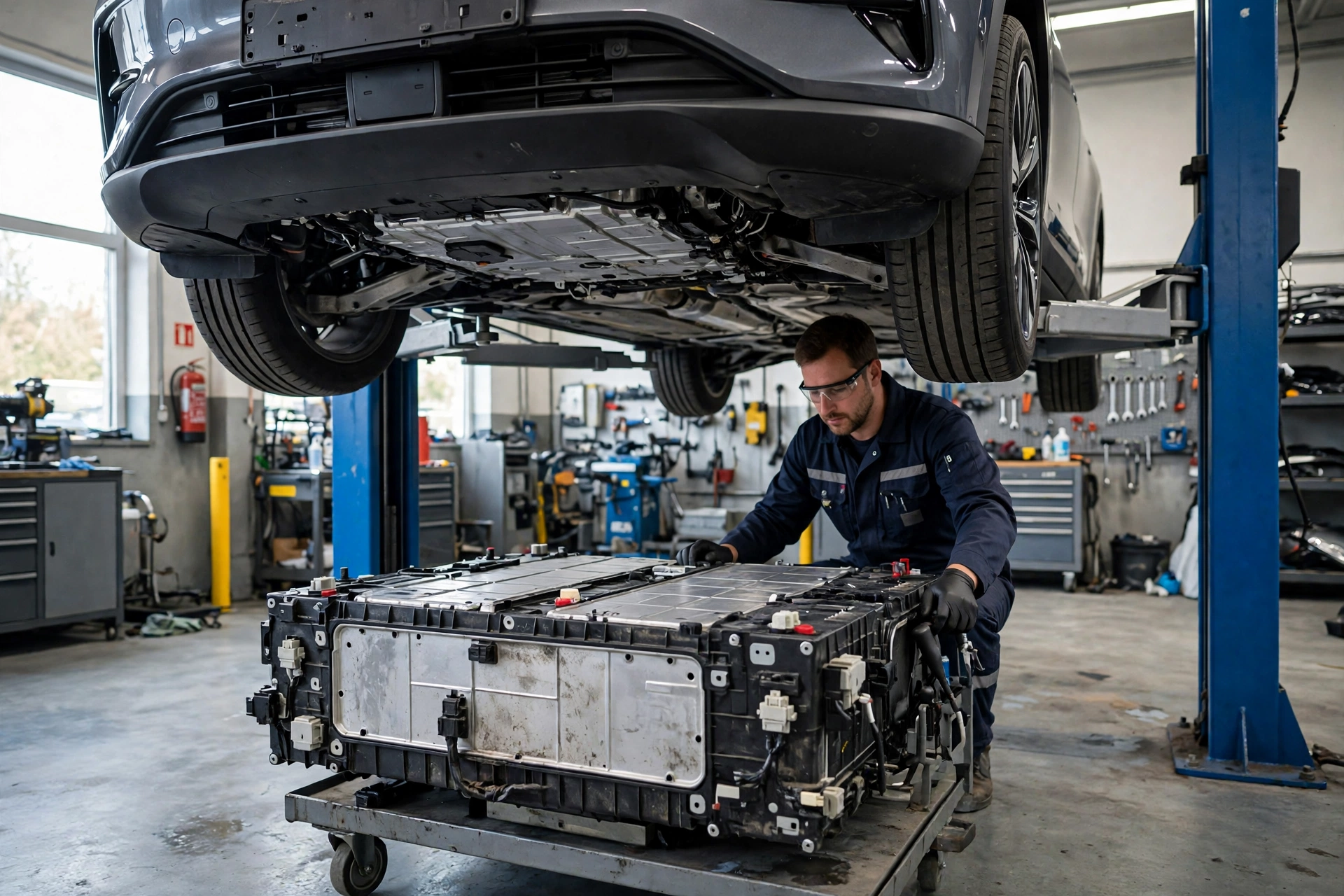
A full EV battery pack replacement in Canada typically costs between $15,000 and $45,000 CAD at an automaker dealership, depending on the model — that is the range reported by The Province, and it is the worst realistic case for a car with no warranty left, not what the typical owner pays. The Province's figures break down like this: about $15,000 for some Nissan Leaf models, just under $30,000 for the Chevrolet Bolt and the Tesla Model S and Model X, and about $45,000 for some Hyundai and Kia models. In British Columbia, a Hyundai Ioniq 5 owner was quoted approximately $30,000 CAD by a dealership for a complete battery replacement, while an ICBC estimate based on another dealer quote reached about $50,000 plus labour and tax — roughly $60,000 in total — and the vehicle was written off. At the extreme end, a GMC Hummer EV pack can reach about $38,000, because the pack is over 200 kWh and structurally integrated into the truck.
Three different jobs share the name battery replacement, and they carry three very different prices. A module-level repair — opening the pack, replacing one or two failed modules, resealing it and recalibrating the battery management system — typically costs $2,000 to $6,000 CAD, and on a Bolt-class pack Canadian specialists quote $2,000 to $4,000. A used or refurbished pack runs $5,000 to $13,000 CAD. A new automaker pack is the $15,000 to $45,000 figure above. The sources disagree on some models, and the disagreement is instructive: The Province puts a new Leaf pack at about $15,000, while a Canadian repair specialist reports about $8,500 CAD for a new Leaf pack at a Nissan dealer. The gap comes from different pack sizes and model years — a 24 kWh Leaf pack is not a 62 kWh one — and from whether the price is a parts list or an installed, out-the-door figure. Always ask which of the three jobs a quote actually covers before comparing numbers.
How long does an EV battery last, and will I ever need a new one? Geotab's 2025 analysis of 22,700 electric vehicles across 21 models found batteries lose about 2.3% of their capacity per year, which projects to roughly 81.6% of original capacity after eight years and about 13 years before reaching the 70% threshold most warranties use. Recurrent, which tracks more than 30,000 connected EVs, found that only about 1.5% of EV batteries have ever been replaced — and for vehicles built in 2022 or later, the rate drops to 0.3%, three cars in a thousand. Charging habits matter: cars charged mostly at home on AC degrade at about 1.5% a year, while heavy users of DC fast charging above 100 kW degrade at about 3.0% a year.
Every EV sold new in Canada carries a traction-battery warranty of at least 8 years or 160,000 km, covering capacity loss below 70% — but note that a pack at 71% is still in spec, even if the lost range ruins your Vancouver-to-Kelowna trip. A Chevrolet Bolt that received a recall battery gets a fresh 8-year or 160,000 km warranty from the installation date of the new pack, which can make a 2019 Bolt warrantied until 2030. Can I replace just one module instead of the whole pack? On most makes, yes — Ford, Hyundai, Kia and BMW all replace failed modules rather than whole packs — but not at Tesla, whose service centres replace the whole pack on out-of-warranty cars, so a module repair means finding an independent specialist. Does insurance cover a failed battery? A sudden failure is a warranty matter; damage from a collision or flood is a comprehensive claim, and a degraded pack is neither.
The decision rule is simple: before authorising any full-pack replacement, get a module-level diagnosis and a state-of-health reading, and check the warranty clock first. In most cases the pack never leaves the car and the bill lands closer to $3,000 than $30,000. If the car is still inside its 8-year or 160,000 km warranty, the dealer claim comes before any quote. To understand how fast your pack is actually fading, read our companion guide on EV battery degradation, then check the fair price range for the diagnostic or the repair on your specific model with the RepairPrice calculator before you approve any work.
| Model | New OEM pack | Module repair or used pack | Notes |
|---|---|---|---|
| Nissan Leaf | ~$15,000 | ~$8,500 new pack (dealer); used from ~$5,500 | Sources disagree: The Province ~$15,000 vs dealer reports ~$8,500 — pack size and model year differ |
| Chevrolet Bolt | Just under $30,000 | $5,000–$9,000 refurbished; $2,000–$4,000 module repair | Recall packs carry a fresh 8-year / 160,000 km warranty |
| Tesla Model 3 | $12,000–$22,000 | $7,000–$14,500 third-party pack | Tesla replaces the whole pack; no module repair at the dealer |
| Tesla Model S / X | Just under $30,000 | $7,000–$14,500 third-party pack | 100 kWh packs cost more than Model 3 packs |
| Hyundai Ioniq 5 | ~$30,000 (BC dealer quote) | Single module ~$1,400 (parts only) | One BC case reached ~$60,000 total and was written off |
| Hyundai / Kia (some models) | ~$45,000 | — | Highest automaker module prices reported by The Province |
| GMC Hummer EV | Up to ~$38,000 | — | 200+ kWh pack, structurally integrated into the truck |


 RepairPrice
