
Electric Car Maintenance Cost in Canada
By Oleksandr Potapenko · 2026-11-16 · How we research prices
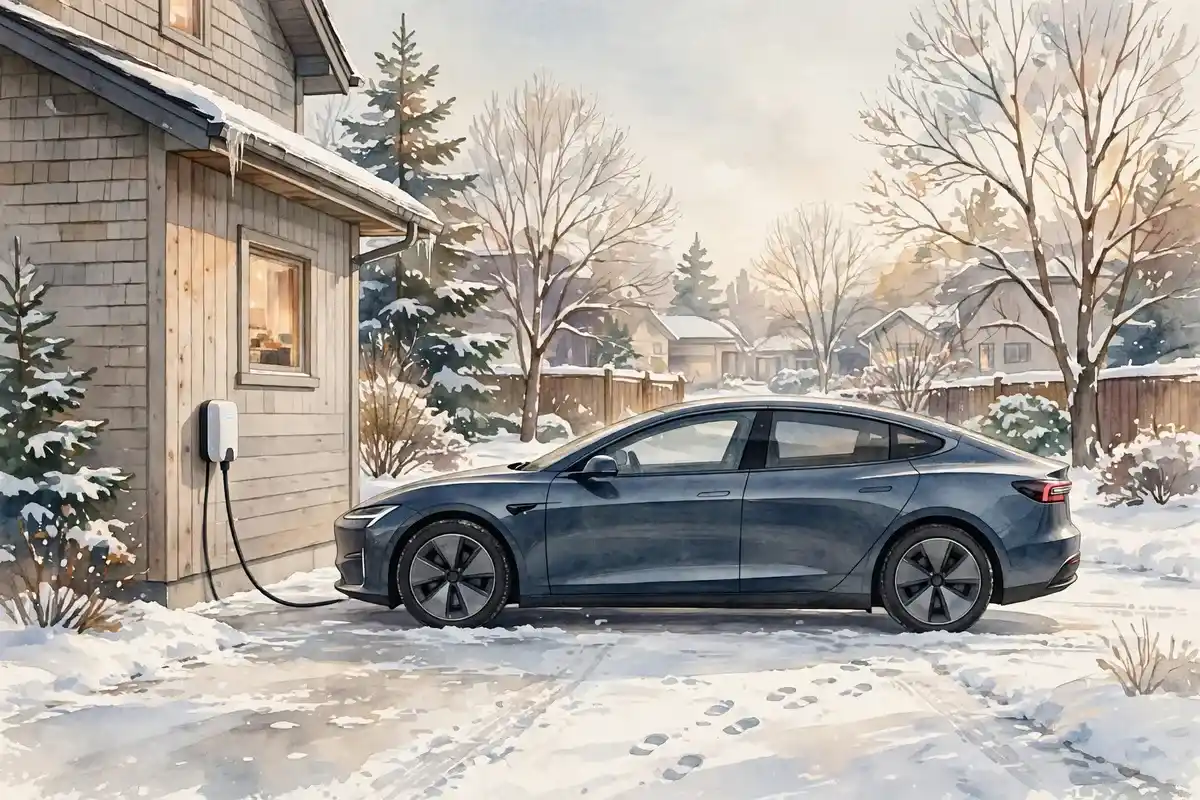
Consumer Reports puts the lifetime maintenance and repair cost of an EV at about $0.031 per kilometre, against $0.061 per kilometre for a gas car — almost exactly half. At the 15,000 km a year the average Canadian drives, that is roughly $465 a year for the EV against $915 for the gas car, a saving of about $450 every year before fuel is even counted. CAA's research lands in the same place: the average EV owner spends 40% to 50% less on maintenance than a gas-vehicle owner. The reason is not mysterious. An EV has no engine oil, no spark plugs, no transmission fluid, no timing belt, no exhaust system and no catalytic converter — the parts that generate most gas-car repair bills simply do not exist.
The Canadian owner data tells the same story with real invoices. ThinkEV, which tracks receipts shared by Canadian EV owners in forums and owner groups rather than manufacturer estimates, puts EV maintenance at $500 to $800 a year against $1,000 to $1,500 for a comparable gas car. Ridez's survey of dealer service menus across Ontario, Alberta and British Columbia found typical EV annual service visits at $150 to $350 — tire rotations, cabin air filters, brake inspections and coolant checks — and a total annual range of $290 to $810. The model-by-model comparison is even more concrete: ThinkEV's 2026 total-cost modelling puts the Hyundai Ioniq 6 and the Chevrolet Equinox EV at about $650 a year in maintenance, against $1,150 for a Honda Civic and $1,200 for a Toyota RAV4. That is $400 to $550 a year saved, or $2,000 to $2,750 over five years, and the gap widens as gas cars age into transmission work, catalytic converter replacements and alternator swaps. One data point that captures the durability: a Ford Mustang Mach-E crossed 316,000 miles — over 508,000 km — with 92% of its original battery capacity still intact.
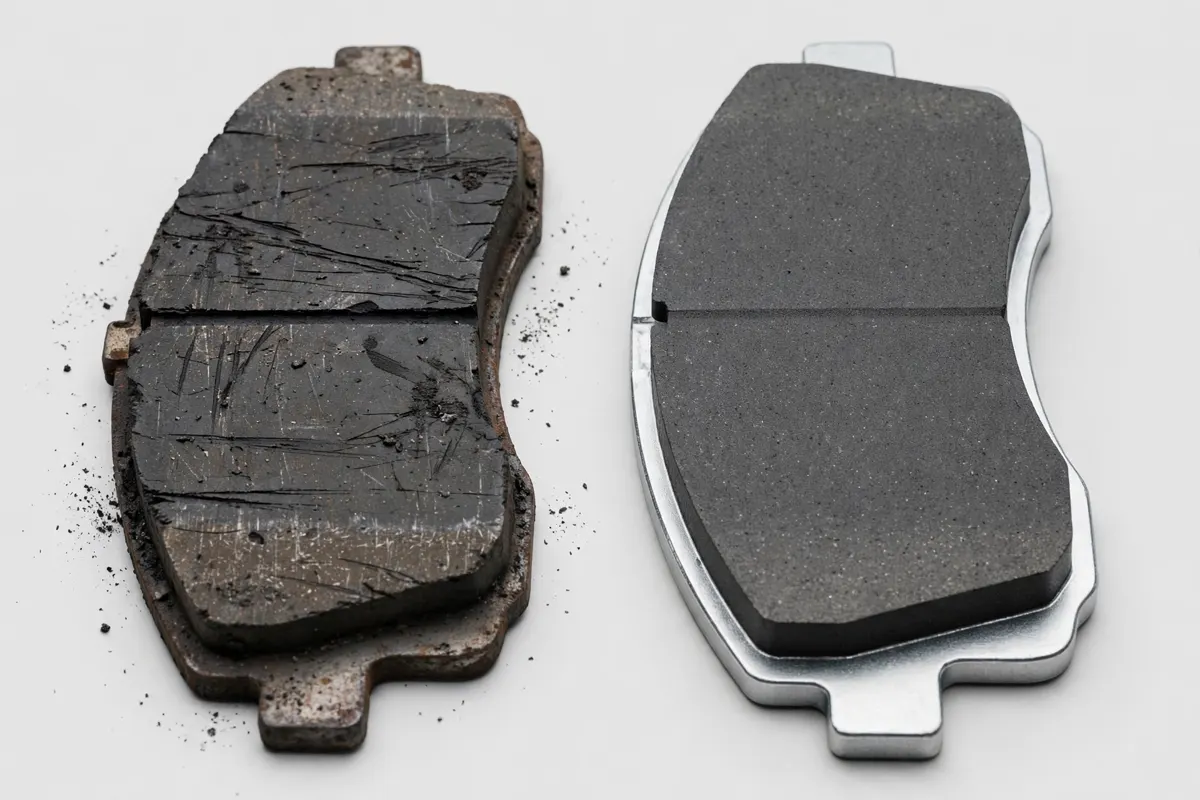
Tires are the exception that every EV owner discovers, and they are the single largest recurring EV maintenance cost. EVs are heavy and deliver instant torque, so they wear tires faster — ThinkEV puts a set at $800 to $1,600 every 40,000 to 60,000 km — and EV-rated tires with higher load ratings and low rolling resistance cost more than ordinary ones. Our guide "Why EVs Wear Tires Faster (and What It Costs)" breaks down the numbers by model. Rotate them every 8,000 to 10,000 km to keep wear even, and budget for tires as a real line item rather than a surprise. Brakes are the opposite story: regenerative braking does most of the slowing, so pads last two to three times longer than on a gas car, and some EVs go 200,000 km on the original pads. But Canadian salt creates a trap the brochures never mention — calipers that are barely used can seize, which is why an annual brake service is advised in the salt belt even when the pads look new. The 12-volt auxiliary battery is another quiet item: EVs still have one, it still fails in cold weather like on a gas car, and it needs replacing every three to five years.
Winter is where Canadian EV ownership needs real attention. CAA's 2024 winter test of 14 EV models found 14% to 39% less range in sub-zero conditions, averaging about 28%, and our winter guide "Winter Car Prep in Canada: What Actually Matters" covers the same ground for gas cars. Pre-condition the cabin while plugged in, use the heated seats and steering wheel instead of blasting cabin heat, and keep the battery between roughly 20% and 80% for daily use. The traction battery itself is the least of your worries financially: most manufacturers warranty it for eight years or 160,000 km against excessive degradation, and out-of-warranty replacement is the rare catastrophic cost, not a routine one — see "EV Battery Degradation: What It Costs and How to Slow It" for the degradation numbers.
The decision rule is to buy the EV for the maintenance saving, but to budget honestly for the two places it disappears: tires and insurance. A 2025 study by the Canadian rate aggregator Surex, covering hundreds of thousands of quotes, found the average annual cost to insure an EV in Canada was $3,131 against $2,289 for a gas car — about $840 more, which eats most of the $400 to $550 maintenance saving if you only count that one line. The fuel saving is what actually wins the comparison: ThinkEV's modelling has the Ioniq 6 costing $384 a year in electricity against $2,325 in gas for a Civic at 20,000 km a year. Before buying, price the tires for your exact model and get an insurance quote — the RepairPrice calculator (calculator.php) will give you the fair maintenance range for the car you are comparing against. An EV is cheaper to maintain than a gas car by every serious measure. It is not cheaper to own unless the fuel saving and the insurance quote both point the same way.
Common questions:
Q: How much does it cost to maintain an electric car per year in Canada? A: ThinkEV's tracking of real Canadian owner receipts puts it at $500 to $800 a year, and Ridez's dealer-menu survey puts the annual total at $290 to $810, against $800 to $1,500 for an equivalent gas car. Consumer Reports' per-kilometre figures work out to about $465 a year at 15,000 km, roughly half the gas car's $915. Tires are the biggest single item inside that number.
Q: Do EVs need brake replacements? A: Rarely. Regenerative braking means pads last two to three times longer than on a gas car, and some EVs go 200,000 km on the original pads. But in Canada's salt belt, calipers can seize from lack of use, so an annual brake service is still advised even when the pads look new.
Q: How long does an EV battery last? A: Most manufacturers warranty the traction battery for eight years or 160,000 km against excessive degradation. Real-world evidence is strong: a Ford Mustang Mach-E passed 316,000 miles (over 508,000 km) with 92% of its original capacity. Degradation is gradual, not a cliff, and cold reduces range temporarily without damaging the battery.
Q: Do electric cars lose range in Canadian winter? A: Yes. CAA's 2024 winter test of 14 models found 14% to 39% less range in sub-zero conditions, averaging about 28%. Pre-heating while plugged in, using heated seats instead of full cabin heat, and keeping the battery charged help, but a car that comfortably covers your commute in July can be tight in January.
| Item | Typical annual cost (CAD) | Notes |
|---|---|---|
| Routine EV maintenance | $290–$810 per year | ThinkEV owner receipts $500–$800; Ridez dealer menus $150–$350 per visit |
| Gas car, comparable | $1,000–$1,500 per year | Consumer Reports: $0.061/km gas vs $0.031/km EV |
| Tires, set of 4 | $800–$1,600 every 40,000–60,000 km | Largest recurring EV cost; rotate every 8,000–10,000 km |
| Brake service | Annual caliper service advised | Pads last 2–3x longer; calipers seize from lack of use in the salt belt |
| 12-volt auxiliary battery | Every 3–5 years | Still fails in cold weather, like on a gas car |
| Battery warranty | Typically 8 years / 160,000 km | Covers excessive degradation; Mach-E kept 92% at 508,000 km |


 RepairPrice
