
Alternator Replacement Cost in the USA
By Oleksandr Potapenko · 2026-11-16 · How we research prices
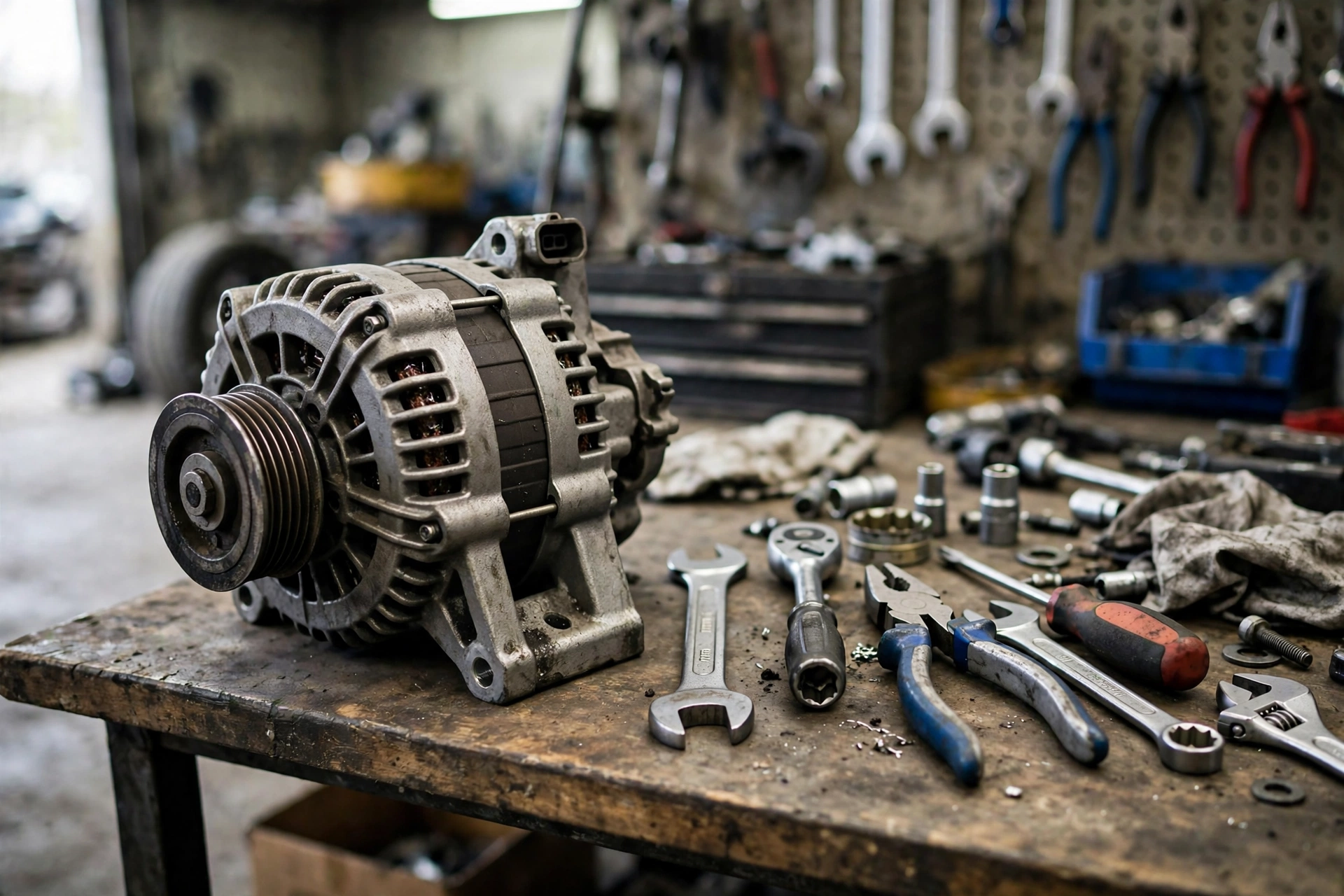
Two respected sources disagree about the alternator by more than $300, and both are right. RepairPal's estimator, updated September 3, 2026, puts the average US alternator replacement at $809 to $1,088, with parts at $613 to $800 and labour at $196 to $288. ARI, which analysed 556,458 real invoices from 3,622 independent US shops between November 2025 and October 2026, reports a median of $464, with the middle half of invoices between $288 and $640. Kelley Blue Book sits between them at $747 to $842. The gap is not a data error. It is a parts choice and a shop choice. RepairPal prices OEM-grade parts at dealer-tier labour rates. ARI's invoices reflect what independent shops actually install, which is often a quality remanufactured alternator at an independent labour rate. When your quote lands near the RepairPal number, you are probably being quoted an OEM part at a high labour rate. When it lands near the ARI median, you are probably being quoted a remanufactured part at an independent shop. Both can be fair. The unfair quote is the one that charges the RepairPal price for the ARI part.
The symptoms are worth more than the average, because an alternator misdiagnosis is the most expensive mistake in the charging system. A battery light on the dashboard, headlights that dim at idle and brighten when you rev the engine, a car that starts with a jump and dies twenty minutes later, or a whining or growling noise from the front of the engine all point at the alternator. But a dying battery and a slipping serpentine belt produce the same symptoms for a fraction of the cost. Before you approve anything, insist on a battery load test and a charging-system test that measures alternator output at idle and at 2,000 rpm, plus a look at the belt. A shop that skips the test and quotes an alternator is guessing with your money. AAA's guidance is the same: test the battery first, because batteries are the single most common reason drivers get stranded, triggering roughly 7 million of AAA's 27 million roadside assistance calls in 2024.
Model and year move the price more than the averages suggest. RepairPal's model pages show a 2009 Toyota RAV4 at $488 to $843, a 2013 Toyota Highlander at $873 to $1,485, a 2017 Highlander at $1,055 to $1,280, and a 2013 Toyota Tundra at $792 to $1,244, all before tax. A 2026 Tundra runs $1,323 to $1,688. The pattern is consistent: newer cars with higher-output alternators, tighter engine bays, and more electronics cost more, and the labour follows access. A Honda Civic needs 1.2 to 1.8 hours; a BMW 530i or a Ford F-150 EcoBoost can need 3.0 to 4.1 hours, according to a 2026 cost guide based on RepairPal Certified shop repair orders. Labour rates rose 9.3 percent year over year in early 2026, according to AAA's 2026 Repair Cost Index, with urban shops averaging $142 to $185 an hour against $112 to $138 in rural areas. If your quote seems high, ask for the labour hours on the estimate and compare them with the book time for your exact engine; access, not dishonesty, is usually the explanation.
The part decision is where the money is. A remanufactured alternator from a reputable brand with at least a one-year parts and labour warranty is the sensible default for most cars over five years old, and it is the reason ARI's median is so far below RepairPal's average. A new OEM alternator is the right call on a newer car, a car you plan to keep for many years, or a model where remanufactured units have a poor track record. A new aftermarket unit sits between them. Whatever you choose, get the part brand and the warranty in writing, and ask the shop to replace the serpentine belt at the same time if it is cracked or glazed, since a slipping belt undercharges the battery and will kill a new alternator's reputation unfairly. A weak battery should be tested too, because it forces the new alternator to work at full output constantly and shortens its life. For the battery side of the bill, see Car Battery Replacement Cost in the USA, and for the three-way no-start diagnosis, Car Won't Start: Battery, Starter, or Alternator?
Dealer versus independent is a real choice here, not just a price gap. A dealer supplies the factory part and knows your model's quirks, but at dealer labour rates the bill can pass $1,500 on a truck or luxury car. A good independent shop with a quality remanufactured or new aftermarket alternator will usually land 30 to 40 percent lower and is the right call for most cars over five years old. The exception is a car still under warranty, or a model where the alternator is integrated with complex electronics and the dealer's scan tools earn their premium. The decision rule is short: if the alternator has failed a charging test, replace it now, because there is no safe way to nurse a dead alternator and every mile you drive on battery power alone brings you closer to a tow. If the symptoms are intermittent, test first, replace the belt if it is due, and do not let anyone sell you an alternator without a charging test on the estimate. Run the quote through the RepairPrice calculator (calculator.php) and our guide How Do I Check If a Repair Quote Is Fair? before you approve it.
Common questions:
Q: How much does an alternator replacement cost in the USA? A: RepairPal's September 2026 average is $809 to $1,088, Kelley Blue Book's is $747 to $842, and ARI's median from 556,458 real independent-shop invoices is $464, with the middle half between $288 and $640. The gap reflects OEM parts at dealer rates against remanufactured parts at independent shops.
Q: How do I know if it is the alternator or the battery? A: A battery problem usually shows up as slow cranking or a no-start after the car sits. An alternator problem shows up as dimming lights, a battery warning light while driving, or a car that starts with a boost and then dies again. A charging-system test settles it in minutes.
Q: Can I drive with a bad alternator? A: Only as far as the nearest shop. The car runs on the battery alone, and once the battery's charge is spent the engine stalls, often without warning and often in traffic.
Q: Is a remanufactured alternator worth it? A: Yes, if it comes from a reputable brand with at least a one-year parts and labour warranty. ARI's invoice data shows most independent-shop alternator jobs land well below the OEM-priced averages precisely because remanufactured units are common. Avoid no-name rebuilds with short warranties.
| Vehicle | Typical range (USD) | What moves the price |
|---|---|---|
| Standard car | $809–$1,088 | RepairPal 2026 national average; parts $613–$800, labour $196–$288 |
| SUV / truck | $900–$1,300 | Higher-output alternator; 2026 Tundra $1,323–$1,688 |
| Luxury / European | $1,100–$1,800 | Factory part, harder access; 3–4 hours labour |
| Remanufactured alternator | Below new-part price | Quality brand + warranty matters; ARI median $464 |
| Dealer replacement | Above the range | Factory part, higher labor rate |


 RepairPrice
