
Paint Protection Film (PPF) Cost in Canada
By Oleksandr Potapenko · 2026-11-16 · How we research prices
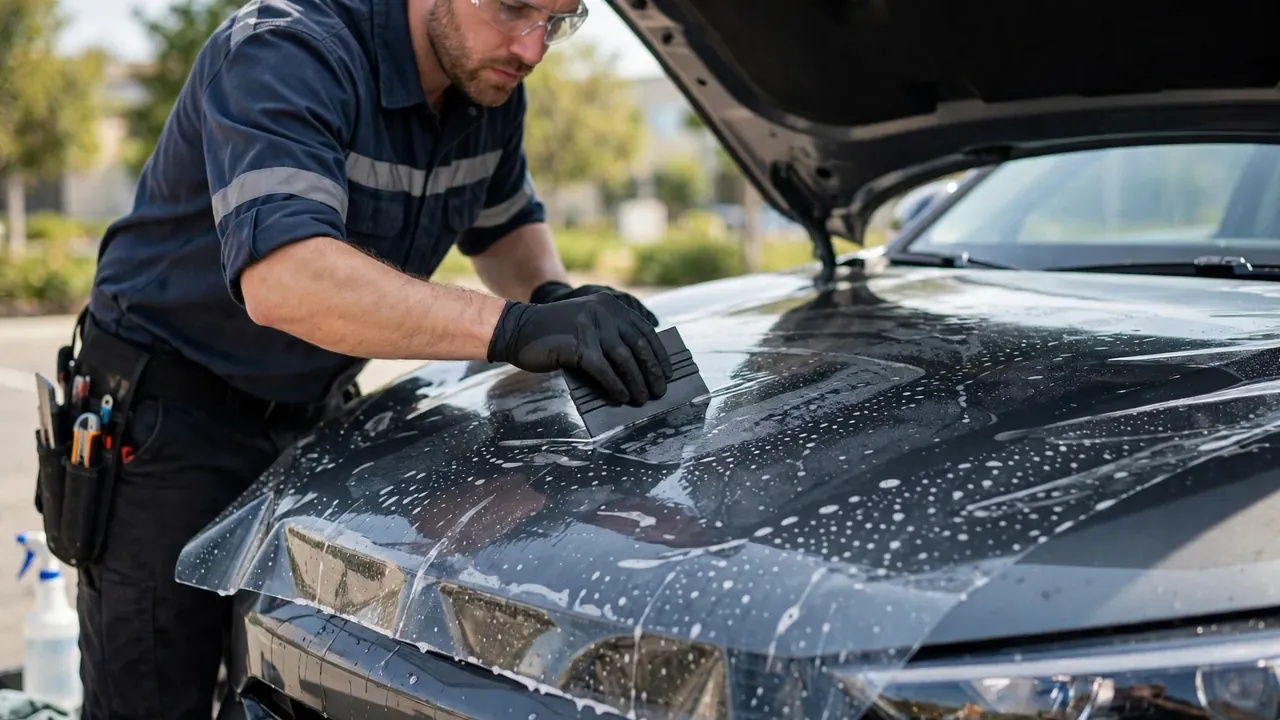
Wrap ID, a Markham and Toronto PPF installer, publishes the most useful planning numbers in Canada: a partial front at $800 to $1,800, a full front at $1,500 to $3,500, and a full vehicle at $4,000 to $9,000 or more, in Canadian dollars before tax. Ultraviolet Detailing Studio in Vaughan, which surveyed nearby shops in November 2026, lands in the same territory with tighter numbers: $700 to $1,100 for a partial front, $1,150 to $2,100 for a full front, and $3,500 to $5,500 or more for a full body. Individual shop menus fill in the detail. SupremeX Detailing in Ottawa lists a partial front from $449.99, a partial front with bumper from $949.99, a full front from $1,749.99 and a full vehicle from $4,999.99, all in XPEL Ultimate Plus. WrapDivision in Hamilton lists a partial front from $850, a full front from $1,499, a track pack from $1,999, a full body from $3,499 and trucks from $4,499, with a ten-year warranty. Vapour Auto in Ottawa lists four tiers from $399 for basic front coverage to $3,999 for a full vehicle. The spread between shops is real, and it is driven by film brand, installer skill and how much of the car is wrapped, not by one shop being wrong.
The film itself is the only paint protection that actually stops stone chips. Paint protection film is a clear, self-healing polyurethane film about 8 mils thick, applied to the paint. A ceramic coating makes water bead; PPF takes the impact. The film absorbs the hit from gravel and road debris, and light scratches in the film heal themselves with heat from the sun or warm water. A quality install lasts up to about ten years, according to ID Protection in Toronto, and the major brands, XPEL Ultimate Plus, 3M Gloss Pro 200 and LLumar Platinum, all carry warranties in that range. 3M's Gloss Pro 200, new in 2025, is an 8-mil optically clear self-healing urethane film, and Calgary's 3M installer prices it at $499 to $699 for a partial front, $1,299 to $2,299 for a full front, and $3,499 to $6,000 or more for a full body. Land Rover sells its own factory matte and gloss protective film on the Defender, and a Langley installer prices LLumar Platinum on a Defender from $850 for the nose to $4,000 for the whole vehicle, which shows how much vehicle size moves the number: a Defender has a lot more hood than a Civic.
The coverage decision is the heart of this guide, and it follows where the chips actually land. A partial front covers the bumper, the leading edge of the hood, the mirrors and sometimes the headlights: the parts that take the first hit on a highway commute. A full front covers the full hood, full fenders, bumper, mirrors and headlights, and it is the most popular package at most shops, because a partial hood leaves a visible line across the middle of the hood where the film ends, and that line collects dirt and shows on dark paint. A track pack adds the A-pillars, the sills below the doors and a band of roof. A full body wraps every painted panel, takes three to five days, and is the right choice for a new luxury car or a car you will keep for a decade. The rule is simple: if you drive the highway every day, buy at least a full front. If the car is a lease, a partial front protects the parts the leasing company inspects. If the car is a $90,000 SUV you will keep for ten years, the full body at $4,000 to $9,000 is cheaper than one bumper and hood respray, which WrapZap in Etobicoke prices at $1,500 to $3,000, and a respray shows up on a vehicle history report and costs you at resale.
There are two things to check before you pay. The first is the installer, not the film. PPF is a skilled trade: the film is cut, stretched, squeegeed and wrapped around edges by hand, and a bad install shows bubbles, lifted edges and dirt under the film within weeks. Ask how long the installer has been doing PPF, whether they use pre-cut patterns or bulk film, and whether the warranty covers both the film and the installation. Ultraviolet Detailing Studio includes an eight-year installation warranty; WrapDivision includes ten years. The second is what happens to the film after a respray or a repair: Calgary PPF Pros notes that film can go back on right after PDR, but after a body-shop respray you must wait 30 days before PPF and 60 days before a ceramic coating. And if the car already has PPF and is hit by hail, tell your insurer: the film is part of the claim, and it must be replaced after the dent repair.
A ceramic coating over PPF is a common combination and a sensible one: the film stops the chips and the coating makes the film easier to wash and keeps it from staining. But do not buy PPF because a dealer told you to. Dealer film packages are usually applied by a subcontractor at a large markup, and the same XPEL or 3M film from an independent installer costs far less. Get two quotes from dedicated PPF shops, ask for the film brand and the warranty in writing, and use the RepairPrice calculator (calculator.php) to check whether the total sits in a fair range for your vehicle and coverage level. If chips are not your problem and you only want easier washing, our guide Ceramic Coating Cost in Canada: Is It Worth It? is the cheaper answer.
Common questions:
Q: How much does paint protection film cost in Canada? A: Wrap ID in Toronto gives $800 to $1,800 for a partial front, $1,500 to $3,500 for a full front, and $4,000 to $9,000 or more for a full vehicle. Ultraviolet Detailing Studio in Vaughan surveyed nearby shops in November 2026 and found $700 to $1,100 partial front, $1,150 to $2,100 full front, and $3,500 to $5,500 or more full body.
Q: Is PPF worth it, or is ceramic coating enough? A: They do different jobs. A ceramic coating beads water and resists chemicals but does not stop stone chips. PPF is an 8-mil polyurethane film that absorbs impacts and self-heals light scratches, and lasts up to about ten years. If you drive the highway daily, PPF is the only protection that stops chips.
Q: What is the difference between partial front and full front PPF? A: A partial front covers the bumper and the leading edge of the hood and fenders, and leaves a visible line across the hood. A full front covers the full hood, full fenders, bumper, mirrors and headlights, with no line. Most shops say the full front is their most popular package.
Q: How long does PPF last? A: Up to about ten years for a quality film such as XPEL Ultimate Plus, 3M Gloss Pro 200 or LLumar Platinum, according to Toronto installer ID Protection. The warranty should cover both the film and the installation, and a good installer offers eight to ten years on the work.
| Coverage | Typical range (CAD) | Notes |
|---|---|---|
| Partial front | $800–$1,800 | Bumper and front of hood, mirrors; leaves a line across the hood |
| Full front | $1,400–$3,500 | Hood, fenders, mirrors, headlights; most popular package |
| Track pack | $1,999–$2,500 | Full front plus A-pillars, sills and roof band |
| Full body wrap | $4,000–$9,000+ | Every painted panel; 3–5 days; 8-mil self-healing film, up to 10-year warranty |
| Bumper cover repaint, for comparison | $800–$1,800 | What chips cost to fix without protection |
| Headlight restoration, pair | $95–$170 | Often bundled with a front PPF job |

 RepairPrice
