
Loose Gas Cap and the Check Engine Light: What to Do
By Oleksandr Potapenko · 2026-11-16 · How we research prices
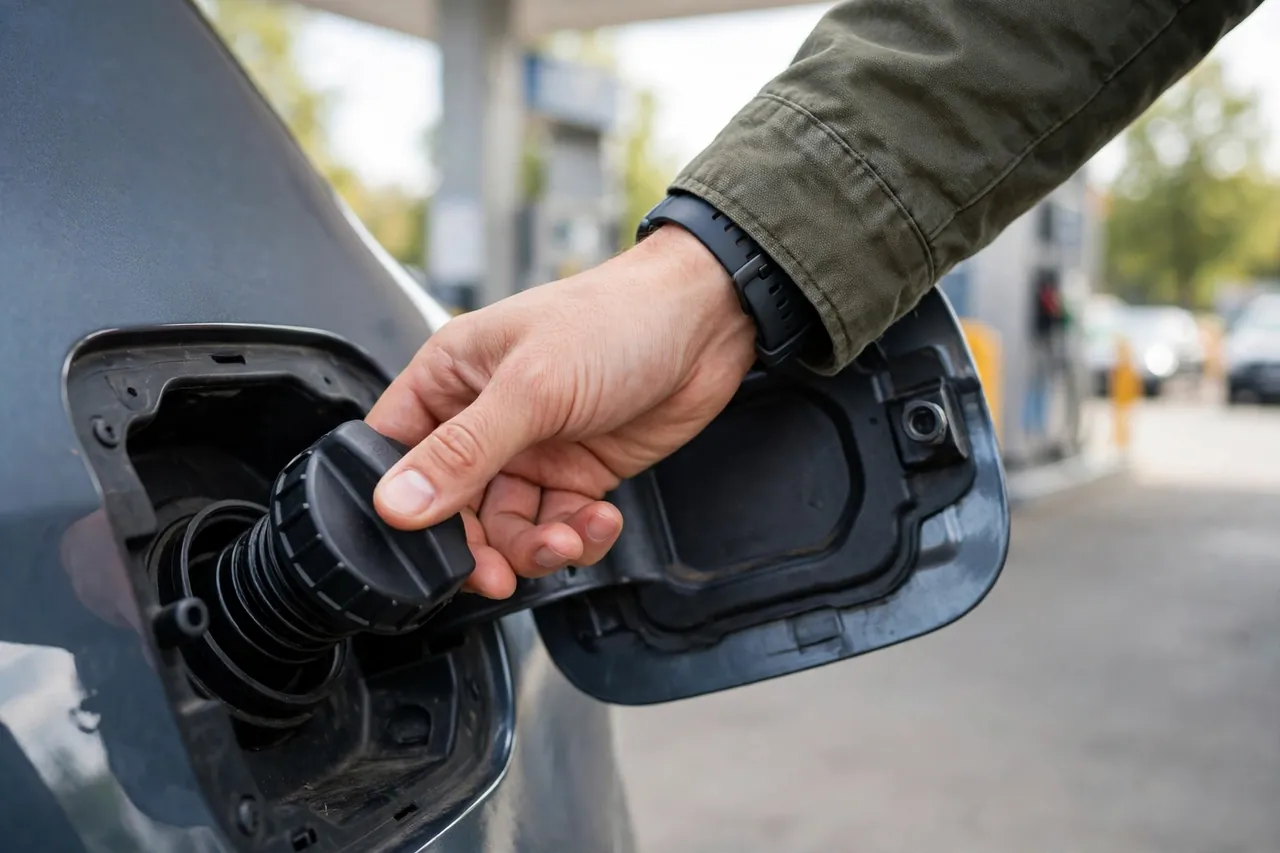
It feels like a joke the first time it happens: a yellow check-engine light, a worried drive to the shop, and a mechanic who tightens the gas cap and sends you home. It is not a joke, and it is not rare. A loose or worn gas cap is the single most common cause of a check-engine light in the United States, accounting for roughly one in five EVAP-related codes triggered each year, according to Steer's diagnostic guide. The fuel system is sealed, and the car constantly tests that seal. A cap that is loose, cross-threaded or cracked lets vapour escape, the pressure test fails, and the light comes on. The car drives normally, the engine sounds normal, and the only symptom is the light itself — which is exactly why it is so easy to ignore, and so easy to fix.
The fix takes thirty seconds and costs nothing. Switch the engine off, remove the cap, check the rubber seal for cracks, flattening or grit, and screw it back on until it clicks — Steer recommends three to four clicks, and most caps are designed to ratchet so you cannot overtighten them. Then drive normally. The light does not go out instantly, and this is the part that sends people to the shop unnecessarily. The car's computer runs its EVAP self-test only under specific conditions: a cold start, a fully warmed engine, a fuel level between roughly a quarter and three quarters of a tank, and stable highway driving. Steer puts the wait at two to three complete drive cycles, roughly 50 to 100 miles of varied driving over several days, and Christian Brothers Automotive gives a similar rule of thumb of a few days or 25 to 50 miles. AutoZRepair, reviewed in November 2026, warns it can take a week or more of normal driving on some cars. If the light is still on after a week, the cap is probably not the problem — or the cap itself is worn out and no longer seals even when tightened. A cap whose ratchet spins without ever clicking is finished; replace it.
The codes behind the light tell you how big the computer thinks the leak is, and they are worth knowing by name. P0457 is the cap-specific code. P0455 means a large leak — a missing cap, a disconnected hose, a vent valve stuck open. P0442 means a small leak, about 0.040 inches: a cap seal, a cracked hose, a leaking canister. P0456 means a very small leak, about 0.020 inches. The same loose cap can produce any of them depending on how loose it is, so the code alone never proves the cap is innocent or guilty — it only tells you where to start. If you own an OBD-II scanner, or borrow one from a parts store, write the code down before you clear it. Clearing a code also wipes the freeze-frame data that shows the conditions when the fault set, and it resets all the readiness monitors to "not ready" — which matters if an emissions test is coming up, because a car with incomplete monitors fails the test even with the light off. Steer is explicit on this point: if you need to pass an emissions inspection, tighten or replace the cap and drive at least a week before scheduling the test, so the EVAP monitor can run and confirm the repair.
If the light stays on, get the code read before buying anything. A diagnostic scan runs $95 to $130 CAD at a Canadian shop and will tell you whether the code is an EVAP leak or something else entirely, and a professional diagnostic at $100 to $180 CAD is the deeper version that is often credited toward the repair. The other usual suspects behind the same light are not expensive to name: one ignition coil costs $135 to $285 CAD, an oxygen sensor $175 to $350 CAD, and a mass airflow sensor $150 to $365 CAD. None of those should be replaced on a guess, and a free code read at a parts store is a starting point, not a diagnosis — it tells you the code, not the cause. If the code is an EVAP leak and the cap is fine, the next step is a smoke test, which pushes harmless vapour into the system and shows where it escapes; Steer puts it at $80 to $150 USD, or roughly $110 to $210 CAD. The full EVAP price picture — purge valve, vent valve, charcoal canister — is in the companion guide EVAP System Leak: Repair Cost in Canada, and the wider diagnostic path is in My Check Engine Light Is On — How Much Will the Diagnostic Cost?
The lesson is about order, not about the cap. Tighten the cap first, wait a few drive cycles, and only then pay for diagnosis. Keep the cap's seal clean, replace a cap whose seal is cracked or whose ratchet no longer clicks — a replacement cap is $15 to $40 USD as a part, and RepairPal's September 2026 estimate for a fitted replacement is $138 to $150 USD, roughly $195 to $210 CAD — and never top off the tank after the pump clicks. Overfilling floods the vapour system with liquid fuel, saturates the charcoal canister, and can set the same light for a different and far more expensive reason. A loose cap is the cheapest check-engine light you will ever get, and it is worth thirty seconds before you spend anything else. If you want a model-specific estimate for whatever the scan finds, the RepairPrice calculator (calculator.php) will price it for your car before you authorise the work.
Common questions:
Q: How long does it take for the check engine light to turn off after tightening the gas cap? A: Typically two to three complete drive cycles, which Steer translates to roughly 50 to 100 miles of varied driving over several days. Christian Brothers Automotive gives a few days or 25 to 50 miles. The EVAP monitor only runs when the engine is warm, the fuel level is between about a quarter and three quarters, and there is stable highway driving — so short trips in winter can stretch the wait to a week or more.
Q: Can a loose gas cap really cause the check engine light? A: Yes. Steer's diagnostic guide calls it the single most common cause of a check-engine light in the United States, about one in five EVAP-related codes each year. The fuel system is sealed and the car tests that seal constantly; a loose, cross-threaded or cracked cap lets vapour escape, the pressure test fails, and the light comes on with codes such as P0442, P0455, P0456 or P0457.
Q: How much does it cost to replace a gas cap? A: The part itself is $15 to $40 USD, per Steer. Fitted at a shop, RepairPal's September 2026 estimate is $138 to $150 USD, roughly $195 to $210 CAD. Most drivers can do it themselves in thirty seconds — it screws on by hand and needs no tools.
Q: My check engine light is still on a week after tightening the cap. What now? A: The cap is probably not the problem. Get the code read — a diagnostic scan is $95 to $130 CAD — and if it is an EVAP leak code, ask for a smoke test before authorising parts. The leak may be a cracked hose, a purge valve or a vent valve, and the smoke test, at roughly $110 to $210 CAD, finds it in about twenty minutes instead of replacing parts one at a time.
| Service | Typical range (CAD) | Notes |
|---|---|---|
| Tighten the gas cap | $0 | 3–4 clicks; wait 2–3 drive cycles, ~50–100 miles |
| Replacement gas cap, DIY part | $20–$55 CAD | Steer $15–$40 USD; screws on by hand |
| Replacement gas cap, fitted | $195–$210 CAD | RepairPal Sept 2026: $138–$150 USD |
| Diagnostic scan | $95–$130 CAD | Reads the exact code: P0442, P0455, P0456, P0457 |
| Professional diagnostic | $100–$180 CAD | Deeper check; often credited toward the repair |
| Smoke test (if cap is ruled out) | $110–$210 CAD | Steer $80–$150 USD; finds the leak in ~20 minutes |
| One ignition coil | $135–$285 CAD | Coil $60–$180 + about 0.8 h labour |
| Mass airflow sensor | $150–$365 CAD | Sensor $100–$300 + about 0.5 h labour |
| Oxygen sensor | $175–$350 CAD | Sensor $80–$220 + about 1 h labour |


 RepairPrice
