
Fuel Economy Suddenly Worse: Causes and Fixes
By Oleksandr Potapenko · 2026-11-16 · How we research prices
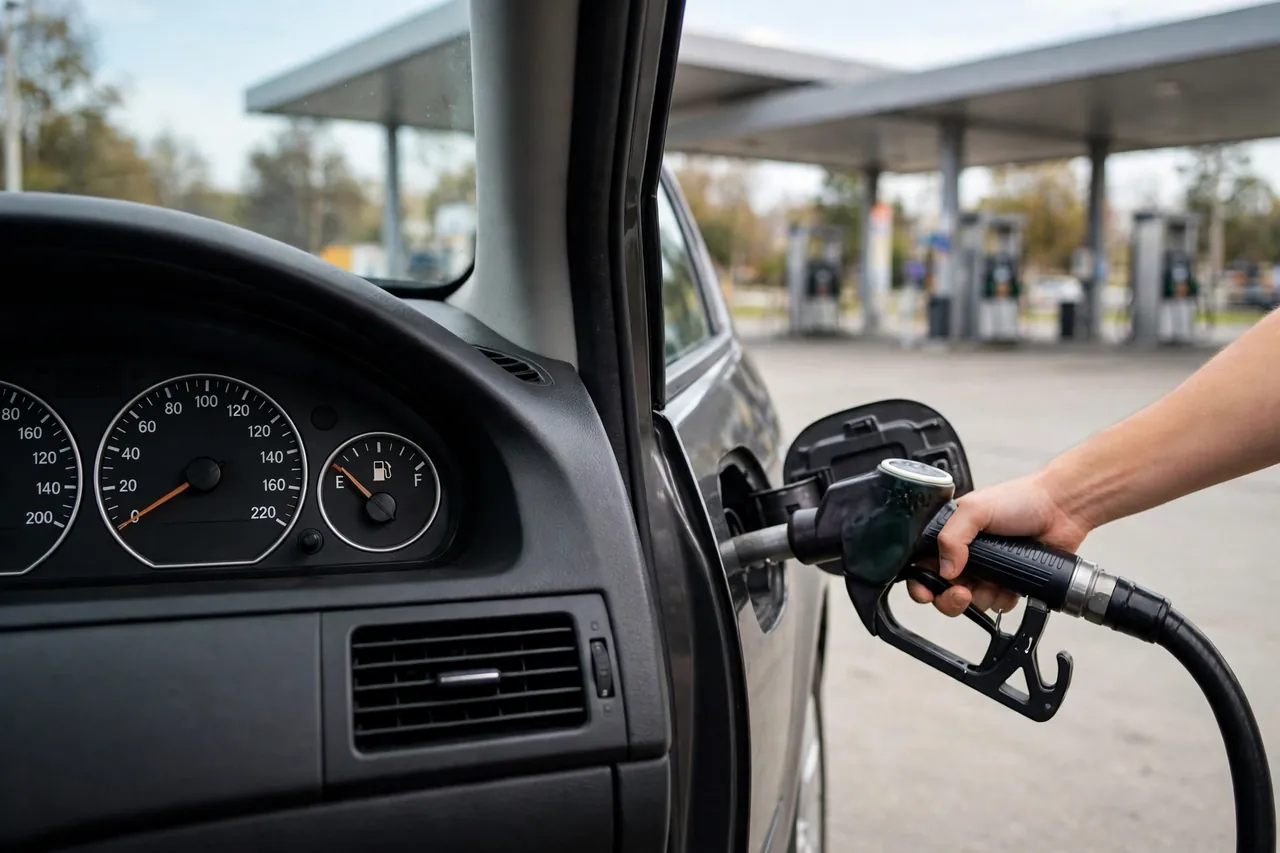
Start with a number, not a feeling: a sudden fuel economy drop of 10% or more almost always has a specific, fixable cause. That threshold comes from OBDGuides' diagnostic guide, and it is the line that separates a real fault from the normal noise of driving. Winter alone can move your consumption by that much — the US Department of Energy reports that fuel economy in a conventional petrol vehicle drops by 10 to 20 percent in city driving when temperatures fall from 25°C to 0°C, and on short trips under five miles the drop can be even greater. Winter-blend fuel carries less energy per litre, the engine runs rich for longer while it warms up, and the cabin heater and defroster add load. So the first job is not a repair at all: it is measurement. Track consumption over three full tanks, in litres per hundred kilometres, on your normal routes. One tank proves nothing, because a single fill, a cold snap or a roof box can skew it. If the drop appeared exactly when winter started and recovers in spring, it is seasonal, not mechanical — and no part you buy will fix the weather.
If the drop is real — same season, same routes, three tanks in a row — the causes rank themselves by how much fuel they waste. The biggest single culprit is a failing oxygen sensor. The US Environmental Protection Agency states that a faulty sensor can increase fuel consumption by 10 to 40 percent, and fueleconomy.gov, cited by CarCareTotal, puts the figure at up to 40 percent. The mechanism is simple and invisible: as oxygen sensors age, they become sluggish and send a lean-biased signal, so the engine computer adds fuel the engine does not need. AA1Car's Larry Carley notes that sensors typically degrade after 100,000 miles, and a lazy sensor can waste fuel for months before it ever triggers a check-engine light. Replacing one costs $175 to $350 CAD at a Canadian independent shop. The mass airflow sensor does the same damage from the other side — it misreads the incoming air and the computer enriches the mixture to compensate — and replacing it costs $150 to $365 CAD. OBDGuides adds a cause the other guides miss: a stuck-open thermostat, code P0128, which keeps the engine in cold-start enrichment because it never reaches full operating temperature. The thermostat itself is a $15 to $40 USD part, and it is one of the most common check-engine codes with no drivability symptoms at all.
The cheap checks come before any sensor, and they are worth doing in order. A clogged engine air filter chokes the engine and costs $50 to $85 CAD to replace. Underinflated tires add rolling resistance — the US Department of Energy estimates that properly inflated tires improve fuel economy by up to 3 percent, and OBDGuides notes that every 10 PSI below specification costs roughly 0.5 percent. A wheel alignment at $95 to $150 CAD fixes the drag of wheels fighting each other. A stuck brake caliper or a dragging parking brake can cost litres per hundred kilometres and will usually announce itself with a hot wheel or a burning smell after a drive. A fuel system cleaning at $115 to $195 CAD addresses deposits and uneven flow, and it is the right first step when the engine idles rough or hesitates as well as drinking more. Worn spark plugs misfire and waste fuel — $135 to $220 CAD for a four-cylinder set, $200 to $335 CAD for a V6 or V8 — and they are due on a schedule, not when they fail.
The diagnostic that ties it all together costs $95 to $130 CAD: a scan that shows the long-term fuel trim readings. Autodiagly's 2026 guide explains the number to watch — long-term fuel trim beyond plus or minus 10 percent means the computer is making big corrections, and a positive 15 percent means the system thinks it is lean and is adding fuel. That reading does not name the fault, but it proves the engine is running rich and tells the shop whether to look at sensors, injectors or air leaks instead of guessing. It is far cheaper than the parts cannon: replacing an oxygen sensor, a mass airflow sensor and a set of plugs on a guess costs more than the fuel you were trying to save. Driving habits belong in the same calculation — Autodiagly puts aggressive driving at a 15 to 30 percent penalty in the city, and thirty minutes of idling a day at roughly 50 gallons of fuel a year — so if the drop coincided with a new commute or a new driver, say so before the shop starts replacing parts.
The decision rule is a sequence, not a shopping list: measure three tanks, fix tire pressure and the air filter first, then get the scan and read the fuel trims, and only then authorise sensor or plug work. If the scan shows a rich-running engine with a lazy oxygen sensor on a car past 160,000 km, the sensor is the bet. If the trims are normal and the drop is seasonal, the fix is patience and a block heater, not parts. For a model-specific estimate of whatever the scan finds, run your car through the RepairPrice calculator (calculator.php). And if the scan points at the fuel system itself, the companion guides Fuel Injector Replacement and Fuel System Cleaning Cost and Fuel Pump and Fuel Filter Replacement Cost cover the two most expensive fuel-side suspects, while O2 and MAF Sensor Replacement Cost covers the sensors in detail.
Common questions:
Q: How much worse can a bad oxygen sensor make fuel economy? A: A lot. The US Environmental Protection Agency states that a faulty oxygen sensor can increase fuel consumption by 10 to 40 percent, and fueleconomy.gov puts the loss at up to 40 percent. A lazy sensor can do this for months before triggering a check-engine light, because it degrades gradually rather than failing outright.
Q: Why is my fuel economy worse in winter? A: The US Department of Energy reports a 10 to 20 percent drop in city driving when temperatures fall from 25°C to 0°C, worse on short trips under five miles. Winter-blend fuel carries 3 to 7 percent less energy, the engine runs rich longer while warming up, and cold oil, cold tires and cabin heating all add load. If the drop recovers in spring, it is seasonal, not a fault.
Q: What should I check first when fuel economy suddenly drops? A: Measure first — three full tanks in litres per hundred kilometres on your normal routes. Then the free checks: tire pressure, air filter, and whether a brake is dragging. Then a diagnostic scan at $95 to $130 CAD to read the long-term fuel trim; beyond plus or minus 10 percent proves the engine is running rich and points the shop at the real fault.
Q: Can a stuck thermostat hurt fuel economy? A: Yes. A thermostat stuck open keeps the engine from reaching full operating temperature, so it stays in cold-start enrichment and burns significantly more fuel. It sets code P0128, one of the most common check-engine codes with no other symptoms, and the thermostat itself is a $15 to $40 USD part.
| Service | Typical range (CAD) | Notes |
|---|---|---|
| Engine air filter | $50–$85 CAD | Cheap check — start here |
| Diagnostic scan (fuel trim) | $95–$130 CAD | LTFT beyond ±10% proves a rich-running engine |
| Wheel alignment | $95–$150 CAD | Dragging wheels waste fuel |
| Fuel system cleaning | $115–$195 CAD | Deposits, uneven flow, mild misfires |
| Spark plugs, 4-cylinder | $135–$220 CAD | V6 / V8: $200–$335 CAD |
| Mass airflow sensor | $150–$365 CAD | Misreads incoming air, engine runs rich |
| Oxygen sensor | $175–$350 CAD | Faulty sensor can cost up to 40% fuel economy (EPA) |
| Thermostat (stuck open, P0128) | $200–$350 CAD fitted, estimate | Part $15–$40 USD (OBDGuides); keeps engine in cold enrichment |


 RepairPrice
