
EV Charging Costs in Canada: Home vs Public
By Oleksandr Potapenko · 2026-11-16 · How we research prices
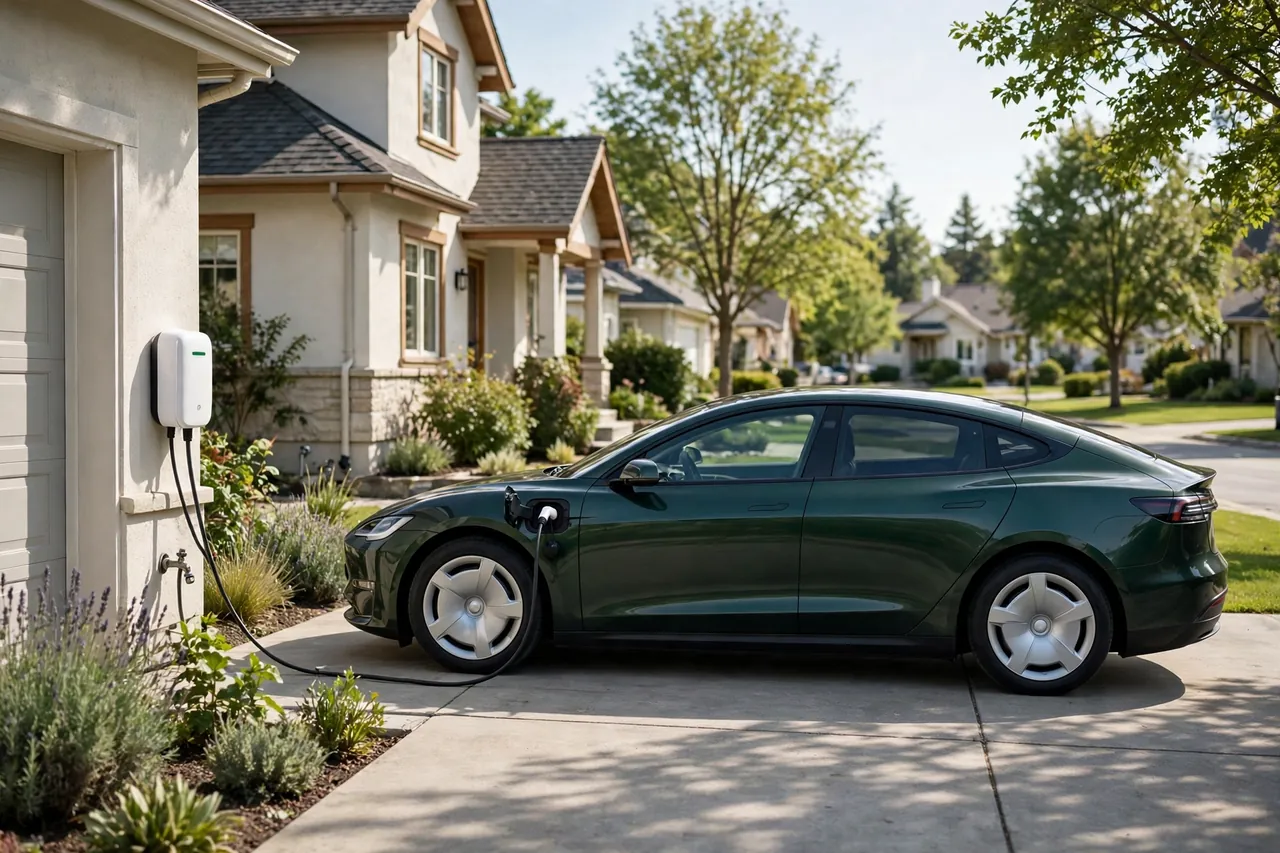
Here is the whole guide in one line: home charging costs $1.50 to $3.50 per 100 kilometres, public DC fast charging costs $5 to $14 per 100 kilometres, and a gas car costs about $14 per 100 kilometres. Everything else is detail about why the gap is that wide and how your province moves the numbers. A mid-size EV uses about 16 to 20 kilowatt-hours per 100 kilometres at the plug once charging losses are included, so the price per kilometre is simply your electricity rate times that consumption. At a home rate of 10 cents per kilowatt-hour, that is $2 per 100 kilometres. At a public fast charger at 50 cents per kilowatt-hour, it is $10. The car is the same. The plug is what changes the bill.
Home is the cheapest fuel in Canada by a wide margin, and the province you live in sets the price. Residential rates run $0.07 to $0.16 per kilowatt-hour depending on the province, according to a 2026 Canadian charging guide from ThinkEV. Hydro-Quebec charges 6.4 cents per kilowatt-hour on its first tier and 9.9 cents on the second tier in 2026, which makes Quebec the cheapest charging in the developed world: about $226 a year for 20,000 kilometres, according to a 2026 provincial cost analysis. Manitoba Hydro's flat residential rate keeps all-in charging near 11 cents. BC Hydro's first step is 10.4 cents. Ontario's off-peak time-of-use rate is 8.7 cents, and its ultra-low overnight plan charges only a few cents per kilowatt-hour between 11 p.m. and 7 a.m., keeping a scheduled overnight session under 10 cents all-in. Alberta is the expensive outlier: its deregulated market and high transmission and distribution charges push all-in prices toward 25 to 30 cents per kilowatt-hour. A second Canadian analysis puts the national average home rate at $0.18 per kilowatt-hour, ranging from $0.11 in Quebec to $0.24 in the Maritimes. The spread matters: the same car costs roughly $226 a year to charge in Quebec and more than twice that in Alberta.
Public charging is a different product at a different price, and the network sets the rate. DC fast charging costs $0.30 to $0.65 per kilowatt-hour depending on the network and the province. Petro-Canada's Electric Highway charges 33 to 45 cents, Tesla Superchargers in Canada charge 30 to 45 cents, and Electrify Canada charges up to 53 cents at peak rates, according to 2026 network pricing compiled by Canadian charging guides. Some networks are cheaper: Circuit Electrique, Hydro-Quebec's network, still bills by the hour in Quebec, $1.00 an hour for Level 2 and $11.04 an hour for DC fast, and BC Hydro's utility-run network is often the cheapest fast charging in the country at roughly $0.35 to $0.45 per kilowatt-hour. Public Level 2 is typically $1.00 to $2.50 per hour, or free at many municipal sites. For a typical 60 kilowatt-hour top-up at a road-trip stop, DC fast costs $18 to $39. One 2026 analysis notes that Tesla Supercharger prices for non-members have crept to $0.50 to $0.70 per kilowatt-hour at some sites, which pushes the per-100-kilometre cost to $11 to $14, essentially the cost of fuel for an equivalent gas car. At that price, fast charging is a convenience you pay for on road trips, not a daily habit.
The habit that decides your annual bill is the home-to-public split. Canadian EV owners do 80 to 90 percent of their charging at home overnight and 10 to 20 percent at public DC fast chargers on road trips. At that split, with a blended rate of about $0.23 per kilowatt-hour, a driver covering 19,300 kilometres a year pays roughly $760 a year in electricity, against about $617 if all charging were at home. Compare that with a gas car at $1.60 a litre using 8.5 litres per 100 kilometres, which costs about $2,620 a year for the same distance. Even a driver who fast-charges for a fifth of their kilometres still saves more than half the fuel bill. The driver who fast-charges every day, with no home charging at all, pays three to seven times the home rate and saves almost nothing against gas, which is why home charging access is the single most important question to answer before buying an EV, ahead of the car's range or price.
Cold weather changes the charging picture in two ways that catch new owners by surprise. First, range drops: Recurrent's analysis of more than 30,000 vehicles found EVs retain about 78 percent of their maximum range at 0 degrees and roughly 70 percent at minus 7 degrees, so a winter road trip needs more charging stops. Second, DC fast charging speeds fall 30 to 50 percent below minus 10 degrees until the pack warms up, which makes each stop longer. The fix is to precondition the battery, using the car's navigation to route to the charger so the pack arrives warm, and to charge at home overnight where the car can warm the battery on cheap off-peak power. A Level 1 outlet, a standard 120-volt plug, adds only about 5 kilometres of range per hour and is barely enough in winter; a Level 2 home charger at 7.2 to 11.5 kilowatts adds 30 to 50 kilometres per hour and is the daily-driver standard for more than 80 percent of Canadian EV owners.
The decision rule is about your parking, not your car. If you have a driveway or a garage where you can install a Level 2 charger, an EV will cost you $1.50 to $3.50 per 100 kilometres in fuel, and the charger pays for itself in fuel savings. See EV Home Charger Installation Cost for the install price, rebates, and the panel question. If you park on the street or in a condo with no charging, budget for public charging at $5 to $14 per 100 kilometres and check the nearest fast chargers before you buy; the car still works, but the savings shrink and the convenience drops. In every case, use the home rate on your own utility bill, not a national average, because Quebec at 6.4 cents and Alberta at 25 to 30 cents are different worlds. And run the numbers for your own driving through the RepairPrice calculator (calculator.php). For the battery health behind all of this, see EV Battery Degradation: What It Costs and How to Slow It, and for the maintenance that goes with it, Electric Car Maintenance Cost in Canada.
Common questions:
Q: How much does it cost to charge an EV at home in Canada? A: Home Level 2 charging costs $0.07 to $0.16 per kilowatt-hour depending on the province, or about $1.50 to $3.50 per 100 kilometres. Quebec is cheapest at 6.4 cents per kilowatt-hour on Hydro-Quebec's first tier, about $226 a year for 20,000 kilometres; Alberta is most expensive at 25 to 30 cents all-in.
Q: How much does public fast charging cost in Canada? A: DC fast charging costs $0.30 to $0.65 per kilowatt-hour depending on the network: Petro-Canada 33 to 45 cents, Tesla Supercharger 30 to 45 cents, Electrify Canada up to 53 cents at peak. A typical 60 kilowatt-hour top-up costs $18 to $39, or $5 to $14 per 100 kilometres.
Q: Is it cheaper to charge an EV at home or in public? A: Home, by three to seven times. Home charging at $0.07 to $0.16 per kilowatt-hour against public fast charging at $0.30 to $0.65 means the same 100 kilometres costs $1.50 to $3.50 at home and $5 to $14 in public. Canadian owners do 80 to 90 percent of charging at home for exactly this reason.
Q: How much does it cost to charge an EV in winter in Canada? A: More per kilometre, because cold cuts range by about 22 percent at 0 degrees and 30 percent at minus 7 degrees, and DC fast charging speeds fall 30 to 50 percent below minus 10 degrees until the pack warms. Precondition the battery by routing to the charger, and charge at home overnight on off-peak power.
| Item | Typical range (CAD) | Notes |
|---|---|---|
| Home charging, per 100 km | $1.50–$3.50 | At $0.07–$0.16/kWh; Quebec cheapest, Alberta priciest |
| Home charging, 20,000 km per year | $226–$600 | Quebec about $226; national average near $480–$620 |
| Public Level 2, per hour | $1.00–$2.50 | Often free at municipal sites |
| Public DC fast charging, per kWh | $0.30–$0.65 | Petro-Canada $0.33–$0.45; Tesla $0.30–$0.45; Electrify Canada up to $0.53 |
| DC fast top-up, 60 kWh session | $18–$39 | Or $5–$14 per 100 km; 3–7x home charging |
| Home charger install, all-in | $1,000–$3,000 | Unit + labour + permit; see EV Home Charger Installation Cost |




 RepairPrice
