
Car Battery Replacement Cost in the USA
By Oleksandr Potapenko · 2026-11-16 · How we research prices
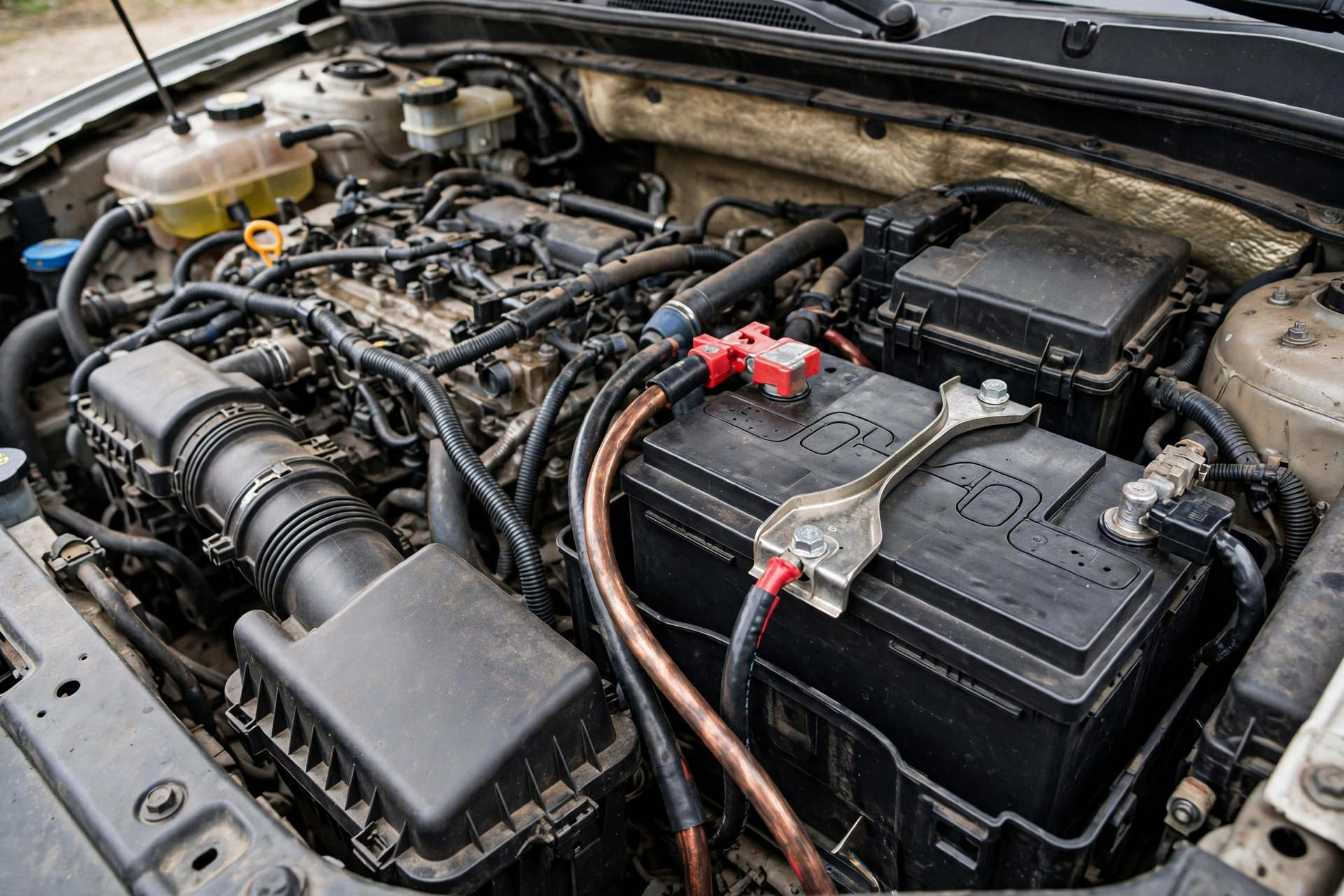
Here is the honest confusion about battery prices in one paragraph. RepairPal's national estimate, updated September 2026, puts a shop battery replacement at $456 to $493, with the battery itself at $394 to $403 and labour at $61 to $90. ARI, which analysed 556,458 real invoices from 3,622 independent US shops between November 2025 and October 2026, reports a median of $295, with the middle half of invoices between $201 and $405. Kelley Blue Book lands at $290 to $460. A 2026 retail price guide puts a standard flooded battery installed at an independent shop at $180 to $300, and an AGM at $280 to $430. All of these are true at the same time. RepairPal prices an OEM-grade battery at dealer-tier labour. ARI's invoices reflect what independent shops actually install, usually a quality name-brand battery at independent rates. And the retail guides reflect a parts store that installs the battery free with purchase. The number that matches your quote depends on where you buy and what part you get, so ask both questions before you compare.
The part decision is chemistry, and it is not optional. A standard flooded lead-acid battery costs $100 to $200 at retail, and most auto parts stores install it for free with purchase. An AGM, or absorbed glass mat, battery costs $200 to $350 at retail, or $230 to $450 at a parts counter depending on group size. The gap is real and it is structural: AGM construction handles the repeated deep cycling of automatic start-stop systems and the heavy electronics load of modern cars. Most gas cars built since 2018 have start-stop, and they are calibrated for AGM charge acceptance. Put a cheap flooded battery in a start-stop car and it dies early, and the stop-start system may shut itself off entirely. The rule is match or upgrade, never downgrade. AAA puts the premium in the same terms: around $200 and up for a standard flooded battery and $250 and up for a premium AGM, before installation and taxes.
Age and climate decide when, not whether. AAA puts normal battery life at three to five years, and its climate data sharpens the picture: batteries in the farthest northern US regions average 58 months or longer, while batteries in the hottest southern regions last under 41 months. Heat, not cold, is the real killer; cold just exposes the weakness on the first freezing morning. AAA recommends load-testing the battery every year once it hits year three, and annually after year two in hot climates. In practice, that means a battery that is four years old and cranks slowly on a cold morning is a battery to replace now, not a battery to gamble on through another winter. A free load test at a parts store will tell you the truth in ten minutes, and it can also catch the two problems people mistake for a dead battery: a failing alternator and a parasitic draw that drains the battery overnight. See Car Won't Start: Battery, Starter, or Alternator? for the three-way diagnosis and Car Battery Keeps Dying: Parasitic Draw Diagnosis Cost for the overnight-drain case.
Where the battery lives changes the labour more than most drivers expect. On most cars it sits under the hood and the swap takes 0.3 to 0.5 hours, which is why parts stores can install it free. On some European luxury cars it sits under the rear seat or in the trunk, and the job takes an hour or more. On many BMW, Mercedes-Benz, Audi, and newer Volkswagen models, the new battery also needs electronic registration, which tells the car's computer that a new battery is fitted so it charges it correctly. Skipping registration shortens the new battery's life, so if your car needs it, confirm the quote includes it. Dealer replacement runs $200 to $400 or more on standard vehicles, and $350 to $600 or more on European luxury cars, according to 2026 retail guides. An independent shop typically runs 25 to 40 percent lower for the same job, and a parts store with free installation is the cheapest route of all on an easy-access car.
The decision rule is simple. If the battery is more than four years old, fails a load test, or leaves you stranded once, replace it; a tow and a missed day cost more than the battery. If it is under three years old and tests well, look elsewhere first: corroded terminals, a loose cable, a parasitic draw, or the alternator. When you do replace it, ask three questions: what CCA and group size are you installing, is it AGM if my car needs AGM, and does the price include a charging-system test, terminal cleaning, and registration if my car needs it. A quote that cannot answer those three is not a bargain, it is a guess. Check any quote against the RepairPrice calculator (calculator.php) and our guide How Do I Check If a Repair Quote Is Fair? And do not confuse this 12-volt battery with the high-voltage hybrid battery: a hybrid pack replacement runs $2,000 to $4,500 on most models, a rare job covered in Hybrid Battery Replacement Cost in the USA, while this guide is about the small battery that starts the engine.
Common questions:
Q: How much does a car battery replacement cost in the USA? A: A standard flooded battery runs $180 to $300 installed at an independent shop, and an AGM for a start-stop car runs $280 to $430. RepairPal's September 2026 national estimate is $456 to $493, ARI's median from 556,458 real invoices is $295, and Kelley Blue Book's range is $290 to $460. The gap reflects OEM parts at dealer rates against name-brand parts at independent shops and free parts-store installation.
Q: How long does a car battery last? A: Three to five years according to AAA, with northern batteries averaging 58 months or longer and southern batteries under 41 months. Heat shortens life more than cold does. Test the battery annually after year three, or after year two in hot climates.
Q: Can I replace a car battery myself? A: Yes on most cars where the battery sits under the hood; it is a 15 to 30 minute job with a wrench. Skip the DIY route if the battery is under a seat or in the trunk, if the car needs battery registration, or if you are not comfortable keeping the terminals in the right order.
Q: Why is an AGM battery so much more expensive? A: AGM construction uses glass-mat separators and a sealed design that handles repeated deep cycling from start-stop systems. It costs $200 to $350 at retail against $100 to $200 for a flooded battery, but for a start-stop car it is required, not optional.
| Battery type | Typical range (USD) | Notes |
|---|---|---|
| Standard flooded, part only | $100–$200 | Most older cars; 3–5 year life |
| Standard flooded, installed (independent) | $180–$300 | Parts store often installs free |
| AGM, part only | $200–$350 | Required for start-stop cars; 4–6 year life |
| AGM, installed (independent) | $280–$430 | Start-stop cars, most cars since 2018 |
| Dealer replacement | $200–$400+ | $350–$600+ on European luxury cars |
| ARI real-invoice range (median $295) | $201–$405 | 556,458 independent-shop invoices |
| KBB range | $290–$460 | Leans to OEM parts and dealer labour |
| Hybrid high-voltage battery | $2,000–$4,500 | Rare replacement; not the 12V battery |

 RepairPrice
